

Silence In Mining Lease Deed Cannot Foreclose State’s Power To Revise Royalty Rates: Supreme Court
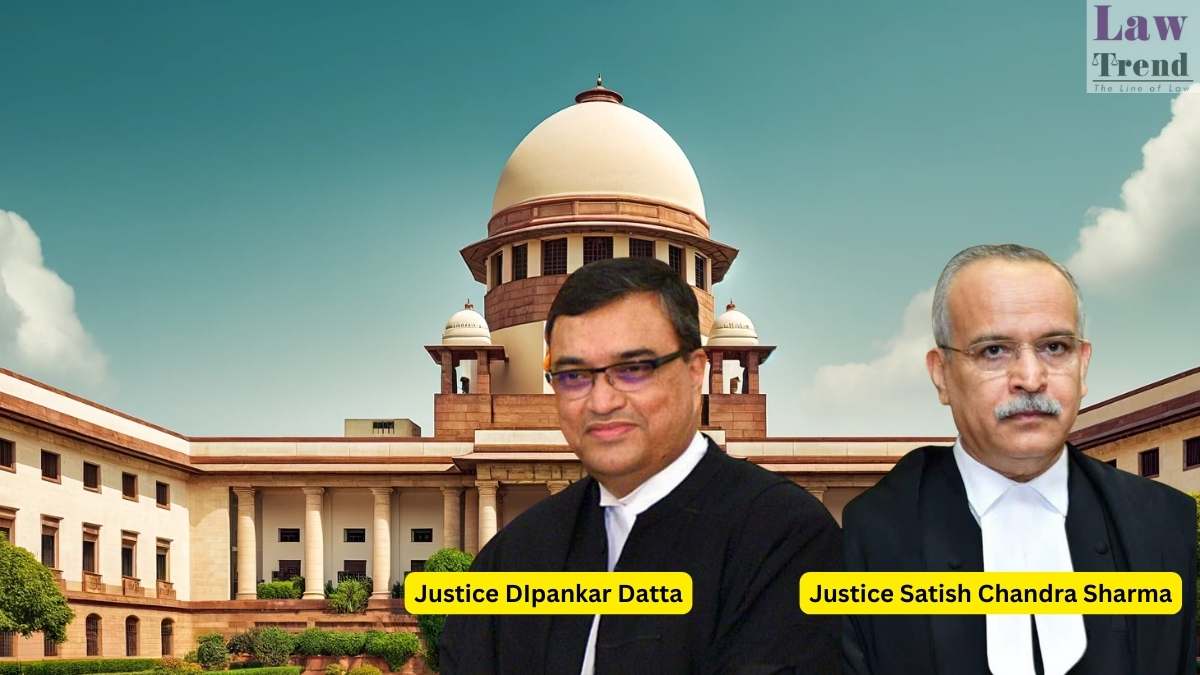

The Supreme Court of India has ruled that the State government is fully empowered to enhance royalty and dead rent rates during the subsistence of a mining lease, even if the executed lease deed does not contain any express provision permitting such an increase. A bench comprising Justice Dipankar Datta and Justice Satish Chandra Sharma allowed the appeals filed by the State of Haryana, setting aside a 2016 judgment of the Punjab and Haryana High Court which had declared the State’s rate revision illegal and arbitrary. The apex court clarified that mining leases are statutory grants rather than simple private contracts, meaning that the statutory rules framed under the Mines and Minerals (Development and Regulation) Act, 1957 (MMDR Act) act as implied conditions that bind the parties.

Background of the Case

The dispute arose from an auction notice issued on October 12, 2001, by the Mines & Geology Department of the Government of Haryana for the extraction of road metal and masonry stone in various areas of the Faridabad district. M/s Faridabad Gurgaon Minerals (FGM) emerged as the highest bidder, and a mining lease deed was subsequently executed on September 17, 2002, for a period of seven years. A similar lease was granted to M/s Ganpati Enterprises Slate Mines (GESM) on the same date for land in District Rewari.

While the initial auction notice and the Letters of Acceptance (LoA) explicitly stated that the leases would be governed by Rules 10 and 21 of the Punjab Minor Mineral Concession Rules, 1964 (which permit periodic rate enhancements), the final lease deeds executed between the State and the lessees did not contain these stipulations.

On June 3, 2005, the Haryana Government amended the 1964 Rules, executing a 50 percent hike in the rates of royalty and dead rent. Aggrieved by this sudden escalation, the lessees filed writ petitions before the High Court of Punjab and Haryana.

In June 2016, the High Court ruled in favor of the lessees, holding that because the lease deeds lacked explicit provisions for rate changes, the State’s unilateral enhancement was invalid. The High Court also concluded that the 50 percent hike was arbitrary, lacked empirical backing, and violated the Rules of Business of the Government of Haryana, 1977, framed under Article 166 of the Constitution of India. The State of Haryana then appealed this decision to the Supreme Court.

READ ALSO  पुराने पैटर्न पर होगी नीट सुपर स्पेशलिस्ट डीएम परीक्षा अगले वर्ष होंगे बदलाव:--सुप्रीम कोर्ट

Arguments of the Parties

The Appellant (State of Haryana)

Senior Advocate Balbir Singh, representing the State of Haryana, argued that the lessees had accepted the leases with complete knowledge of the statutory regime, as highlighted in the initial auction notice and the LoA. He maintained that under Rule 21(1)(i)(a) of the 1964 Rules, lessees have a mandatory obligation to pay royalty at revised rates “notified from time to time.”

The State contended that its power to regulate minerals stems from its role as a constitutional trustee of public natural resources. Citing the nine-judge bench decision in Mineral Area Development Authority v. SAIL and the decision in State of Rajasthan v. J.K. Synthetics, the State argued that terms of a mining lease must always yield to statutory rule changes.

Furthermore, regarding the alleged violations of the Rules of Business, the State argued that the rules are directory rather than mandatory. Alternatively, because the rate revision increased state revenue rather than depleting it, it did not “affect the finances of the State” in an adverse manner, meaning prior consultation with the Finance Department was unnecessary.

The Respondents (Lessees)

Senior Counsel Dhruv Mehta and Yashraj Singh Deora, appearing for M/s FGM and M/s GESM respectively, asserted that the lease deed was a binding contract and that the State had consciously chosen to omit any clause allowing future rate revisions. They argued that the State had effectively waived its statutory benefit by entering into a contract without reserving the right to hike royalty.

Relying on Indian Aluminium Co. v. Kerala State Electricity Board, they argued that a statutory contract is binding and restricts the future exercise of statutory powers. On the constitutional front, they argued that the Rules of Business are strictly mandatory under the precedent of MRF Limited v. Manohar Parrikar. They posited that the term “affect the finances” encompasses both positive and negative impacts, meaning that any change in royalty rates strictly required prior consultation with the Finance Department and formal approval by the Council of Ministers, neither of which took place.

Finally, they argued the 50 percent hike was arbitrary because the State had ignored its own findings that mining rates in Haryana were already significantly higher than those in neighboring states.

READ ALSO  Is Power of Attorney Holder suffering from asthmatic problems a sufficient cause for not preferring review petitions within statutory period? Kerala HC Answers

The Court’s Analysis

The Supreme Court analyzed the dispute through three core issues:

1. Contractual Silence vs. Statutory Power

The Court firmly rejected the argument that the State’s statutory power was curtailed by the silence of the lease deed. The bench explained that when the government acts in a regulatory capacity under a statute, it cannot contract away its sovereign obligations.

The Court held that the provisions of the MMDR Act and the 1964 Rules form an implied condition of every mining lease. Under Section 15(3) of the MMDR Act, the legislative phrase “for the time being” clearly marks royalty rates as dynamic and subject to change.

Emphasizing the State’s custodial role over public wealth, the bench noted: “Minerals are not ordinary commodities; they are held by the State in trust for the people. The State is under a constitutional obligation to ensure that their exploitation subserves the public interest, including securing an appropriate revenue for the public exchequer”

The Court also observed: “Mere silence in the lease deed with regard to revision of royalty cannot denude the State of a statutory power and/or operate as a bar to the exercise of power under section 15 of the MMDR Act and the rules framed thereunder; hence, a lessee cannot claim any vested right to static royalty for the entire lease period.”

2. Arbitrariness and Non-Application of Mind

On the issue of whether the 50 percent hike was arbitrary, the Court ruled that the judiciary cannot micromanage economic and fiscal policy decisions.

The Court observed: “In matters of fiscal and economic policy, the Government machinery would not work if it were not allowed some free play in its joints.”

The bench pointed out that the previous rate revision occurred in 1999, meaning the 2005 hike occurred after a gap of five and a half years—well beyond the statutory three-year minimum interval. It concluded that the state had considered comparative data from neighboring states, satisfying the requirement of an informed executive decision.

READ ALSO  Delay Can’t be a Ground to Reject Amendment Application; Supreme Court Lays Down Guidelines on Deciding Amendment Application

3. Compliance with the Rules of Business

The Court distinguished the present case from MRF Limited, noting that the decision to revise royalty rates was approved directly by the Chief Minister, who also held the portfolio for the Minister-in-charge of Mining.

Addressing the constitutional mechanics of collective cabinet responsibility under Articles 154 and 163, the Court observed: “Financial decisions of the State, by their very nature, form part of the collective responsibility of the Council and would necessarily require the knowledge and approval of the Chief Minister. It is a constitutional necessity. Any purported fiscal decision, even if taken by the Council of Ministers or the Finance Department ought not to be given effect without the involvement and approval, or at least the knowledge, of the Chief Minister.”

Since the Chief Minister had directly approved the notification, and there was no evidence on record showing that the Finance Minister disagreed with the decision, the Court ruled that there was a “deemed consent” of the Finance Minister, satisfying constitutional requirements.

The Decision

The Supreme Court allowed the appeals filed by the State of Haryana and set aside the judgment of the Punjab and Haryana High Court, declaring the royalty and dead rent rate revisions to be fully valid.

However, considering that the notification had been stayed for a significant period during litigation, that the leases expired in 2009, and that the lessees could not recover the enhanced rates from their past buyers, the Court granted limited equitable relief. The bench ordered that the interest on the arrears of royalty and dead rent, if imposed by the State, must be capped at a maximum of 12 percent per annum.

Case Details

Case Title: The State of Haryana & Ors. v. M/s Faridabad Gurgaon Minerals & Anr.
Case No.: Civil Appeal arising out of SLP (Civil) Diary No. 15252 of 2017 (with Civil Appeal arising out of SLP (Civil) Diary No. 30225 of 2017)
Bench: Justice Dipankar Datta, Justice Satish Chandra Sharma
Date: July 13, 2026

Law Trend
Law Trendhttps://lawtrend.in/
Legal News Website Providing Latest Judgments of Supreme Court and High Court

Related Articles

Latest Articles

