

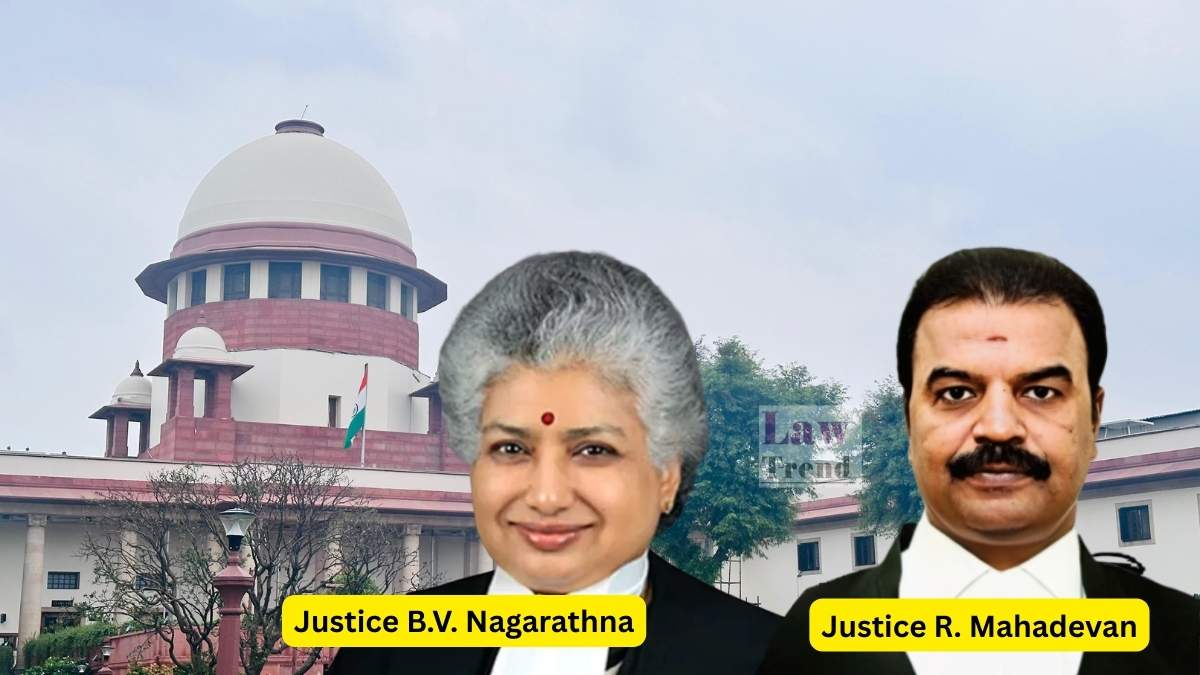
The Supreme Court of India on Monday declined to halt an appellate tribunal’s decision that cleared Bombay Dyeing and Manufacturing Company Limited and its promoters of regulatory penalties. While refusing to stay the ruling, the top court agreed to examine an appeal by the Securities and Exchange Board of India (SEBI) and directed that the tribunal’s split verdict will not serve as a legal precedent for future cases.
A bench of Justices BV Nagarathna and R Mahadevan issued a formal notice regarding the market regulator’s petition. The bench ordered the legal counsel representing the Wadia Group to submit counter-affidavits in response to SEBI’s appeal.
Because the Securities Appellate Tribunal (SAT) decision was a split 2:1 verdict, the bench specifically noted in its order that the ruling should not be cited as a precedent in similar disputes before the tribunal.
Background Of The Regulatory Dispute
The dispute originates from a January 16 decision by the SAT, which overturned an October 2022 order issued by a whole-time member of SEBI. The regulator’s initial order had restricted Bombay Dyeing, along with several current and former promoters and directors, from accessing the securities market or holding key managerial roles in listed companies.
SEBI’s enforcement action followed a show-cause notice issued in June 2021, which also targeted individuals connected to SCAL Services Limited. The regulatory action was based on allegations that 11 memoranda of understanding (MoUs) executed between Bombay Dyeing and SCAL Services—both Wadia Group companies—for the bulk sale of flats in Mumbai were sham transactions designed to artificially inflate Bombay Dyeing’s revenues.
However, the SAT majority ruled that SEBI failed to establish that these flat-sale agreements were fraudulent or intended to misrepresent the company’s financial health.
Details Of The Disputed Transactions
During the Supreme Court hearing, Senior Advocate Arvind Datar, representing SEBI, detailed the nature of the transactions. He stated that Bombay Dyeing originally held a 49 percent stake in SCAL Services. On March 29, 2012, Bombay Dyeing reduced this holding to below 19 percent, meaning SCAL ceased to qualify as an associate company under regulatory definitions.
Datar pointed out that the 30 percent stake was transferred to another Wadia Group entity rather than an independent third party. The day after this equity transfer, the first MoU was executed, initiating a series of 11 agreements over a two-year period that totaled more than Rs 3,000 crore.
According to SEBI’s findings, Bombay Dyeing recorded the proceeds from these agreements as sales in its financial records. Conversely, SCAL Services did not list corresponding purchases in its books, registering only an agency commission instead.
Arguments Presented To The Bench
In his plea for a stay, Datar argued that the SAT majority decision raised significant questions regarding the definition of associate companies, the doctrine of a single economic entity, and the legal principle of lifting the corporate veil.
Counsels representing Wadia Group chairperson Nusli Wadia and Bombay Dyeing strongly opposed any stay on the appellate order. Senior Advocates Abhishek Singhvi and Darius Khambata argued that their clients had operated in full compliance with all relevant regulatory and legal frameworks.
The defense further argued that the SAT had completely exonerated the company and its promoters on the facts of the case, and emphasized that SEBI had not legally challenged multiple tribunal findings that validated the transactions.




