

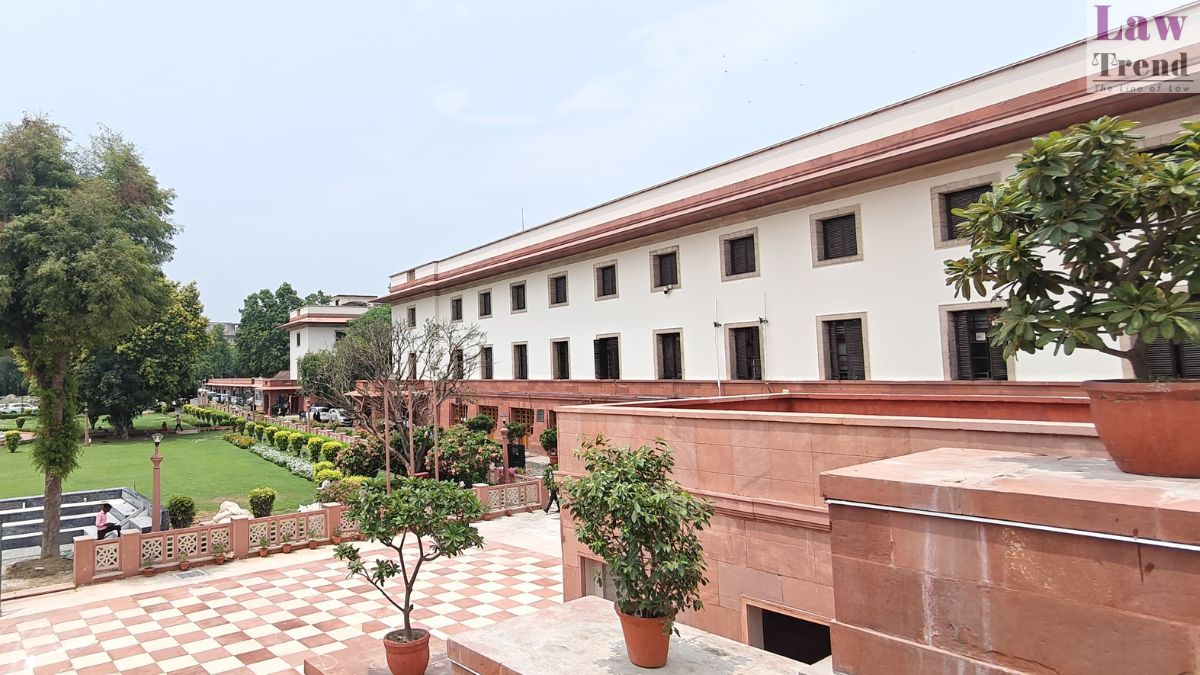
The Supreme Court on Wednesday declined to entertain a Public Interest Litigation (PIL) seeking a sweeping regulatory overhaul of Sikh religious and heritage properties across India.
A bench comprising Chief Justice Surya Kant and Justice Joymalya Bagchi ruled that the extensive demands outlined in the petition fall strictly within the legislative domain. The court advised the petitioner, Charanjeet Singh, to instead present his grievances directly to the Parliamentary Petitions Committee to prevent any perception of judicial overreach into religious matters.
A Passionate Appeal in Court
During the proceedings, Charanjeet Singh, who appeared in person and is associated with a Delhi-based Sikh body, made an emotional appeal to the bench. At one point, Singh bowed before the judges, pleading, “I bow before you. Please issue a notice on my petition.”
While expressing empathy, Chief Justice Surya Kant clarified the limits of the court’s jurisdiction on matters requiring legislative amendments.
“The court is here for you; you may come whenever you wish. But these issues require amendments to the law, for which you must go to Parliament,” the Chief Justice stated. “You should approach the Petition Committee of Parliament.”
The Chief Justice further emphasized the need for judicial restraint in sensitive areas: “If we step in, it might appear as though there is interference in religious matters.”
However, the bench kept a door open for the petitioner, granting Singh the liberty to return to the Supreme Court if he remains dissatisfied with the response from Parliament.
What the Sweeping PIL Demanded
The PIL sought to fundamentally restructure how Sikh religious and heritage properties are preserved, audited, and managed nationwide. Key directives requested in the petition included:
- A New National Authority: The petition urged the court to direct the Union of India to establish a “National Khalsayi Sikh Heritage Protection Authority” tasked with identifying, preserving, auditing, and protecting all Khalsayi Sikh heritage properties.
- State-Level Inventories: It sought to mandate all state governments and Union Territories to compile and submit comprehensive inventories of all Sikh religious, historical, and endowment properties under their jurisdiction, including explicit details on ownership, leases, transfers, and encroachments.
- Special CAG Audits: The petitioner requested that the Comptroller and Auditor General of India (CAG) execute a special audit of all statutory bodies, boards, committees, and trusts responsible for managing Sikh religious properties.
- Federal Investigations: The PIL also called for directions to the Central Bureau of Investigation (CBI) and the Enforcement Directorate (ED) to probe allegations involving large-scale illegal alienation, undervaluation, misappropriation, or laundering of financial proceeds generated by these heritage properties.
With the Supreme Court steering the matter toward Parliament, any potential action on these expansive administrative and financial reforms now rests in the legislative sphere.




