

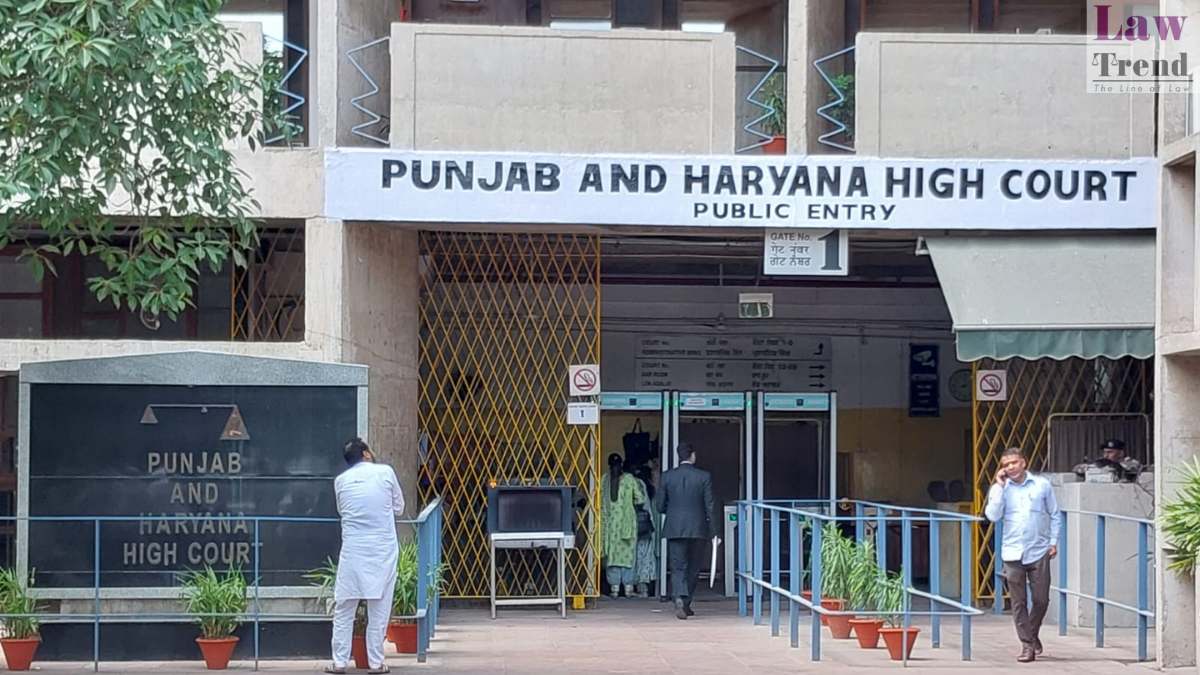
The Punjab and Haryana High Court has ruled that state governments have the authority to establish academic and selection criteria that exceed the minimum standards set by the University Grants Commission (UGC). In dismissing a petition against Haryana’s hiring process for 123 college-cadre assistant professor positions in chemistry, Justice Harpreet Singh Brar stated that employers maintain the prerogative to recruit the best available talent rather than relying solely on base-level requirements. However, acknowledging a conflict with a previous ruling by a coordinate bench, the court referred the underlying legal questions to a larger bench.
Court Rejects Candidate’s Challenge to Recruitment Process
The ruling was delivered in response to a petition filed by Renu Kumari Rohal, who sought the cancellation of an August 2024 recruitment advertisement issued by the Haryana Public Service Commission (HPSC). Rohal had successfully cleared the initial screening test but was disqualified after scoring 52 marks on the subject knowledge test, falling just short of the 52.5-mark qualifying threshold.
Justice Brar declared the petition non-maintainable, noting that the petitioner had failed to challenge a state government memorandum dated November 11, 2022, which formally adopted the UGC guidelines with specific state-level modifications. The court also emphasized that candidates who participate in a selection process without raising any prior objections cannot legally challenge the framework simply because they failed to secure a favorable outcome.
Debate Over State Autonomy and UGC Regulations
Representing the petitioner, Advocate R. N. Lohan argued that the state’s recruitment framework violated the UGC Regulations of 2018, which the Haryana government had previously adopted. Lohan contended that under UGC rules, a designated selection committee must conduct the hiring process, whereas the state had improperly delegated the creation of selection criteria to the HPSC. Citing the Supreme Court’s judgment in the Mandeep Singh case, the petitioner argued that UGC rules remain binding on the state.
The petitioner also maintained that the UGC guidelines do not require separate exams for assistant professor appointments, as the commission already evaluates subject knowledge through a national examination. Additionally, Lohan challenged the 35 percent qualifying cut-off in the subject knowledge test as arbitrary, referencing a prior High Court decision in Asha Rani v. State of Haryana.
Defending the recruitment process, Deputy Advocate General Harish Nain argued that the Mandeep Singh case was irrelevant because it specifically addressed Punjab’s implementation of UGC rules. Nain pointed out that Rohal had only filed her legal challenge after failing the subject knowledge test, having participated in the process without objection up to that point.
Key Legal Questions Referred to Larger Bench
The High Court concluded that administering screening and subject knowledge tests does not breach UGC regulations. Justice Brar observed that the UGC framework establishes a baseline for eligibility rather than a restrictive cap on institutional excellence. By introducing qualifying examinations alongside interviews, the state’s process seeks to enhance meritocracy and supplement the national guidelines rather than dilute them.
To resolve conflicting judicial opinions, Justice Brar referred two specific questions to a larger bench. The registry has been directed to present the matter to the Acting Chief Justice to form the appropriate bench. The referred questions will determine whether a state government can mandate higher or more rigorous qualifications than those outlined by the UGC, and whether states are legally required to adopt UGC regulations in their entirety.




