

Contempt Appeal Under Section 19 Not Maintainable Against Order Closing Proceedings Without Punishment: Andhra Pradesh High Court
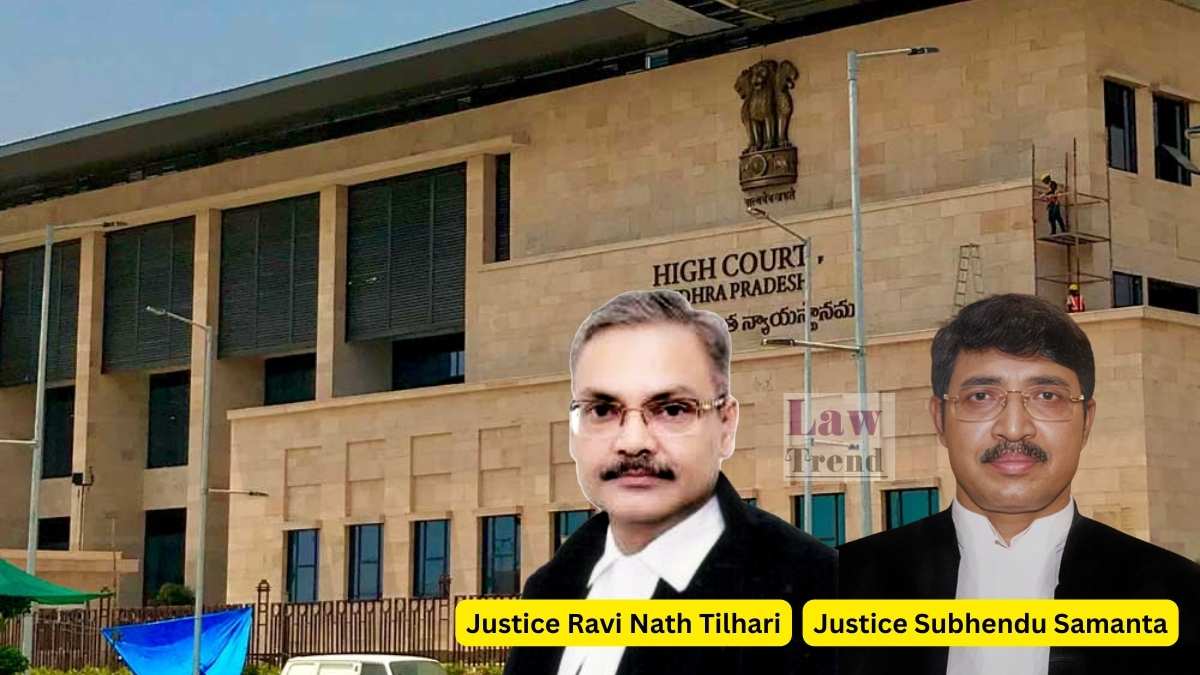

The High Court of Andhra Pradesh at Amaravati has ruled that an appeal under Section 19 of the Contempt of Courts Act, 1971, is not maintainable against an order that closes contempt proceedings without a finding of guilt or the imposition of a punishment. The division bench, comprising Justice Ravi Nath Tilhari and Justice Subhendu Samanta, sustained the objections raised by the High Court Registry, clarifying that such appeals are only legally permissible when they challenge orders that actively impose punishment. However, the bench granted the appellants the liberty to either file a fresh appeal or convert their current contempt appeal into an intra-court appeal under Clause 15 of the Letters Patent.

Background of the Case

The matter originated from a writ petition (W.P. No. 937 of 2023) decided on July 10, 2024, wherein a learned Single Judge directed the respondents to include the temporary service of the petitioners for the purpose of calculating pensionary benefits and gratuity. Alleging that the respondents had disobeyed this directive, the appellants—Kasi Raju (deceased, represented by his legal heirs) and 19 others—initiated contempt proceedings.

The learned Single Judge subsequently closed the contempt case, recording that the order had been complied with. Challenging this closure, the appellants filed a Contempt Appeal. The High Court Registry returned the appeal with objections, questioning its maintainability on the grounds that the Single Judge had neither found the respondents guilty nor imposed any punishment in the contempt case.

Arguments of the Parties

The learned counsel for the appellants, Sri Surepalli Madhava Rao, contested the Registry’s objections. He argued that Section 19 of the Contempt of Courts Act, 1971, states that an appeal lies as a matter of right from “any order or decision” of the High Court in the exercise of its jurisdiction to punish for contempt. The counsel asserted that the statutory provision does not explicitly require the impugned order to contain a finding of guilt or a sentence of punishment to trigger the right of appeal.

In the alternative, the counsel submitted that if the Contempt Appeal was found to be unmaintainable under Section 19 of the Act, it should be considered maintainable under Clause 15 of the Letters Patent. He contended that because the Single Judge recorded compliance based on a memo filed by the respondents, the closing order essentially constituted a “judgment” that is appealable under Clause 15.

READ ALSO  अगर मौखिक तलाक की अनुमति नहीं है तो लिखित तलाक़ भी नहीं दिया जा सकता- आंध्र प्रदेश हाईकोर्ट ने दिया महत्वपूर्ण निर्णय

The Court’s Analysis

To resolve the issue of maintainability, the division bench analyzed the language of Section 19(1) of the Contempt of Courts Act, 1971, focusing particularly on the expression “in the exercise of its jurisdiction to punish for contempt.”

The bench relied on the landmark Supreme Court decision in Midnapore Peoples’ Coop. Bank Ltd. and Others V. Chunilal Nanda and Others (2006) 5 SCC 399. In that judgment, the Apex Court settled the scope of such appeals, stating:

READ ALSO  Cam Employees of Autonomous Bodies Claim Parity With Government Employees? Answers Supreme Court

“An appeal under Section 19 is maintainable only against an order or decision of the High Court passed in exercise of its jurisdiction to punish for contempt, that is, an order imposing punishment for contempt.”

The Supreme Court had further clarified that:

“neither an order declining to initiate proceedings for contempt, nor an order initiating proceedings for contempt nor an order dropping the proceedings for contempt nor an order acquitting or exonerating the contemnor, is appealable under Section 19 of the CC Act.”

Applying this binding precedent, Justice Ravi Nath Tilhari noted that the order under challenge was not one imposing punishment upon the respondents, but rather an order closing the contempt case after recording compliance. Consequently, the bench determined that an appeal under Section 19(1)(a) was not maintainable.

Addressing the alternative argument regarding Clause 15 of the Letters Patent, the bench observed that while Clause 15 provides for appeals against judgments, not all judgments are appealable. The court remarked that whether a compliance-recording order qualifies as a “judgment” depends entirely on the nature of the order, which must be examined if and when an appeal under Clause 15 is formally presented. Since the appellants had filed the present appeal specifically under Section 19 of the Contempt of Courts Act, the bench could not decide its maintainability under the Letters Patent in its current form.

Decision of the Court

Upholding the Registry’s objections, the High Court held that the Contempt Appeal is not maintainable under Section 19 of the Contempt of Courts Act, 1971.

READ ALSO  To Avoid Conflicting Judgments the Same Court Shall Try Cross Cases: Kerala HC

However, noting the principle established in the Midnapore case that “If the High Court, for whatsoever reason, decides an issue or makes any direction, relating to the merits of the dispute between the parties, in a contempt proceedings, the aggrieved person is not without remedy. Such an order is open to challenge in an intra-court appeal”, the bench granted the appellants the liberty to either file a fresh appeal under Clause 15 of the Letters Patent or convert the present Contempt Appeal into one under Clause 15.

The court directed that if the appeal is converted, the Registry must place the matter before the appropriate Bench, where the question of its maintainability under the Letters Patent will remain open for arguments. If the appellants do not opt for this conversion, the Contempt Appeal will stand dismissed as not maintainable at the SR stage.

Case Details:

Case Title: Kasi Raju, S/o Kava Raju (Died) and 19 others v. Arun Kumar and another

Case No.: Contempt Appeal (SR). No: 4482 of 2026

Bench: Justice Ravi Nath Tilhari, Justice Subhendu Samanta

Date: 24.06.2026

Law Trend
Law Trendhttps://lawtrend.in/
Legal News Website Providing Latest Judgments of Supreme Court and High Court

Related Articles

Latest Articles

