

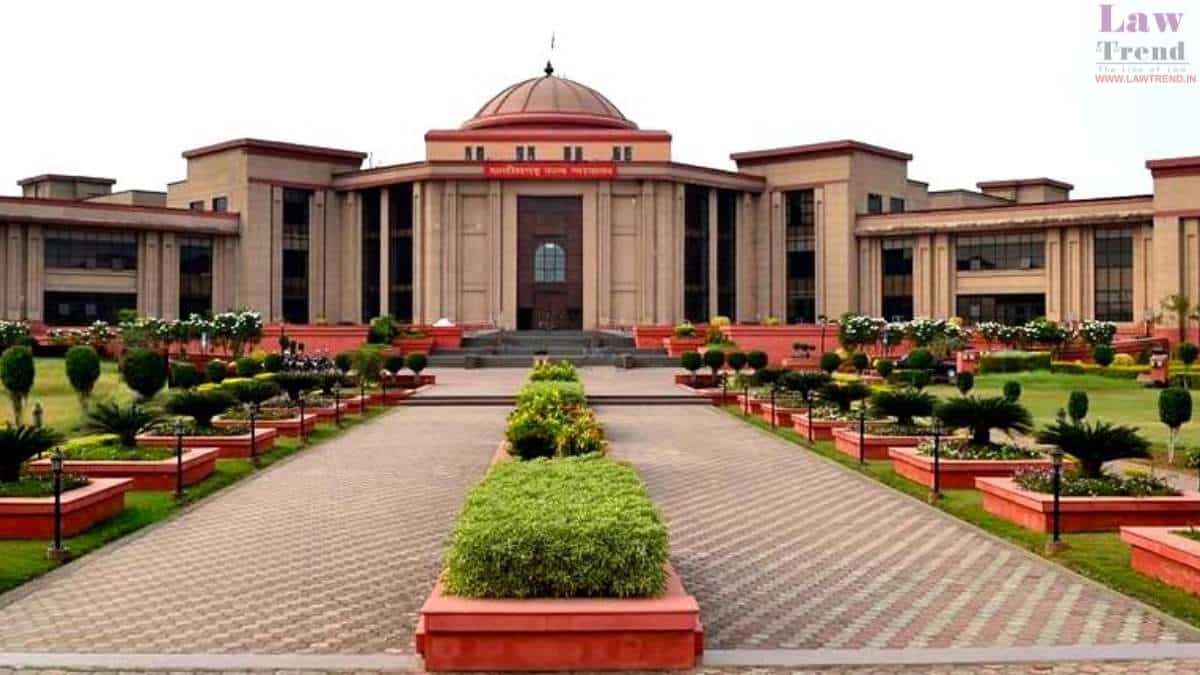
The Chhattisgarh High Court has dismissed a petition challenging a state government directive that introduced daily recitations of religious prayers and mantras in government schools, ruling that the order does not force students to act against their faith.
A single-judge bench of Justice Amitendra Kishore Prasad termed the petition premature, finding no evidence of coercion or violation of constitutional rights. The judgment, delivered on July 2, was uploaded to the high court’s website on Tuesday.
In its ruling, the court emphasized that a comprehensive reading of the school education department’s directive reveals no mandatory requirement for students to participate in activities that would infringe upon their religious freedom. The court also noted that the three petitioners failed to provide any evidence of direct injury, concluding that the challenge was based entirely on speculative apprehensions.
The legal challenge targeted a June 12 circular issued by the state’s School Education Department, which mandated cultural and value-based daily routines across government schools starting in the 2026-27 academic session. Under the guidelines, morning assemblies must include the national anthem, the national song, deep mantra, Saraswati Vandana, Guru Mantra, Shanti Mantra, and lessons on the lives of prominent historical figures. Additionally, schools are directed to conduct recitations of the state song, Gayatri Mantra, and Shanti Mantra at the end of the school day.
Constitutional Concerns Raised By Petitioners
Representing the petitioners, counsel Aamir Khan argued that enforcing the recitation of traditional verses in state-funded institutions amounted to imparting religious instruction, which is constitutionally prohibited. He contended that the directive violated Articles 14, 21, 25, 28(1), 29, and 30 of the Constitution.
Khan asserted that students from minority communities could feel compelled to engage in religious practices foreign to their faith, potentially forcing them to choose between their beliefs and their education.
State Defends Cultural Education Initiative
Defending the policy, Deputy Advocate General Anand Dadariya countered that the petition was politically motivated and lacked any actual grievance. He argued that the circular falls within the state’s valid executive powers under Article 162 and aligns with the National Education Policy 2020 to promote Indian knowledge systems and cultural awareness.
The state government informed the court that the program had already been implemented across schools without receiving complaints from students, parents, or teachers. Dadariya clarified that the terms “compulsory” and “ensure” in the directive apply to school administration and discipline rather than religious participation. He added that the policy outlines no disciplinary actions or punishments for students who choose not to recite the verses.
Furthermore, the state maintained that verses like the Shanti Mantra represent ancient philosophies of universal well-being and ecological balance rather than religious teachings, aligning with the fundamental duties of citizens under Article 51A.
Court Leaves Door Open For Future Grievances
While dismissing the current petition, Justice Prasad granted the petitioners permission to file a new case in the future if they can produce concrete evidence of actual rights violations or coercion.




