

Writ Courts Cannot Grant Relief Beyond the Pleadings and Prayers in a Petition: Andhra Pradesh High Court
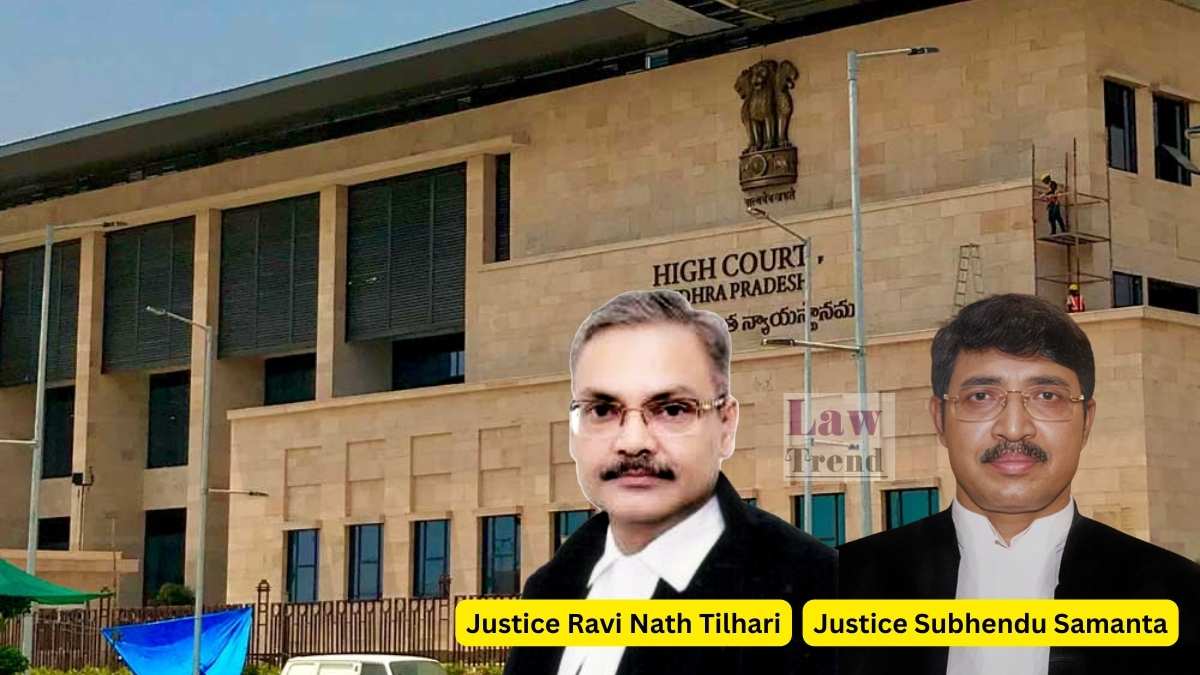

The High Court of Andhra Pradesh has ruled that writ courts cannot grant relief that has not been specifically prayed for by the parties in their pleadings. A division bench comprising Justice Ravi Nath Tilhari and Justice Subhendu Samanta partly allowed a writ appeal, setting aside a Single Judge’s interim direction that had ordered the parties to maintain status quo over the mutation of names in revenue records for a disputed land of Ac.2.48 cents in Tirupati District. While setting aside the status quo on mutation, the court provided a limited three-week protection to the writ petitioners to approach the competent civil court regarding their threatened dispossession.

Background of the Case

The dispute concerns an extent of Ac.2.48 cents of land in Sy.No.243/3 situated at Cherlopalle Village, Tirupati Rural Mandal, Tirupati District. The writ petitioners (respondents 1 to 7 in the writ appeal) asserted that the subject land was assigned to their grandfather, who remained in possession and enjoyment of the property. Conversely, the appellant, V. Chandrasekhar Naidu, claimed that his father had purchased the land from the grandfather’s legal heirs.

The property has a prolonged history of litigation under the A.P. Assigned Lands (Prohibition of Transfer) Act, 1977. While a resumption order was passed in 2006, it was ultimately set aside in W.P.No.26503 of 2009, which was subsequently confirmed by a division bench in Writ Appeal Nos.373 and 572 of 2021.

Following these developments, the appellant made a representation to the Joint Collector to delete the land from the prohibited properties list under Section 22A of the Registration Act, 1908. This representation was allowed on February 19, 2026. Challenging this deletion, the writ petitioners filed a statutory appeal before the appellate authority on April 15, 2026. Fearing dispossession pending the appeal, they filed W.P.No.14219 of 2026, seeking a direction to restrain the official respondents from evicting them.

On May 8, 2026, a Single Judge disposed of the writ petition, directing the appellate authority to decide the statutory appeal within four months. However, the Single Judge also ordered the parties to maintain status quo regarding the mutation of names in the revenue records for the subject land. The appellant challenged this specific status quo direction in the present writ appeal.

READ ALSO  GPA-cum-Sale Agreement Does Not Confer Title to Resist Decree for Specific Performance Based on Prior Sale Agreement: Andhra Pradesh High Court

Arguments of the Parties

The appellant’s counsel, Kondaparthy Kiran Kumar, argued that the direction to maintain status quo on mutation was entirely beyond the scope of the writ petition. He contended that the writ petitioners had not prayed for any relief regarding mutation entries, but had only sought protection against dispossession. He further submitted that mutation for an extent of Ac.1.65 cents of the disputed land had already been completed in the appellant’s favor. Additionally, the appellant had already obtained an ad-interim temporary injunction against the writ petitioners in a civil suit (O.S. No.47 of 2026) pending before the Principal Civil Judge, Tirupati.

On the other hand, counsel Maheswari Arika, representing the writ petitioners, argued that the status quo order on mutation was justified to preserve the property’s status while the statutory appeal was being decided. She further contended that the writ petitioners had no prior knowledge of the civil suit as the ad-interim injunction was granted ex-parte. She submitted that there was an imminent threat of dispossession, which would cause them irreparable injury.

READ ALSO  Lack of District Survey and Replenishment Study Fatal to Environmental Clearance: AP High Court Upholds NGT Order Against Silica Mine

The Court’s Analysis and Precedents

The division bench analyzed whether the Single Judge could have legally granted a status quo order on mutation when no such relief was sought. The bench noted that the prayer in W.P.No.14219 of 2026 was strictly limited to declaring the threat of dispossession illegal and seeking a direction not to evict the petitioners pending their statutory appeal.

The Court highlighted the settled legal rule that courts should not grant reliefs that have not been founded on the pleadings of the parties. It cited several landmark Supreme Court rulings to reinforce this principle:

In Union of India v. E.I.D. Parry (India) Ltd., the Supreme Court held: “This view is contrary to the settled law that a question, which did not form part of the pleadings or in respect of which the parties were not at variance and which was not the subject-matter of any issue, could not be decided by the court.”

Similarly, in State of Orissa and another v. Mamata Mohanty, the apex court observed: “It is a settled legal proposition that “as a rule relief not founded on the pleadings should not be granted”. Therefore, a decision of a case cannot be based on grounds outside the pleadings of the parties.”

The Court also referenced its recent ruling in Divyagnakumari Harisinh Parmar and Others v. Union of India and Others, reiterating: “This Court cannot entertain an entirely new case at the appellate stage at the behest of either party and is strictly confined to adjudicate the issues arising from the suit as framed by the pleadings of the parties.”

The Court concluded that since the writ petition contained no prayer regarding mutation entries, the Single Judge’s order directing status quo on the same could not be legally sustained.

READ ALSO  Section 37 NDPS Act Twin Conditions Must Be Considered in Commercial Quantity Cases; Supreme Court Cancels Bail Granted to Drug Trafficking Accused

The Decision

The High Court allowed the writ appeal in part and set aside the Single Judge’s direction ordering status quo on mutation entries.

Regarding the dispute over physical possession and the threat of dispossession, the Court observed that these issues are currently pending before a competent civil court in O.S. No.47 of 2026. The bench ruled that the parties must work out their interim remedies before the trial court.

However, taking into account the writ petitioners’ plea of an imminent threat of eviction and the fact that the civil court’s injunction was ex-parte, the High Court protected their possession for a limited period of three weeks. The Court directed: “For the aforesaid period, if the writ petitioners are in possession of the subject property, they shall not be dispossessed except by due process of law.”

The Court made it clear that this temporary protection would not influence the trial court, which remains free to pass appropriate orders on the merit of the injunction applications. Finally, the Court upheld the Single Judge’s direction to the statutory appellate authority to dispose of the pending appeal expeditiously.

Case Details

Case Title: V. Chandrasekhar Naidu v. E. Muneendra and 12 others
Case No.: Writ Appeal No. 684 of 2026
Bench: Justice Ravi Nath Tilhari and Justice Subhendu Samanta
Date of Judgment: June 18, 2026

Law Trend
Law Trendhttps://lawtrend.in/
Legal News Website Providing Latest Judgments of Supreme Court and High Court

Related Articles

Latest Articles

