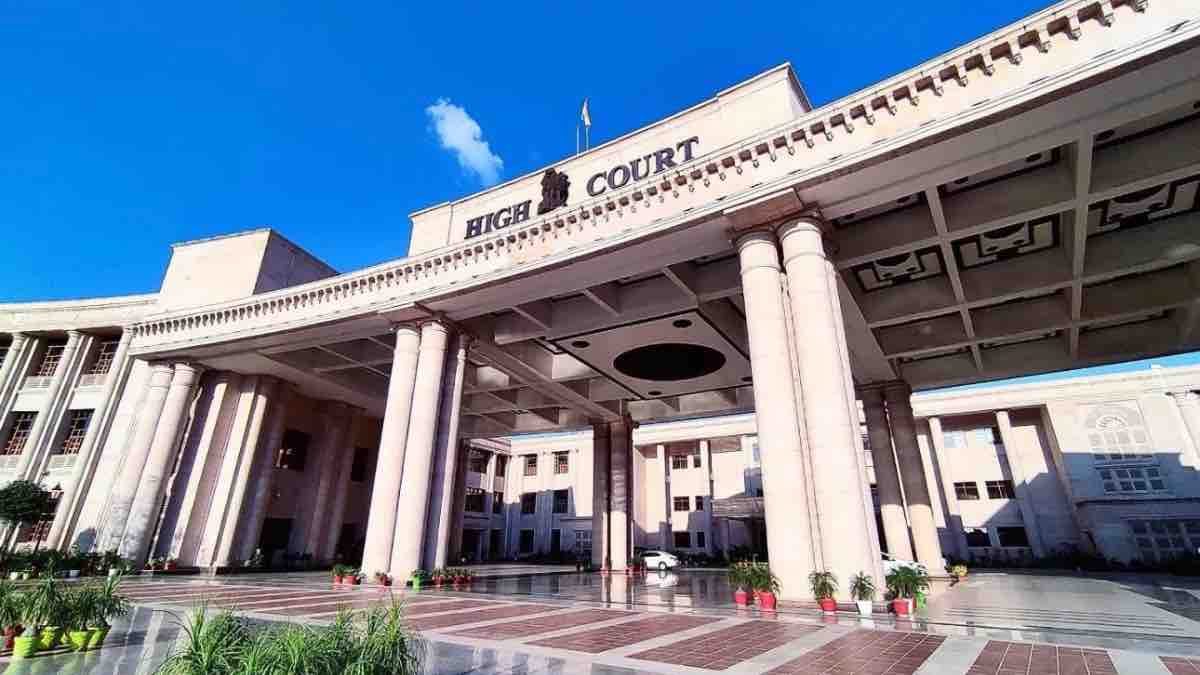
The Lucknow Bench of the Allahabad High Court has affirmed the murder conviction of a man who set his eight-month-pregnant wife ablaze, ruling that death by septicemia following severe burn injuries constitutes murder if the act was intentional and designed to ensure death. A division bench comprising Justice Rajesh Singh Chauhan and Justice Indrajeet Shukla maintained the conviction under Section 302 of the Indian Penal Code (IPC). However, the court partly allowed the appeal by commuting the husband’s life imprisonment to a fixed-term sentence of twenty years without remission, taking into account his young age at the time of the offense and his potential for reformation.
Background of the Case
The case arose from an incident on November 28, 2010, in Sitapur, Uttar Pradesh. The deceased victim, Ruchi, was married to the accused-appellant, Manish, approximately three years prior to the incident. Smt. Maya Devi, the mother of the deceased and the first informant, stated that shortly after the marriage, Manish began demanding an additional dowry of Rs. 50,000. Due to the family’s poor financial background, the demand could not be met, leading to physical assault and harassment of Ruchi.
On November 27, 2010, Manish and Ruchi visited Maya Devi’s residence and obtained the keys to her house under the Kashi Ram Urban Housing Scheme in Sitapur, stating they wanted to stay there for a few days. The following day, Maya Devi was informed that her daughter had been burnt and admitted to the District Hospital. Upon arrival, she found Ruchi severely burnt and alone.
Ruchi survived in the hospital for 23 days, during which she delivered a stillborn baby girl, before succumbing to her injuries on December 21, 2010. During her hospitalization, on November 30, 2010, an Executive Magistrate recorded her dying declaration. Following her death, an inquest was conducted, and an autopsy revealed extensive first- to third-degree burns over her head, chest, neck, abdomen, and back. The medical officer opined that the cause of death was septicemic shock resulting from these ante-mortem burn injuries.
The trial court (Additional Sessions Judge/Fast Track Court (New), Sitapur) acquitted Manish of dowry death and cruelty charges under Sections 304-B and 498-A of the IPC and Section 4 of the Dowry Prohibition Act. However, relying on the victim’s dying declaration, the court convicted him of murder under Section 302 of the IPC, sentencing him to life imprisonment with a fine of Rs. 20,000. Manish subsequently appealed this conviction.
Arguments of the Parties
The learned counsel for the appellant, Mr. Punit Kumar Shukla, argued that the prosecution failed to prove its case beyond reasonable doubt, as the two witnesses of fact (the victim’s mother and brother) were not eyewitnesses. He contended that the dying declaration was untrustworthy because it was not recorded in a question-and-answer format and was instead a continuous narrative. He also pointed out that the doctor did not objectively assess the victim’s vitals before certifying her fitness to make a statement, and that her extensive burns made a coherent statement doubtful. Furthermore, he highlighted an unexplained delay in lodging the FIR, which was registered on January 28, 2011. Alternatively, he argued that since death occurred after 23 days due to septicemia, the burn injuries were a remote cause of death, and the conviction should be altered to culpable homicide under Section 304 of the IPC, citing the coordinate bench ruling in Sushila Devi v. State of U.P..
Conversely, the learned State Law Officer, Mr. Bipul Kumar Singh, argued that the dying declaration was voluntary, coherent, and duly recorded by an Executive Magistrate with a valid medical fitness certificate. He maintained that the law does not prescribe a strict question-and-answer format for dying declarations, citing the Constitution Bench ruling in Laxman v. State of Maharashtra and the Supreme Court decision in Naeem v. State of U.P.. On the issue of septicemia, the State relied on Maniklal Sahu v. State of Chhattisgarh, Prasad Pradhan v. State of Chhattisgarh, and Patel Hiralal Joitaram v. State of Gujarat, arguing that the septicemia was a direct consequence of the intentional burn injuries and that the act of burning a pregnant woman warranted no leniency.
Court’s Analysis and Reasoning
The High Court began by recalling its duty under Sections 374 and 386 of the CrPC. Citing the Supreme Court’s decision in State of Uttarakhand v. Anil, the bench noted that “the High Court is a first appellate Court is under mandate of law to reassess the evidence led by the parties, statement of victim including medical examination, scientific reports and the defence version with due care to arrive at a just conclusion in deciding whether the trial Court was justified in convicting the accused or not.”
Upon scrutinizing the dying declaration, the court found it to be voluntary, coherent, and consistent. It rejected the defense’s objection to the narrative format, pointing to Surinder Kumar v. State of Punjab, which held that no specific format is legally required. The dying declaration detailed a barbaric act: when Ruchi asked for money to treat their child’s illness, Manish assaulted her, threw a bowl of lentils at her, dragged her into an inner room, poured kerosene on her head, set her on fire, and bolted the door from the outside to prevent her escape.
The court rejected the defense’s plea for mitigation under Exception 4 (sudden fight) of Section 300 of the IPC. Citing Surender Kumar v. State of Himachal Pradesh, the bench observed that a “fight” requires a bilateral exchange of blows, which was entirely absent. Pointing to Anil Kumar v. State of Kerala, the court held that by locking his severely injured, pregnant wife inside the room, Manish took “undue advantage” of the situation and acted with extreme cruelty, and that “the act of bolting the door from outside completely negates the defence of sudden and grave provocation.”
Addressing the legal issue of death by septicemia, the court conducted a comprehensive review of historical and modern precedents to distinguish between the primary and secondary effects of bodily injuries:
- The court cited the pre-Constitution case of Doraisamy Servai v. Emperor, which established that the true test is “whether the cause of death is to be directly associated with the act of the accused” and that blood poisoning is a natural peril of a severe wound.
- It referred to State of Haryana v. Pala, where the Supreme Court held that septicemia resulting directly from injuries is not a separate disease but the cause of death.
- Under Explanation 2 to Section 299 of the IPC, a person who inflicts a bodily injury is deemed to have caused the death, even if proper medical remedies could have prevented it, a principle reinforced in Jagtar Singh v. State of Punjab, Veerla Satyanarayana v. State of Andhra Pradesh, and State of Rajasthan v. Arjun Singh.
- The court distinguished the present case from Sushila Devi v. State of U.P. and Maniben v. State of Gujarat (where convictions were downgraded to Section 304), noting that those cases lacked the deliberate intent and cruel conduct of locking the victim inside.
The bench concluded that: “the intended burn injuries proved to be fatal. The bolting of the door from outside after putting the deceased to ablaze, though the death occurred after several days of septicemia, yet it is undoubtedly a murder punishable under Section 302 I.P.C.”
Regarding the sentence, the court examined whether a life sentence could be modified to a fixed term. Citing the Constitution Bench in Union of India v. V. Sriharan and subsequent rulings in Shiva Kumar v. State of Karnataka and Munna Moyuddin Shaikh v. State of Gujarat, the court confirmed that constitutional courts have the power to substitute an ordinary life sentence with a fixed-term sentence of more than 14 years.
Applying the factors outlined in Navas @ Mulanavas v. State of Kerala, the court weighed the mitigating circumstances: Manish was only 21 years old at the time of the incident, had already served approximately 15 years in prison, showed exemplary conduct and remorse in jail, and came from a financially weak socio-economic background.
The Decision
The Allahabad High Court upheld the finding of guilt under Section 302 of the IPC but modified the sentence. The bench held that “the ends of justice would be adequately met by commuting the sentence of imprisonment for life to a fixed term sentence of twenty years without remission.”
The appeal was partly allowed, and the life sentence was commuted to 20 years of rigorous imprisonment.
Case Details
Case Title: Manish vs State of U.P.
Case No.: Criminal Appeal No. 565 of 2019
Bench: Justice Rajesh Singh Chauhan, Justice Indrajeet Shukla
Date: June 03, 2026