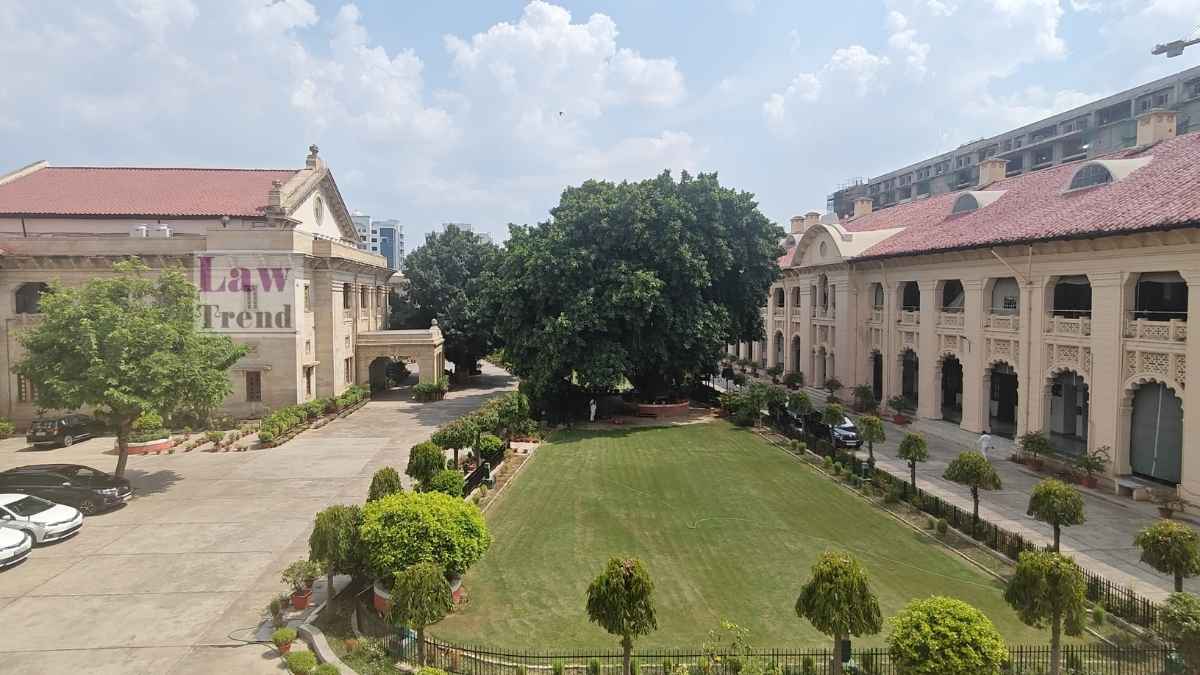
The Allahabad High Court has quashed a summoning order issued by a Magistrate in a murder case, ruling that converting a police final report into a complaint case must not be treated as a mechanical exercise. Justice Anil Kumar-X emphasized that Magistrates must exercise great caution, particularly in grave offences like murder, and actively evaluate witness credibility rather than acting as mere spectators.
Background of the Case
The case stems from the death of a man named Rahul on November 3, 2013. A village Chaukidar initially informed the police that an intoxicated Rahul accidentally fell from a roof and died from his injuries. However, later that same day, Rahul’s brother filed an FIR alleging that two men, Lala and Mahesh, had made Rahul consume liquor at their house, assaulted him, and murdered him.
Following a police investigation, a final report was submitted concluding that no case was made out against the accused. Dissatisfied with this conclusion, the informant filed a protest petition, which the Magistrate treated as a complaint case. Based on the statements of seven witnesses, the Chief Judicial Magistrate of Bulandshahr summoned the accused to face trial for murder under Section 302 of the IPC. A revisional court later upheld this summoning order.
Arguments by the Parties
Counsel for the petitioners (the accused) argued that the allegations were entirely false and highlighted that the police investigation had correctly identified the death as an accidental fall. They pointed out that none of the seven witnesses examined during the complaint proceedings were actual eyewitnesses. Furthermore, the defense emphasized that a completely new motive—that the accused killed Rahul to grab Rs. 35,000 he was allegedly carrying—was introduced during the complaint stage, despite being entirely absent from the original FIR.
Conversely, the State and the private respondent argued that at the summoning stage, a court is only required to see if a prima facie case exists. They relied on witness statements asserting that Rahul was last seen with the accused and was carrying Rs. 35,000, which later went missing, constituting a strong incriminating circumstance.
The Court’s Analysis
Upon reviewing the record, the High Court found glaring gaps in the prosecution’s narrative. The Court noted a crucial missing link: the deceased’s body was found in front of a third party’s house, a fact that was never explained during the investigation or complaint proceedings.
The Court also took strict note of the late introduction of the robbery motive and the missing Rs. 35,000, pointing out that these claims were missing from both the FIR and the protest petition. The Court observed, “Material facts omitted from the protest petition cannot ordinarily be supplied later through oral statements.”
Additionally, the Court highlighted severe inconsistencies in witness testimonies. It specifically pointed to a witness who claimed to have seen the assault but fled in fear, yet later claimed the accused voluntarily confessed to him that they had no intention to kill.
Detailing the vital duties of a Magistrate, the High Court ruled, “The primary object of every criminal proceeding is discovery of truth.” It further stated, “Conversion of a final report into a complaint case should never become an empty formality.”
Justice Anil Kumar-X stressed that in serious crimes requiring thorough scientific and forensic investigation, a mere complaint enquiry cannot substitute a full-fledged criminal investigation. The Court directed that Magistrates must carefully examine witnesses and test their credibility, rather than mechanically recording statements.
The Decision
Concluding that the Magistrate failed to properly scrutinize the material and conduct a meaningful enquiry into the inconsistencies, the High Court allowed the petition. The Court set aside the Chief Judicial Magistrate’s 2024 summoning order and the subsequent revisional court’s order, citing a clear non-application of judicial mind.
Case Title: Lala And Another Vs. State of U.P. and Another
Case No.: MATTERS UNDER ARTICLE 227 No. 680 of 2025
Bench: Justice Anil Kumar-X
Date: June 3, 2026