

Functional Disability, Not Mere Physical Disability, Determines Loss of Earning Capacity in Motor Accident Claims: Supreme Court
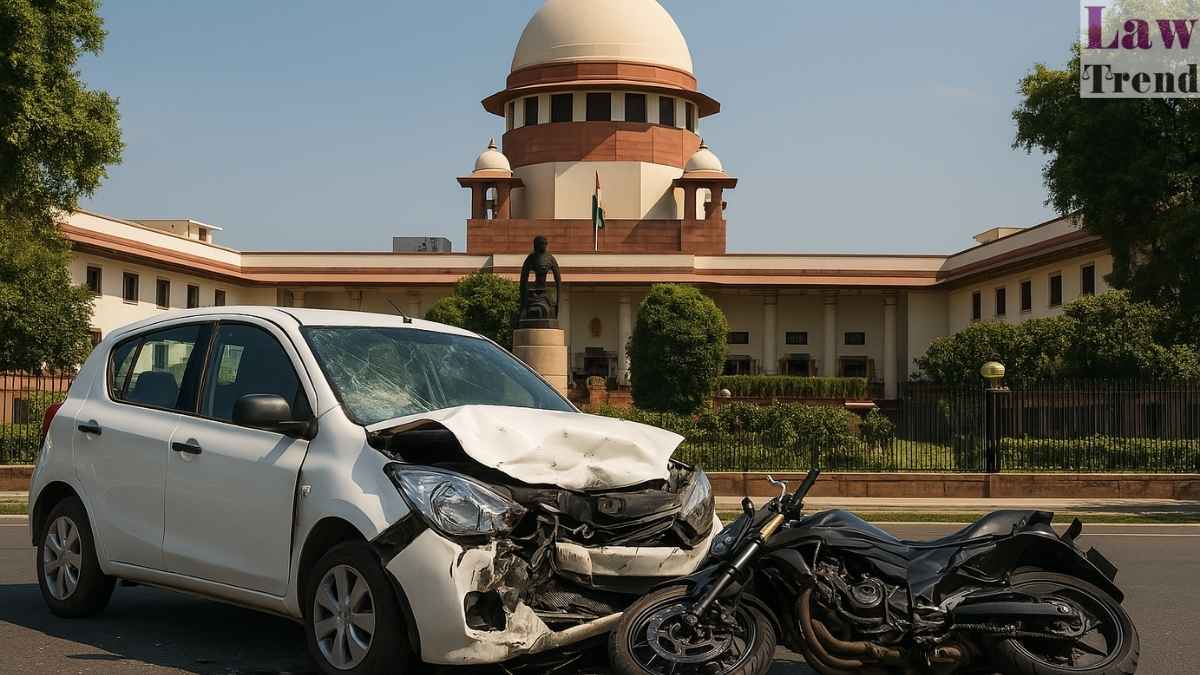

The Supreme Court of India has ruled that compensation for loss of earning capacity in motor accident claims must be assessed based on the functional disability of the victim, rather than mechanically applying the percentage of physical disability. A bench comprising Justice Prashant Kumar Mishra and Justice N.V. Anjaria partly allowed an appeal, significantly enhancing the compensation for a claimant whose right leg was amputated, observing that his functional disability for his physical profession was 100%.

Background of the Case

On April 18, 2017, the appellant, M. Paramesh, a 30-year-old mason, was riding his bicycle on the Namakkal-Salem NH-7 Road when a lorry hit him from behind in a rash and negligent manner. The accident caused grievous injuries that ultimately resulted in the amputation of his right leg above the knee. The Motor Accident Claims Tribunal (MACT) found the lorry driver negligent and held the owner and insurer liable.

Paramesh filed a claim for Rs. 25,00,000, asserting he earned Rs. 20,000 per month as a mason and was no longer able to continue his profession. A medical certificate assessed his permanent physical disability at 70%.

The Tribunal initially awarded Rs. 10,84,330, assessing his monthly income at Rs. 6,000 and calculating the loss of earning capacity directly on the 70% physical disability figure. On appeal, the High Court of Judicature at Madras enhanced the monthly income to Rs. 12,000 and the total compensation to Rs. 23,86,320. However, the High Court also maintained the loss of earning capacity at 70%. Dissatisfied with the quantum, Paramesh appealed to the Supreme Court.

READ ALSO  Chhattisgarh High Court Commutes Death Sentence to Life Imprisonment, Citing Lack of 'Rarest of the Rare' Criteria

Arguments and the Court’s Analysis

Before addressing the core disability assessment, the Supreme Court pointed out calculation errors made by the High Court. While the High Court enhanced the monthly income, it mistakenly calculated the 40% future prospects addition based on the Tribunal’s original, lower income assessment. The High Court also inadvertently omitted amounts for nutrition, clothing, and medical expenses from its final tally.

The primary focus of the Supreme Court’s analysis was the distinction between physical and functional disability. Relying on the precedent set in Raj Kumar vs. Ajay Kumar and Another, the Court emphasized that physical disability percentages cannot be mechanically applied as the percentage of economic loss. The crucial consideration is the effect of the permanent disability on the earning capacity of the injured.

The Court observed that Paramesh’s sole avocation was that of a mason, which inherently involves physical, manual labor requiring the continuous use and support of both legs.

“By virtue of the aforesaid amputation, the appellant has effectively lost his capacity to continue the work of a mason which was admittedly the sole avocation being pursued by him for earning his livelihood,” the Court noted.

Furthermore, the respondents did not argue that Paramesh could engage in a sedentary occupation or that his earning capacity remained unaffected. Concluding that the amputation rendered him incapable of his only source of livelihood, the Court stated: “In such circumstances, restricting the loss of earning capacity to 70% merely on the basis of physical disability would not be justified.”

The Decision

The Supreme Court ruled that the functional disability of the appellant must be assessed at 100%, overturning the 70% physical disability metric adopted by the lower courts.

READ ALSO  सुप्रीम कोर्ट ने दिल्ली के पूर्व मंत्री सत्येन्द्र जैन से कहा कि वह ईडी मामले में सुनवाई में देरी के लिए उसके समक्ष कार्यवाही का उपयोग न करें

The Court recalculated the loss of earning capacity based on a 100% functional disability, a monthly income of Rs. 12,000, a 40% addition for future prospects, and a multiplier of 17. Additionally, recognizing the lifelong need for periodic replacement, maintenance, and rehabilitation for an artificial limb, the Court enhanced the award for future medical expenses from Rs. 1,00,000 to Rs. 2,00,000.

The Supreme Court partly allowed the appeal and significantly enhanced the total compensation awarded to the appellant to Rs. 40,29,730. The respondent insurance company was directed to deposit the enhanced amount, along with 7.5% interest, within six weeks.

READ ALSO  High Court Cannot Interfere with Decisions Taken by Speciality Doctors for Providing Treatment: Madras HC

Case Title: M. Paramesh Versus VRL Logistics Ltd. and Another
Case No.: Civil Appeal No. 8708 of 2026
Bench: Justice Prashant Kumar Mishra, Justice N.V. Anjaria
Date: June 23, 2026

Law Trend
Law Trendhttps://lawtrend.in/
Legal News Website Providing Latest Judgments of Supreme Court and High Court

Related Articles

Latest Articles

