

‘Judge Should Not Sit Like a Sphinx’; Litigants Cannot Be Taken by Surprise Through Unraised Issues: Madras High Court
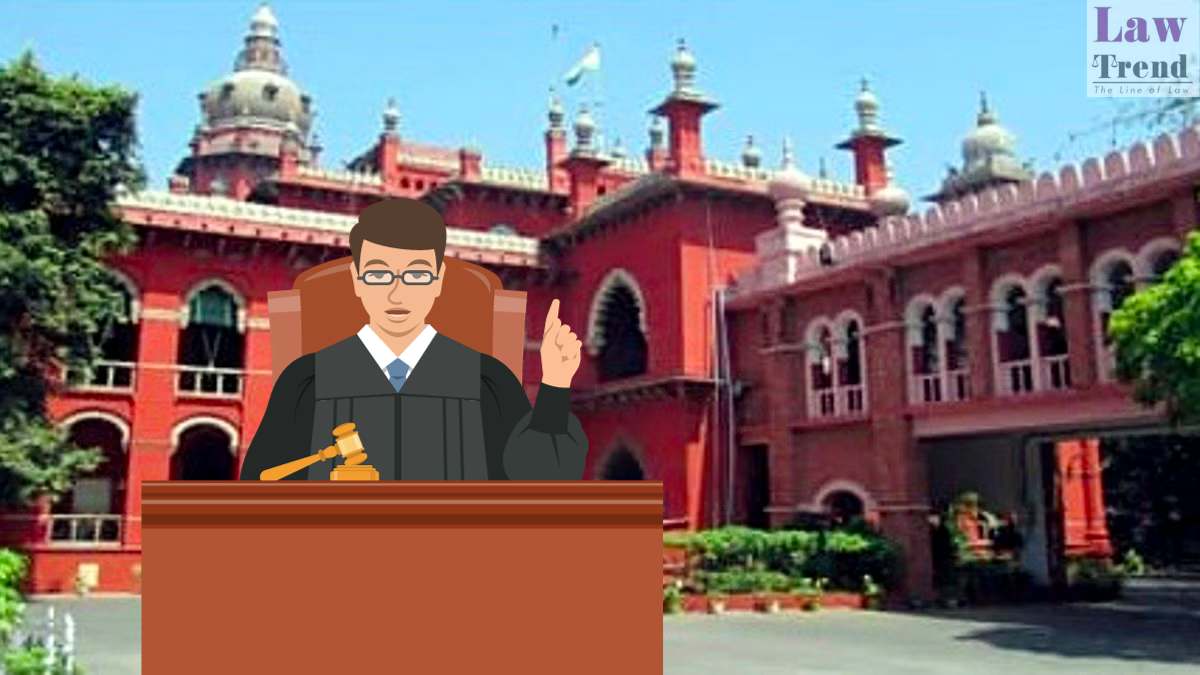

The Madurai Bench of the Madras High Court, comprising Justice G.R. Swaminathan and Justice R. Poornima, has ruled that trial courts must not act as passive observers or spring unexpected adverse findings on litigants regarding uncontested issues. Setting aside a trial court’s order that dismissed a promissory note recovery suit, the High Court held that a trial judge is statutory empowered and obligated to seek necessary clarifications during proceedings instead of remaining silent. The Court also clarified that executing a cash loan transaction in breach of Section 269SS of the Income Tax Act, 1961, does not render the underlying transaction illegal, invalid, or statutorily void, as such violations merely invite independent financial penalties under tax laws.

Background of the Case

The appellant and plaintiff, P. Palanikumar, advanced a cash loan of Rs. 25,00,000 to the respondent and defendant, R. Selvi, on June 5, 2015, to help her meet family expenses and discharge sundry debts. Upon receiving the money, the defendant executed a promissory note (Ex.A1) on the same day, agreeing to repay the sum with interest at the rate of 12% per annum. As security for the loan, the defendant also deposited the original sale deed of her property dated February 10, 2006 (Ex.A2) with the plaintiff.

When the defendant failed to repay the principal amount or pay the interest, the plaintiff sent a legal notice on June 19, 2017 (Ex.A3). Although the defendant sent a reply notice on July 3, 2017 (Ex.A4), she did not comply with the payment demand. Consequently, the plaintiff instituted a recovery suit (O.S.No. 143 of 2017) before the IV Additional District Judge, Madurai, seeking a sum of Rs. 31,54,167 with subsequent interest.

During the trial court proceedings, the defendant did not file a written statement, did not cross-examine the plaintiff, and did not adduce any evidence. Despite the suit remaining entirely uncontested, the trial court dismissed the suit on June 28, 2018. The trial judge framed three issues regarding the plaintiff’s sources of income to lend the loan, the cash mode of payment for such a large sum, and the execution of the promissory note with the best available evidence, ultimately deciding all three issues against the plaintiff.

Arguments of the Parties

The appellant argued that the trial court’s dismissal of the suit was entirely unjustified, especially since the defendant had failed to file a written statement or cross-examine him. He contended that the lower court attached undue importance to his financial wherewithal when it was never actively disputed by the defendant. Furthermore, he argued that the trial court completely failed to appreciate the admissions made by the defendant in her reply notice.

READ ALSO  61वें, 91वें या 181वें दिन चार्जशीट दाखिल होने पर भी डिफॉल्ट जमानत के अधिकार से इनकार नहीं लिया जा सकता: हाईकोर्ट

On the other hand, the respondent’s counsel argued that the trial judge acted responsibly and should be complimented for not dealing with the matter mechanically. Citing the Supreme Court decision in Maya Devi v. Lalta Prasad (2015) 5 SCC 588, the respondent argued that the absence of a defendant does not automatically entitle a plaintiff to a decree, and trial courts must independently satisfy themselves regarding the factual and legal veracity of the claims.

The Court’s Analysis

The High Court systematically analyzed the case across several key legal principles:

1. Active Role of the Trial Judge and Judicial Interventions The Court observed that the trial judge failed to ask a single question during the proceedings to clarify any lingering doubts about the plaintiff’s financial capacity. Pointing to Section 165 of the Indian Evidence Act, 1872, and Order 10 Rule 2 of the Civil Procedure Code (CPC), the Bench observed that the trial judge had the sweeping power to seek clarifications but failed to exercise it. The Court noted:

“The Judge should not sit like a sphinx. He must engage in a dialogue with the Bar. He must pose questions to the witness to disabuse his mind of lingering suspicions.”

The Bench emphasized that litigants must not be taken by surprise with adverse findings on unraised issues:

“Our adjudicatory system contemplates laying all cards on the table. There can be no ace up the Judge’s sleeve. The outcome of the judgment may be a bolt from the blue but its substance must not.”

Furthermore, the Court pointed out that Order 10 Rule 3 of the CPC mandates that the substance of any oral examination must be contemporaneously recorded in writing, an exercise that was completely ignored in this case.

2. Principles of Pleadings and Admissions The Court noted that because the defendant failed to file a written statement, she could not lead any evidence, as established in Siddik Mahomed Shah v. Saran (1929) and reiterated in Manjusha v. United India Assurance Co. Ltd. (2025). While she could have participated via cross-examination under the rule of Modula India v. Kamakshya Singh Deo (1988), she chose not to do so.

READ ALSO  दिव्यांग व्यक्तियों के लिए वाहन में परिवर्तन कर के भुगतान से छूट दी गई है, ऐसे व्यक्ति द्वारा वाहन चलाने की आवश्यकता नहीं है: मद्रास हाईकोर्ट

Applying the rule of non-traverse under Order 8 Rule 5 of the CPC, the Court analyzed the defendant’s reply notice (Ex.A4). The notice merely claimed that the plaintiff was a front for a third party named Shanthanakrishnan and did not deny the receipt of the money or her signature on the promissory note. Citing the Karnataka High Court’s decision in M. Jeetendar Gandhi v. Huthappa (1999), the Court held that the plaintiff’s uncontested statement sufficiently proved the execution of the promissory note and receipt of consideration.

3. Presumptions Under the Negotiable Instruments Act Since the recovery suit was based on a promissory note, the statutory presumption of consideration under Section 118 of the Negotiable Instruments Act, 1881, was triggered. Citing Kuppayammal v. A. Sitheswaran (2011), the Court held that the initial burden was on the defendant to rebut this presumption. Since she failed to step into the witness box or lead evidence, she failed to discharge this onus.

4. Income Tax Act Violations and Loan Validity Addressing the trial court’s objection that the loan of Rs. 25,00,000 was paid entirely in cash in violation of Section 269SS of the Income Tax Act, 1961, the Court held that such a breach does not invalidate the transaction itself. Citing R. Singaravadivelan v. Durai Senthil (2024), the Court noted that a transaction is not non-existent merely because it is omitted from IT returns.

Referring to the Supreme Court’s ruling in Sanjabij Tari v. Kishore S. Borcar (2025), the Court reproduced the key finding:

READ ALSO  Madras HC Rejects Applications by OPS, Others Against AIADMK General Council Resolutions and General Secretary Election

“However, this court is of the view that any breach of section 269SS of the Income-tax Act, 1961 is subject to a penalty only under section 271D of the Income-tax Act, 1961. Further neither section 269SS nor 271D of the Income-tax Act, 1961 states that any transaction in breach thereof will be illegal, invalid or statutorily void.”

Consequently, the Court held that a transaction above Rs. 20,000 is not rendered unenforceable or void under civil law merely because of a tax-related violation.

5. Custody of Title Deeds and Promissory Note Attestation The Court observed that the plaintiff was in possession of the defendant’s original title deeds (Ex.A2), and the defendant offered no explanation as to how they reached his hands. Additionally, citing Eswari Ammal v. Vallimayil (2021) and Rani v. Arokiyammal (2014), the Court clarified that a promissory note does not legally require attestation, making the non-examination of an attestor irrelevant.

Decision of the Court

Finding the approach of the trial court “utterly unsatisfactory” and its reasons “clearly unsustainable,” the High Court set aside the impugned judgment and decree of the lower court. The Appeal Suit was allowed, and the recovery suit was decreed in favor of the plaintiff as prayed for. The Court added that after the defendant satisfies the decree, she will be entitled to apply to the trial court to retrieve her original sale deed (Ex.A2). No costs were ordered.

Case Title: P. Palanikumar Vs. R. Selvi
Case No.: A.S.(MD)No.162 of 2018
Bench: Justice G.R. Swaminathan and Justice R. Poornima
Date: 04.06.2026

Law Trend
Law Trendhttps://lawtrend.in/
Legal News Website Providing Latest Judgments of Supreme Court and High Court

Related Articles

Latest Articles

