

Notarised Affidavits Accepted At Filing Stage, Physical Appearance For Photo Verification Not Mandatory: Allahabad High Court
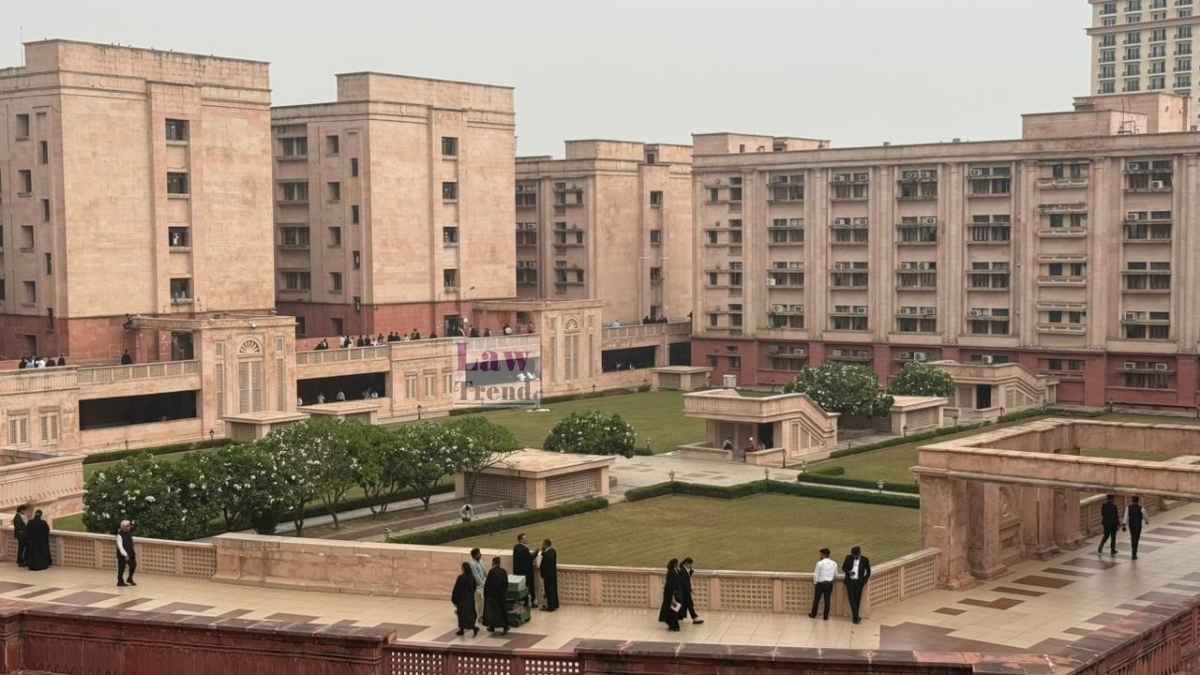

The Lucknow Bench of the Allahabad High Court, comprising Justice Alok Mathur and Justice Amitabh Kumar Rai, has held that affidavits duly notarised anywhere in the country are accepted at the stage of filing writ petitions, establishing that physical appearance at the High Court’s Photo Verification Centre is not mandatory. Consequently, the Court dismissed a writ petition challenging the validity of the Photo Affidavit Identification Regime as superfluous, noting that the High Court Registry had already clarified the acceptance of notarised affidavits.

Background of the Case

The petitioner, Shri Biswajit Chowdhury, appearing in person via online mode, filed a writ petition challenging an Office Memorandum dated October 7, 2015, along with connected administrative instructions. The petitioner sought a declaration that the differential treatment under the Photo Affidavit Identification Regime—which exempted officials of the State Government, Union Government, and State instrumentalities while requiring ordinary litigants to physically appear and affix photographs—was arbitrary, discriminatory, and violative of Article 14 of the Constitution of India.

The petitioner had earlier approached the Supreme Court of India in Writ Petition (Civil) No. 479 of 2025, which was disposed of with liberty to submit a representation before the Chief Justice. Subsequently, the petitioner filed applications under the Right to Information Act, 2005 (RTI Act) seeking clarity on the legal basis and operation of the regime. The central grievance raised was that litigants residing outside Allahabad or Lucknow should not be compelled to physically travel to the Benches solely to undergo photograph-based affidavit attestation prior to filing writ petitions.

Arguments and Information Disclosed

In an RTI response dated June 3, 2026, the High Court Registry provided point-wise information to the petitioner regarding filing procedures:

  1. E-Filing and Travel Requirements: Cases are accepted through e-filing mode as per instructions approved by the Chief Justice via notice dated August 16, 2017.
  2. Status of 2015 Memorandum: The instructions issued under the Office Memorandum dated October 7, 2015, mandating personal appearance, were confirmed as no longer in force.
  3. Acceptance of Notarised Affidavits: The Stamp Reporting Section accepts all duly sworn affidavits whether sworn through the Photo Affidavit procedure or otherwise, in accordance with the Allahabad High Court Rules, 1952, the Code of Civil Procedure, 1908, the Code of Criminal Procedure, 1973, the Bharatiya Nagarik Suraksha Sanhita, 2023, and the Notaries Act, 1952.
  4. Defective Affidavits: Reference was made to the judgment dated May 19, 2025, in Writ-C No. 3389 of 2025 (M/s Rajdhani Inter State Transport Co., New Delhi v. State of U.P.).
READ ALSO  आरोप की गंभीरता या विशालता नियोक्ता को तुरंत निष्कर्ष पर पहुंचने का अधिकार नहीं देती: इलाहाबाद हाईकोर्ट ने बर्खास्तगी रद्द की

During the proceedings, Shri Vijay Dixit, counsel representing the High Court Registry, confirmed on instructions that notarised affidavits are accepted by the Stamp Reporting Section without raising defects.

Court’s Analysis

The Court noted that e-filing instructions introduced during the COVID-19 pandemic continue to remain in force. Examining the legal rules, the division bench emphasized that litigants are permitted to submit notarised affidavits from anywhere in the country without needing to travel to the High Court Benches for photo verification.

Addressing the petitioner’s submission that he had previously traveled to Allahabad to obtain photo identification for a petition under Article 227 of the Constitution on the advice of his counsel, the Court observed that legal advice provided by counsel cannot form the subject matter of adjudication in a writ petition.

READ ALSO  Employees Should Not Retire with Pending Disciplinary Proceedings Unless for Compelling Reasons or Serious, Complex Charges: Allahabad High Court

The Court held:

Accordingly, we find that even an affidavit duly notarised anywhere in the country is accepted at the stage of filing a writ petition. Therefore, no person is mandatorily required to approach the Photo Verification Centre established in the High Court for photo verification of the affidavit at the stage of filing a writ petition.

The bench further observed:

In sum and substance, any person desirous of filing a writ petition or any other application is required to file an affidavit along with such petition or application. Such affidavit may be notarised anywhere in the country, which clearly indicates that there is no mandatory requirement for any person to physically appear before the Photo Verification Centre at either Allahabad or Lucknow.

Final Decision

The Court concluded that since the High Court had already clarified to the petitioner through the RTI response that notarised affidavits are accepted, the continuation of the writ petition was unnecessary.

The Court noted:

READ ALSO  ‘Played Hide And Seek With Court’: Allahabad HC Dismisses Advocate’s PIL With ₹25,000 Cost

Accordingly, we are of the opinion that the present writ petition is superfluous and has unnecessarily consumed the valuable time of this Court in examining the petitioner’s contentions at length.

In light of the above, no interference is called for as sought by the petitioner, particularly when the High Court has already clarified that notarised affidavits are acceptable and there is no mandatory requirement of photo verification in such cases.

Finding no grounds for interference, the High Court dismissed the writ petition.

Case Details:

Case Title: Biswajit Chowdhury v. Registrar General, High Court Of Judicature At Allahabad And Ors.
Case No.: WRIT-C No. 6896 of 2026
Bench: Justice Alok Mathur and Justice Amitabh Kumar Rai
Date: July 16, 2026

Law Trend
Law Trendhttps://lawtrend.in/
Legal News Website Providing Latest Judgments of Supreme Court and High Court

Related Articles

Latest Articles

