

Ex-Facie Proof of Adultery Can Bar Maintenance at Interim Stage, Rules Supreme Court
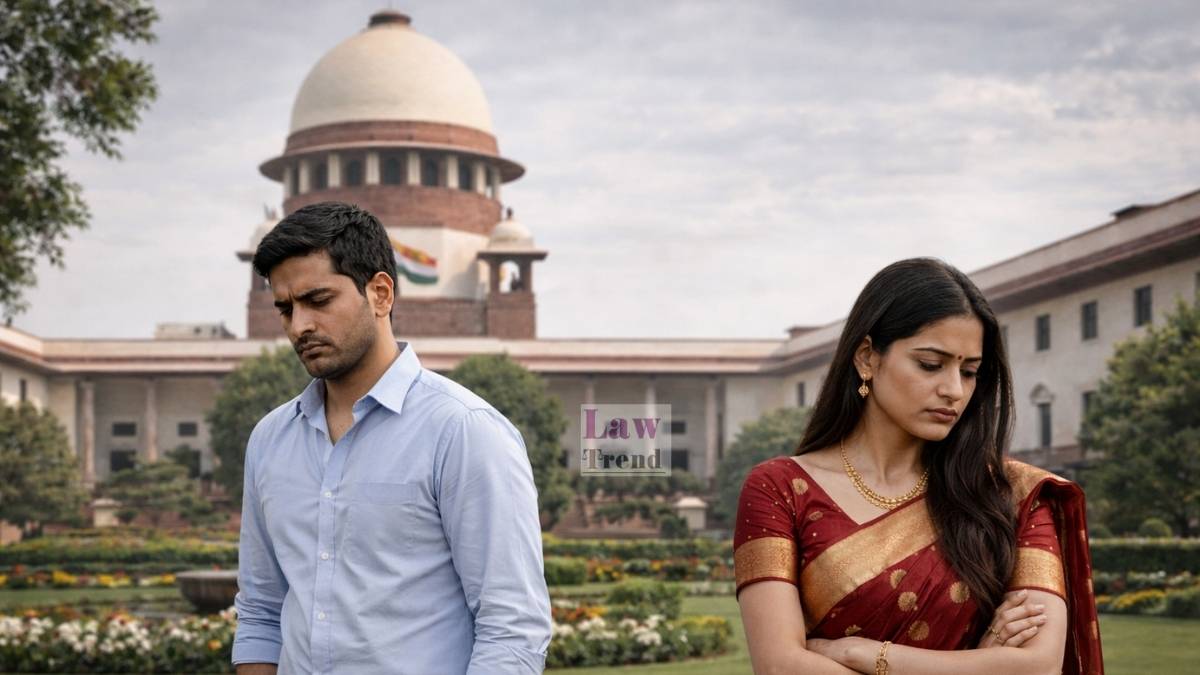
The Supreme Court has held that an application alleging adultery under Section 125(4) of the Code of Criminal Procedure, 1973 (CrPC) can bar a wife from receiving interim maintenance if the husband presents clear and cogent evidence that establishes the charge ex-facie (on the face of it). A bench comprising Justice Sanjay Karol and Justice Vipul M. Pancholi set aside a High Court judgment that had affirmed a trial court’s decision to defer the adjudication of adultery allegations to the final stage of trial.

Background of the Case

The parties were married in July 2014. Following marital discord, the wife left the matrimonial home in May 2020 along with their minor child. In November 2020, she filed an application under Section 125 CrPC seeking maintenance along with an application for interim maintenance before the Special Additional Chief Judicial Magistrate, PCPNDT Cases, Udaipur.

In response, the husband filed an application under Section 125(4) CrPC, contending that the wife was living in an adulterous relationship and was thus statutorily disentitled from receiving maintenance. He submitted photographs and electronic evidence in support of his claims.

On June 27, 2024, the trial court dismissed the husband’s application under Section 125(4) CrPC, observing that the authenticity and originality of the electronic documents could only be determined after evidence was formally exhibited during the main trial. The trial court subsequently awarded interim maintenance to the wife and the minor son.

The husband approached the High Court seeking to quash these orders, but the High Court dismissed his petition on February 4, 2025, holding that there is no provision in the CrPC mandating the adjudication of infidelity as a preliminary issue before deciding interim maintenance.

READ ALSO  दशकों पुराना किरायदारी विवाद सुलझा: सुप्रीम कोर्ट ने ऐतिहासिक फैसले में स्वामित्व अधिकार बरकरार रखा

Arguments of the Parties

The husband argued before the courts that his allegations of adultery ought to be decided as a preliminary issue, as a finding of adultery under Section 125(4) CrPC directly impacts and disentitles the wife to both interim and final maintenance.

The wife contended that the allegations of living in adultery were disputed questions of fact requiring evidence to be formally exhibited and evaluated during the main trial, and thus interim maintenance could not be denied at the threshold.

The Court’s Analysis

Analyzing the scheme of Section 125 CrPC, the Supreme Court noted that proceedings under this section are summary in nature, civil in standard of proof, and designed to prevent vagrancy and destitution. Examining Section 125(4), the Bench noted that the provision explicitly bars a wife from receiving maintenance or interim maintenance if she is living in adultery.

Addressing the procedural structure, the Court explained:

“Put clearly, it has to be observed that an application for maintenance is stage one of the proceedings wherein by virtue of the second proviso, the court may, circumstances permitting, award interim maintenance. The application under Section 125(4) is stage two and it is the decision in stage two which will determine whether the application reaches the final stage i.e. order of maintenance under Section 125(1) or not.”

The Bench clarified that while the mere pendency of a Section 125(4) application does not automatically stop interim maintenance, the court cannot defer the application to final adjudication if ex-facie proof is offered. The Court laid down the threshold required to deny interim maintenance:

“To reiterate, if the application for maintenance to be denied at the interim stage itself, the party having filed the application under Section 125(4) must present clear and cogent evidence that would ex-facie establish adultery on part of the claimant for maintenance.”

The Court found that the lower courts erred in holding that such a question could only be decided at the stage of final adjudication, as such a view would render the statutory bar under Section 125(4) otiose.

Observations on Unregulated Private Investigators

Observing that the husband relied on 237 photographs and 92 videos allegedly obtained through private detectives, the Court highlighted the absence of a regulatory framework surrounding private investigative agencies in India. Expressing concern over privacy rights, data protection, and potential tampering or morphing of electronic evidence, the Court emphasized that electronic records must strictly satisfy Section 65B of the Indian Evidence Act, 1872 (or corresponding provisions of the Bharatiya Sakshya Adhiniyam, 2023) for admissibility.

Reaffirming the precedent in Navinchandra N. Majithia v. State of Meghalaya, the Court noted that while private investigations are not recognized under the Code of Criminal Procedure for statutory investigation, defence parties frequently introduce such material. Citing principles from R.M. Malkani v. State of Maharashtra, Naresh Kumar Garg (Dr.) v. State of Haryana, and Arjun Panditrao Khotkar v. Kailash Kushanrao Gorantyal, the Court underscored the need for verification and admissibility checks.

READ ALSO  सुप्रीम कोर्ट ने चुनावी बांड योजना को रद्द किया, इसे असंवैधानिक बताया

Highlighting that The Private Detective Agencies (Regulation) Bill, 2007 has remained pending, the Court stressed the urgent need for statutory regulations, checks, and grievance redressal mechanisms regarding private investigators.

Decision

The Supreme Court allowed the appeal and set aside the impugned High Court judgment dated February 4, 2025. The matter was remanded to the Trial Court to decide the husband’s Section 125(4) application on its merits in accordance with the principles laid down.

READ ALSO  Bombay HC Dismisses Husband's Plea to Cancel Maintenance; Orders Enhanced Support and Interest Payment

Additionally, the Supreme Court directed that a copy of the judgment be sent to the Secretary, Ministry of Law and Justice, Government of India, and the Chairman, Law Commission of India, to consider appropriate action on regulating private investigative agencies.

Case Details

Case Title: Himanshu Chordia v. State of Rajasthan & Anr.
Case No.: Criminal Appeal No(s). [___] of 2026 (Arising out of SLP (Crl.) No. 3171 of 2025)
Bench: Justice Sanjay Karol, Justice Vipul M. Pancholi
Date: July 31, 2026

Law Trend
Law Trendhttps://lawtrend.in/
Legal News Website Providing Latest Judgments of Supreme Court and High Court

Related Articles

Latest Articles


