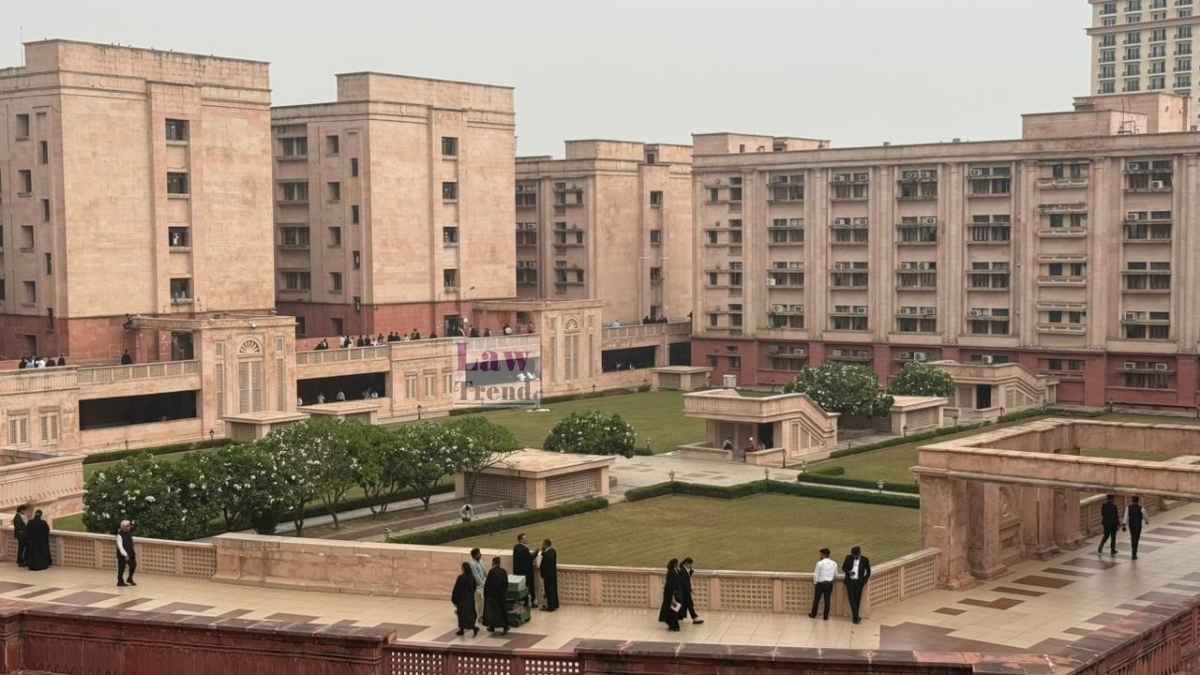
The Lucknow Bench of the High Court of Judicature at Allahabad has set aside the convictions and life sentences of seven individuals accused of murdering a 14-year-old boy in 2013. The court ruled that a criminal conviction cannot rest on mere suspicion, inadmissible custodial confessions, or uncorroborated police recoveries. A division bench comprising Justice Rajesh Singh Chauhan and Justice Abdhesh Kumar Chaudhary allowed the connected criminal appeals, holding that the prosecution failed to establish an unbroken chain of circumstantial evidence to prove the appellants’ guilt beyond reasonable doubt.
Background of the Case
The prosecution’s case originated from an incident on May 29, 2013, at approximately 10:30 PM, when 14-year-old Maaz Ahmad Siddiqui was shot dead inside his aunt Husn Bano’s residence in Faridi Nagar, Lucknow. According to the initial written complaint filed by Husn Bano, three motorcycle-borne assailants forced their way into the house and fired indiscriminately at the minor boy while he was watching television. The complainant initially suspected a local resident named Arif and his family members due to personal enmity.
However, as the police investigation progressed under Investigating Officer Ramesh Chandra Yadav, the initial suspects were exonerated. The police developed a new narrative based on informer tips and custodial confessions, identifying Police Inspector Sanjay Rai as the master conspirator. The prosecution claimed that Rai was emotionally obsessed with the complainant’s daughter, Nida Arsi, and resented her relationship with a neighbour named Akmal. Seeking to eliminate perceived obstacles and falsely frame Akmal for murder, Rai allegedly hired contract killers to execute a member of Nida’s family.
On February 28, 2020, the Trial Court convicted all seven appellants—Sanjay Rai, Rambabu @ Chotu, Ajeet Rai @ Shintu, Sandeep Rai, Rakesh Kumar Soni @ Bablu, Rahul Rai, and Sunil Kumar Saini @ Pahalwan—under various charges including Section 302 read with Section 120-B, Section 449, and Section 34 of the Indian Penal Code (IPC), along with Section 3/25 of the Arms Act.
Arguments of the Parties
The appellants, represented by Senior Advocate I.B. Singh and a team of advocates, contended that the trial court’s judgment was perverse and entirely based on inadmissible, manufactured police records. They pointed out that key eye-witnesses, including the complainant Husn Bano and her son Nadeem Ahmed, turned hostile and flatly denied that the appellants were the assailants. The defense argued that the recoveries of the motorcycles, a Maruti Alto car, and the murder weapon were staged in the absence of independent witnesses. They also highlighted a crucial ballistic discrepancy: while the empty cartridges matched the recovered pistol, the fired bullets retrieved from the scene and the victim’s body did not match the weapon.
Conversely, the Additional Government Advocate, S.P. Singh, representing the State of Uttar Pradesh, argued that the circumstantial evidence was watertight. The state maintained that the recoveries of the vehicles and the 9mm pistol, supported by the Forensic Science Laboratory (FSL) report matching the empty cartridges, formed an unbroken chain of custody. The prosecution also argued that Sanjay Rai’s failure to provide a plausible explanation during his Section 313 CrPC examination regarding the presence of his brother’s Alto car in Varanasi served as an additional incriminating link.
The Court’s Analysis and Observations
The High Court subjected the circumstantial evidence and the investigative process to rigorous scrutiny. Reviewing the legal standards for circumstantial cases, the court referenced the landmark ruling in Sharad Birdhichand Sarda v. State of Maharashtra (1984) 4 SCC 116, highlighting the five golden principles (“Panchsheel”) of proof. The court noted that the prosecution failed to bridge the gap between “may be guilty” and “must be guilty,” quoting the judicial precedent:
“Certainly, it is a primary principle that the accused must be and not merely may be guilty before a court can convict and the mental distance between ‘may be’ and ‘must be’ is long and divides vague conjectures from sure conclusions.“
1. Inadmissibility of Custodial Confessions
The bench strongly criticized the prosecution’s reliance on custodial confessions to link the accused to the conspiracy and the crime. Citing the Supreme Court’s decisions in Haricharan Kurmi v. State of Bihar and Surinder Kumar Khanna v. Directorate of Revenue Intelligence, the court reiterated that confessions made in police custody are not substantive evidence. It observed:
“…the confession of a co-accused person cannot be treated as substantive evidence and can be pressed into service only when the court is inclined to’ accept other evidence and feels the necessity of seeking for an assurance in support of its conclusion deducible, from the said evidence. In criminal trials, there is no scope for applying the principle of moral conviction or grave suspicion.“
2. Flawed and Doubtful Recoveries
The court raised serious concerns about the recoveries of the vehicles and the weapon. The search at Varanasi where the Alto car and the pistol were found was conducted at the house of Dinesh Chandra Saini, who turned hostile and testified that his signatures were taken on blank papers. The court cited Ramanand @ Nandlal Bharti v. State of Uttar Pradesh to highlight that the mandatory procedure of obtaining independent witnesses prior to recording disclosure statements was completely bypassed. Furthermore, the court found contradictions regarding whether the recovery memos were written by the Investigating Officer or a clerk, indicating they may have been prepared at the police station rather than the spots of recovery.
3. Ballistic Discrepancy and Chain of Custody
The bench identified a fatal flaw in the forensic evidence. While the empty cartridges found at the spot matched the recovered 9mm pistol, the actual bullets recovered from the scene and the deceased’s body did not. The court also observed that the prosecution failed to explain an eight-day delay in depositing the recovered pistol to the FSL, raising doubts of tampering.
4. Misuse of the Case Diary and Section 313 Statements
The court held that the Trial Court committed a manifest error by treating statements in the Case Diary (under Section 172 CrPC) as substantive evidence, violating the rule established in Mohd. Ankoos v. High Court of A.P. Additionally, addressing the adverse inference drawn from Sanjay Rai’s silent or inadequate responses during his Section 313 CrPC examination, the court cited Raja Nayak v. State of Chhattisgarh, clarifying that an accused’s silence cannot be used to substitute or complete a broken chain of prosecution evidence.
5. Absence of Motive and Conspiracy
The court dismissed the prosecution’s romantic obsession narrative as “a bogey” and “purely far-fetched,” noting that Nida Arsi denied any relationship with Rai. It concluded that there was no legal evidence to prove a meeting of minds or a prior agreement among the appellants.
Reflecting on the brutal nature of the crime and the pressure on courts to convict, the bench warned against spinning stories out of suspicion, quoting previous jurisprudence:
“…human nature is too willing, when faced with brutal crimes, to spin stories out of strong suspicions… between ‘may be true’ and ‘must be true’ there is a long distance to travel which must be covered by clear, cogent and unimpeachable evidence by the prosecution before an accused is condemned a convict.“
The Decision
The High Court concluded that the prosecution had failed to establish a complete and unbroken chain of custody or link the appellants to the murder of Maaz Ahmad Siddiqui.
Accordingly, the High Court allowed all the connected criminal appeals, set aside the trial court’s judgment dated February 28, 2020, and acquitted all seven appellants. The court ordered their immediate release from custody, provided they are not required in connection with any other case.
Case Details:
- Case Title: Sanjay Rai v. State of U.P.
- Case No.: Criminal Appeal No. 475 of 2020 (with Criminal Appeal Nos. 671, 672, and 673 of 2020)
- Bench: Justice Rajesh Singh Chauhan, Justice Abdhesh Kumar Chaudhary
- Date of Judgment: June 05, 2026