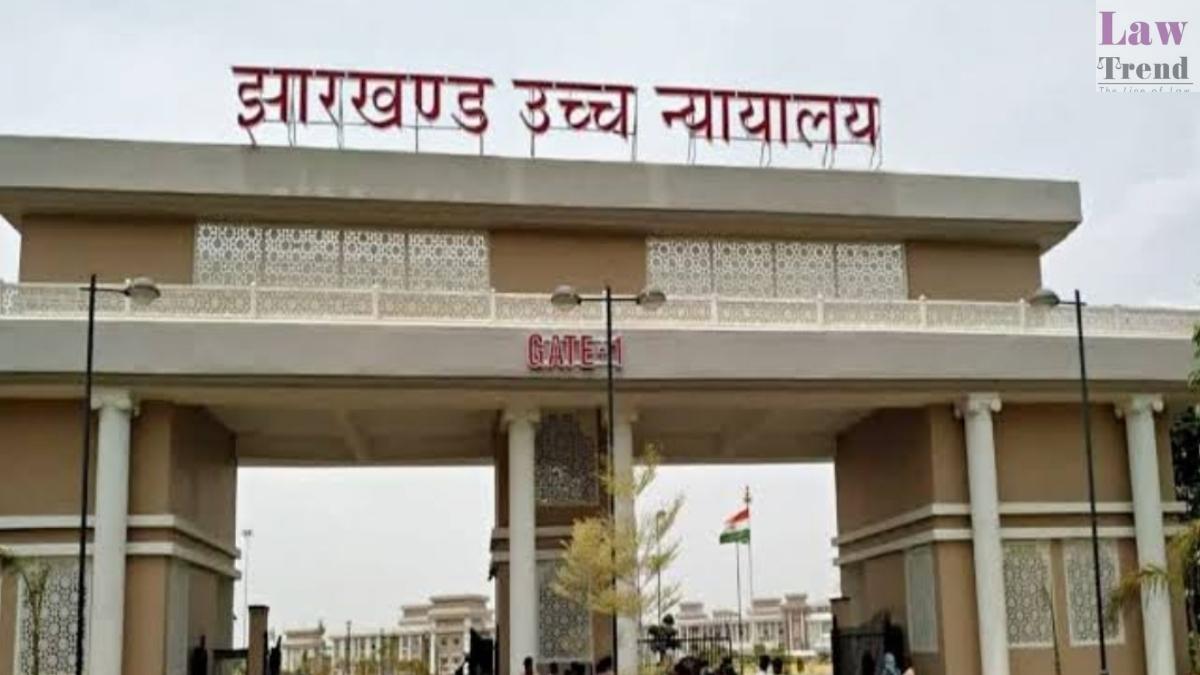
In a significant ruling on public trusts, limitation, and civil procedure, a Division Bench of the High Court of Jharkhand, comprising Chief Justice M. S. Sonak and Justice Rajesh Shankar, dismissed two long-pending Letters Patent Appeals (LPAs) concerning the management and properties of the historic Santal Mission of Northern Churches (SMNC). The High Court affirmed that once the primary grounds for a suit under Section 92 of the Code of Civil Procedure (CPC)—such as breach of trust and removal of trustees—are not established, ancillary declarations against property transfers cannot stand independently, especially when barred by limitation and defective for non-joinder of necessary parties.
Background of the Case
The origin of the legal dispute dates back to 1880, when Rev. Hans Peter Doerresen and Rev. Laurentius Olaves Skrefsrud founded the ‘Indian Home Mission to the Santals’ (later renamed ‘Santal Mission of Northern Churches’ or SMNC) to promote the education and civilization of local inhabitants in the Santal Parganas region. To secure acquired properties, a Trust Deed was executed on April 21, 1880. Following court proceedings in Title Suit No. 01 of 1914, a scheme for trust management was settled and later incorporated into a Supplementary Trust Deed dated December 8, 1920.
Between 1950 and 1959, the mission established several Evangelical Lutheran Churches, which eventually evolved into the “Trust Association of Northern Evangelical Lutheran Church” (NELC), a self-governing entity registered as a company under the Indian Companies Act, 1956 (NELC Pvt Ltd). On February 10, 1968, the then-existing trustees of SMNC executed an Instrument of Transfer under Article 62(e) of the Indian Stamp Act, 1899, introducing NELC Pvt Ltd as a new trustee.
This transfer led to two cross-suits in 1971:
- Title Suit No. 05 of 1971: Filed under Section 92 CPC by beneficiaries (appellants) after obtaining consent from the Advocate General, seeking a scheme for management, removal of existing trustees for alleged misconduct, and a declaration that the Instrument of Transfer dated February 10, 1968, was illegal and void ab initio.
- Title Suit No. 11 of 1971: Filed by NELC Pvt Ltd and its co-trustees seeking a declaration of title, confirmation of possession over mission compounds, and a permanent injunction restraining the defendants (appellants) from interfering with mission properties.
In 1985, the Trial Court partly decreed Title Suit No. 05 of 1971, refusing to remove trustees or frame a scheme, but declaring the transfer deed dated February 10, 1968, illegal and inoperative. In 1986, the Trial Court decreed Title Suit No. 11 of 1971 in favor of NELC Pvt Ltd.
On appeal, a learned Single Judge of the Patna High Court disposed of First Appeal Nos. 564 of 1985 and 197 of 1986 by a common judgment on June 30, 1992, setting aside the decree in Title Suit No. 05 of 1971 and upholding the decree in Title Suit No. 11 of 1971. Following the creation of the State of Jharkhand in November 2000, the LPAs were transferred to the High Court of Jharkhand as LPA No. 79 of 1992 and LPA No. 80 of 1992.
Arguments of the Parties
Appellants’ Submissions: Senior Advocate Rajeeva Sharma, representing the appellants, contended that Title Suit No. 05 of 1971 was fully maintainable under Section 92 CPC as prior consent of the Advocate General had been obtained. He argued that the 1968 transfer deed was collusive, fraudulent, and executed in breach of Sections 47 and 48 of the Indian Trusts Act, 1882, because one of the three trustees had improperly delegated his authority through a Power of Attorney. He further argued that non-joinder of NELC Pvt Ltd was not fatal because all its directors were impleaded as defendants and NELC was already a party in the parallel suit.
Advocate Sudhir Kumar Sharma, arguing on legal points, contended that the Indian Trusts Act applies only to private trusts and that the transfer deed was incompetent under Article 62(e) of the Indian Stamp Act, 1899.
Respondents’ Submissions: Senior Advocate Anil Kumar, appearing for the respondents, submitted that once the Trial Court refused to remove trustees or frame a scheme, the suit under Section 92 CPC could not survive merely for a declaration against the transfer deed. He argued that NELC Pvt Ltd was a distinct legal entity and an indispensable party, without which no decree setting aside the transfer could be passed. Furthermore, he submitted that the cause of action accrued on February 10, 1968, and the suit filed on June 4, 1971, was barred by the three-year limitation period prescribed under Article 58 of the Limitation Act, 1963. He emphasized that the instrument was merely an appointment of a new trustee and not an illegal conveyance of trust properties.
Court’s Analysis and Findings
The High Court evaluated the core legal issues across eight defined points of determination:
1. Scope and Maintainability under Section 92 CPC
The High Court observed that while Title Suit No. 05 of 1971 was initially maintainable based on the plaint’s allegations of breach of trust, the primary reliefs under Section 92 CPC (framing a scheme and removing trustees) were denied by the Trial Court due to lack of proof, a finding that became final as the appellants never filed cross-appeals.
Relying on the Supreme Court judgments in Swami Parmatmanand Sarswati v. Ramji Tripathi (AIR 1974 SC 2141) and R.M. Narayana Chettiar v. N. Lakshmanan Chettiar ((1991) 1 SCC 48), the Bench highlighted:
“It is, therefore, clear that if the allegation of breach of trust is not substantiated or that the plaintiff had not made out a case for any direction by the Court for proper administration of the trust, they very foundation of a suit under the section would fail; and, even if all the other ingredients of a suit under section 92 are made out, if it is clear that the plaintiffs are not suing to vindicate the right of the public but are seeking a declaration of their individual or personal rights of the individual or personal rights of any other person or person in whose they are interested, then the suit would be outside the scope of Section 92.”
2. Bar of Limitation
Addressing the limitation issue, the Court noted that Section 3 of the Limitation Act, 1963, imposes a mandatory duty on courts to dismiss time-barred suits, even if limitation is not pleaded as a defence. The cause of action accrued on February 10, 1968, while the suit was filed on June 4, 1971—beyond the three-year period under Article 58 or Article 113 of the Limitation Act.
Citing Draupadi Devi v. Union of India (AIR 2004 SC 4684), Kamlesh Babu v. Lajpat Rai Sharma ((2008) 12 SCC 577), Lachhmi Sewak Sahu v. Ram Sup Sahu (AIR 1944 PC 24), Rajendra Singh v. Santa Singh ((1973) 2 SCC 705), and Manindra Land and Building Corp. v. Bhutnath Banerjee (AIR 1964 SC 1336), the Bench held that where a suit is barred on the face of the plaintiff’s own pleadings, appellate courts are duty-bound to apply the statutory bar.
3. Non-Joinder of Necessary Party
The High Court held that NELC Pvt Ltd was an indispensable party as it was the transferee in the challenged instrument. Impleading directors in their individual capacity could not substitute the corporate entity. Relying on LIC v. Escorts ((1986) 1 SCC 264) and Dhansingh Prabhu v. Chandrashekhar (2026(1) SCC OnLine 1419), the Bench affirmed that a company has an independent legal personality, and failure to join it was fatal to Title Suit No. 05 of 1971.
4. Pleadings, Transfer Validity, and Trust Delegation
The Court rejected the argument that the First Appellate Court went beyond pleadings, citing Bachhaj Nahar v. Nilima Mandal ((2008) 17 SCC 491) and Bhagwati Prasad v. Shri Chandramaul (AIR 1966 SC 735). On the allegation of violating Sections 47 and 48 of the Indian Trusts Act, 1882, the Bench held that the execution of a power of attorney for a purely ministerial act does not constitute an unlawful delegation of discretionary trust duties. Distinguishing Sheikh Abdul Kayum v. Mulla Alibhai (1962), Princes Fatima Fauzia v. Syeed Ul-Mulk (1979), and Bonnerji v. Sitanath Das (1921), the Court found no invalidity in the 1968 instrument.
5. Juristic Status of a Trust
Regarding maintainability of Title Suit No. 11 of 1971, the Court reaffirmed that a trust is not a juristic person capable of suing in its own name. Citing Sankar Padam Thapa v. Vijaykumar Dineshchandra Agarwal (2025 SCC OnLine SC 2194), the Bench reiterated that a trust acts through its trustees, and suits brought by trustees to protect trust properties are fully competent.
Decision
The High Court held that the First Appellate Court was completely justified in setting aside the Trial Court’s decree in Title Suit No. 05 of 1971 and upholding the decree in Title Suit No. 11 of 1971. Consequently, both Letters Patent Appeals were dismissed with no order as to costs.
Case Title: Dilip David Hansda & Ors. v. Mr. Oddvar Holmedal & Ors. (with connected appeal)
Case No.: L.P.A. No. 79 of 1992 WITH L.P.A. No. 80 of 1992
Bench: Chief Justice M. S. Sonak, Justice Rajesh Shankar
Date: July 23, 2026