

Appellate Court Cannot Remit Matter to Trial Court Solely for Sentencing Upon Reversing Acquittal: Supreme Court
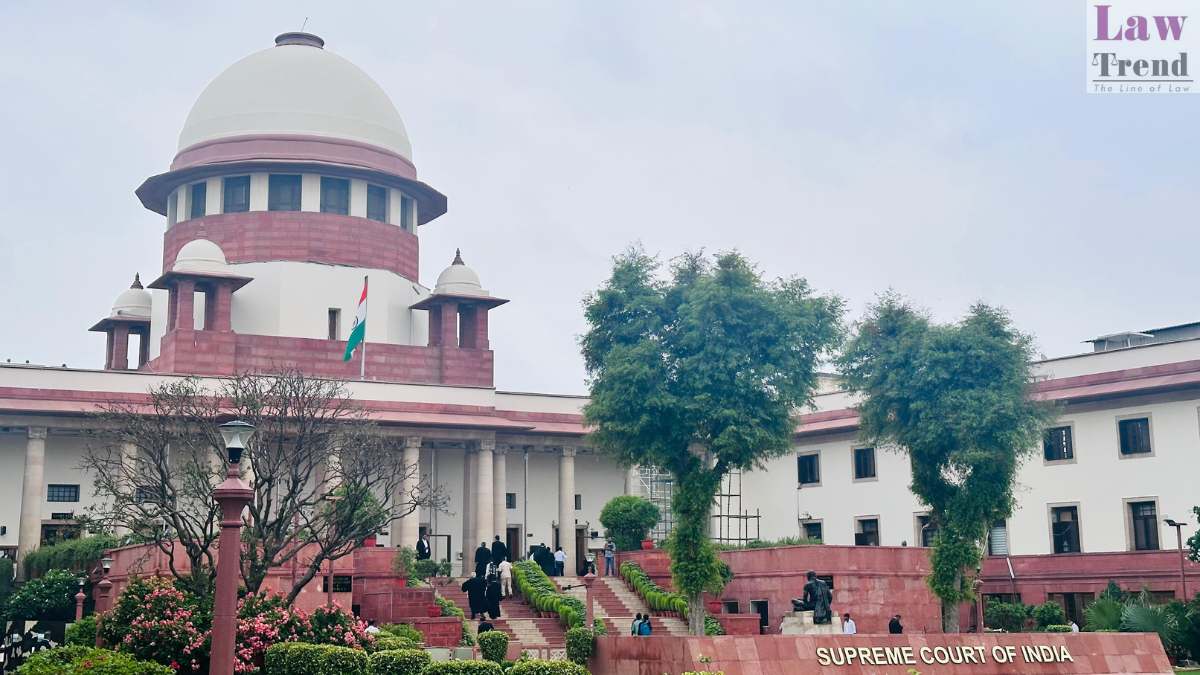
The Supreme Court of India has ruled that when an appellate court reverses an order of acquittal and finds the accused guilty for the first time, it cannot remit the matter to the trial court solely for the purpose of hearing the accused and passing the sentence. A division bench comprising Justice K. V. Viswanathan and Justice Vijay Bishnoi held that under Section 386(a) of the Code of Criminal Procedure, 1973 (Cr.P.C.), the appellate court has a bounden duty to hear the convict on the question of sentence and impose the sentence itself. Setting aside the Calcutta High Court’s direction to the trial court to sentence the appellant, the Supreme Court restored the appeals to the High Court’s file for the limited purpose of hearing the convict on the issue of sentence.

Background of the Case

The appellant, Mukesh Kumar Yadav, stood trial before the learned Sessions Judge, Andaman and Nicobar Islands, for offences punishable under Sections 376, 312, and 417 of the Indian Penal Code, 1860 (IPC) in Sessions Case No. 32/2015. On April 24, 2024, the trial court acquitted the appellant of all charges.

Two appeals were subsequently filed before the High Court at Calcutta (Circuit Bench at Port Blair) challenging the acquittal: one by the State [CRA (DB)/4/2024] and one by the victim [CRA (DB)/6/2024]. By a judgment dated April 23, 2026, the High Court reversed the acquittal, holding the appellant guilty of offences under Sections 376 and 312 IPC.

However, instead of setting a date for sentencing, the High Court directed the appellant to surrender before the Trial Judge by May 22, 2026. It further ordered that, upon his surrender, the Trial Judge should take him into custody, hear him on the point of sentence, and pronounce the sentence. The appellant challenged this procedure before the Supreme Court, which issued notice to the respondents on May 12, 2026, to address the correctness of the procedure.

Arguments of the Parties

The Supreme Court heard Mr. Rauf Rahim, learned senior counsel for the appellant, Mr. Kunal Chatterji, learned counsel for the respondent-victim, and Mr. Mukesh Kumar Verma, learned counsel for the respondent-State.

READ ALSO  Supreme Court Sets February 13 to Hear Godhra Train Burning Case Appeals

The primary issue centered on the legal validity of the High Court’s procedure of relegating the sentencing exercise to the trial court after reversing an acquittal and recording a conviction for the first time on appeal.

Court’s Analysis and Cited Precedents

The Supreme Court began by examining Chapter XVIII of the Cr.P.C., which regulates trials before a Court of Session, specifically focusing on Section 235 (equivalent to Section 258 of the Bharatiya Nagarik Suraksha Sanhita, 2023 [BNSS]). Under Section 235(2) Cr.P.C., if an accused is convicted, the judge must hear the accused on the question of sentence before passing sentence according to law.

The Court referred to Allauddin Mian and Others Sharif Mian and Another v. State of Bihar (1989) 3 SCC 5, which explained that the requirement of a sentencing hearing is intended to satisfy natural justice:

“The requirement of hearing the accused is intended to satisfy the rule of natural justice. It is a fundamental requirement of fair play that the accused who was hitherto concentrating on the prosecution evidence on the question of guilt should, on being found guilty, be asked if he has anything to say or any evidence to tender on the question of sentence.”

The Court also discussed Dagdu and Others v. State of Maharashtra (1977) 3 SCC 68, which held that if a convicting court fails to hear an accused on sentence, a higher court can remedy the breach by providing that hearing itself. Dagdu noted that this procedure “must inevitably happen where the conviction is recorded for the first time by a higher court.”

Addressing the powers of an appellate court, the Supreme Court analyzed Section 386(a) Cr.P.C. (equivalent to Section 427 of the BNSS). Section 386(a) states that in an appeal from an order of acquittal, the appellate court may “reverse such order and direct that further inquiry be made, or that the accused be re-tried or committed for trial, as the case may be, or find him guilty and pass sentence on him according to law.”

The bench highlighted Kumar Exports v. Sharma Carpets (2009) 2 SCC 513, where a Single Judge of the High Court had convicted an appellant and remitted the matter to the magistrate for sentencing. In that case, the Supreme Court explicitly disapproved of the practice, stating:

“This course, adopted by the learned Single Judge, is unknown to law… Those powers do not contemplate that an appellate court, after recording conviction, can remit the matter to the trial court for passing appropriate order of sentence. The judicial function of imposing appropriate sentence can be performed only by the appellate court when it reverses the order of acquittal and not by any other court.”

Applying these principles, the Supreme Court made the following key observations:

“Not only should the appellate court not remand the matter to the trial court only for the purpose of imposing a sentence, after it finds accused guilty, it has a bounden duty to hear and impose an appropriate sentence.”

“The appellate court which will include the High Court, in a given scenario, while recording a conviction after reversing the acquittal, should adjourn the matter to a suitable date, hear the convicts, and impose an appropriate sentence itself.”

The Supreme Court noted that even it has followed this procedure when convicting an accused for the first time, citing Suryamoorthi and Another v. Govindaswamy and Others (1989) 3 SCC 24, where the court adjourned the matter to hear the accused on sentence. Similarly, in Kamalakar Nandram Bhavsar and Others v. State of Maharashtra (2004) 10 SCC 192 (which referenced Santa Singh v. State of Punjab), the Supreme Court directly heard the convicts on the quantum of sentence instead of remitting the case.

READ ALSO  Supreme Court Declines Plea to Mandate Eradication of Superstition and Sorcery

Concluding its statutory analysis, the Court held:

“What is clear from the above discussion is that, a court which convicts the accused for the first time has to hear the accused on sentence. If it is a trial court then Section 235(2), Cr.P.C., will apply. If it is the appellate court which is convicting the accused for the first time after reversing the acquittal, the appellate court has to hear the convict on sentence. The appellate court cannot relegate the matter to the court below only for the purpose of imposing a sentence after the appellate court had recorded a conviction. That will be contrary to Section 386(a), Cr.P.C., and the judgments of this Court.”

Decision of the Court

The Supreme Court held that the Calcutta High Court committed an error in directing the trial judge to pronounce and impose the sentence. Accordingly, the Supreme Court set aside that specific portion of paragraph 108 of the High Court’s judgment.

The Supreme Court remitted the matter to the High Court, restoring appeals CRA (DB)/6/2024 and CRA (DB)/4/2024 to the High Court’s file. The High Court was directed to fix a date for hearing the convict on the issue of sentence, and subsequently impose an appropriate sentence in accordance with law.

READ ALSO  सुप्रीम कोर्ट ने विधायक अब्बास अंसारी के खिलाफ जांच पूरी करने के लिए यूपी पुलिस को 10 दिन की समयसीमा तय की

The Court clarified that the rest of the High Court’s judgment concerning the merits of the conviction was not considered at this stage as it was premature. The Court ruled that post the imposition of the sentence, the appellant would be at liberty to challenge both the conviction and the sentence afresh. Finally, the Court directed the Registrar General of the Calcutta High Court to place the judgment before the Chief Justice of the Calcutta High Court for appropriate action.

Case Details

  • Case Title: Mukesh Kumar Yadav v. The State (UT of Andaman & Nicobar Islands) Etc.
  • Case No.: Criminal Appeal Nos. 2863-2864 of 2026 (Arising out of SLP (Crl.) Nos. 8660-61 of 2026)
  • Bench: Justice K. V. Viswanathan and Justice Vijay Bishnoi
  • Date: May 26, 2026

Law Trend
Law Trendhttps://lawtrend.in/
Legal News Website Providing Latest Judgments of Supreme Court and High Court

Related Articles

Latest Articles
