

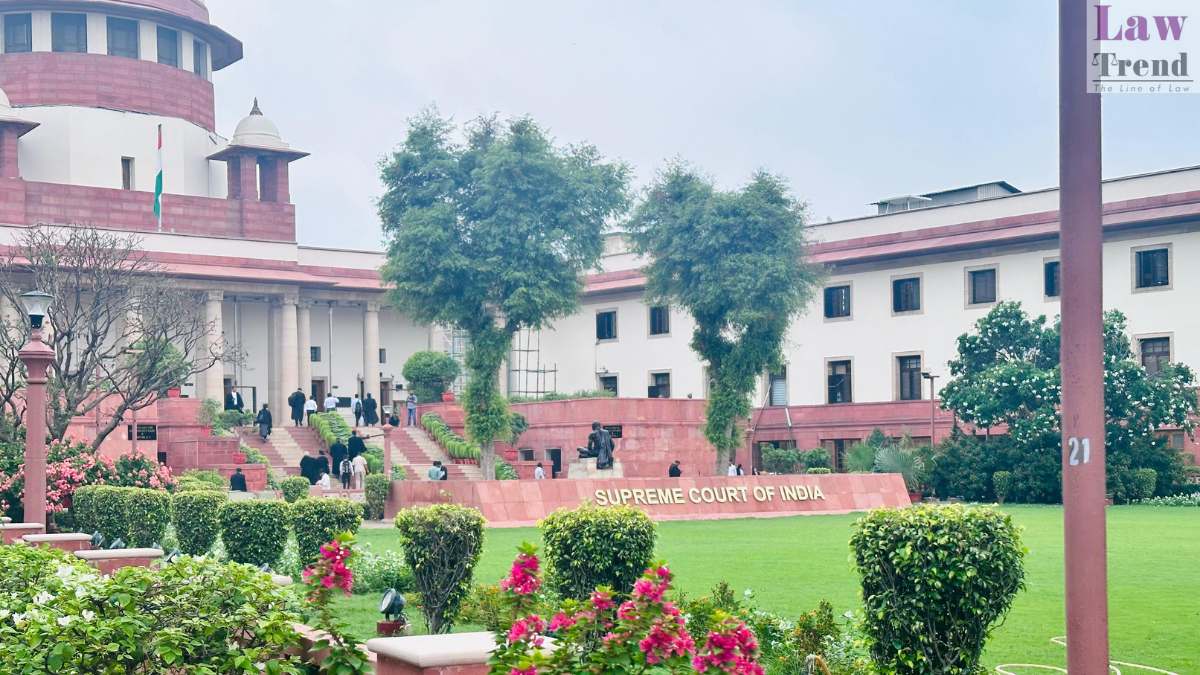
The Supreme Court of India on Tuesday heavily penalized the Rajasthan government for what it termed an “apathetic administrative tendency,” accusing the state of responding to grave ecological threats “only upon direct judicial scrutiny and compulsion.”
The sharp reprimand came during a suo moto hearing concerning rampant illegal mining in the ecologically sensitive Chambal region, which is home to the National Chambal Gharial Sanctuary.
A Supreme Court bench comprising Justice Vikram Nath and Justice Sandeep Mehta expressed deep concern that Rajasthan’s administrative machinery only swung into action after the court threatened to force the personal appearance of senior state officers. Furthermore, the court rejected the state’s proposed 18-to-36-month timeline to establish anti-mining infrastructure, calling it highly undesirable given the “emergent nature” of the environmental crisis.
Judicial Compulsion vs. Responsible Governance
The top court took suo motu cognisance of the illegal mining crisis in March this year, impleading the central Ministry of Environment, Forest and Climate Change alongside the state governments of Rajasthan, Madhya Pradesh, and Uttar Pradesh.
While Rajasthan has recently filed five separate compliance affidavits spanning its Home, Finance, Forest, Transport, and Mines departments—detailing over ₹65 crore in approved funding for IT-enabled monitoring, 118 CCTV cameras, and additional patrol vehicles—the bench was unimpressed by the timing of these measures.
“The chronology emerging from the record prima facie indicates that several crucial decisions relating to surveillance infrastructure, constitution of enforcement mechanisms, operational coordination, seizure protocols and inter-departmental action plans were undertaken only after judicial intervention assumed a more coercive and supervisory character,” the Bench observed on Tuesday.
The judges noted that such a state of affairs reveals a systemic failure, where critical environmental and governance decisions are delayed until the court intervenes, rather than being handled through timely institutional initiative.
A History of ‘Indolence’
This is not the first time the apex court has expressed frustration with Rajasthan’s handling of the Chambal crisis. Just 12 days prior, on May 12, the court drew a sharp contrast between Rajasthan and its neighbors, Madhya Pradesh and Uttar Pradesh, which had already taken active steps.
At that May 12 hearing, the court noted with “serious displeasure” that Rajasthan had failed to file any compliance affidavit despite explicit directives. The Bench previously described the state’s behavior as “wholly casual, indifferent, and indolent” in the face of irreversible environmental degradation and the destruction of protected wildlife habitats.
Additionally, just last month, the Supreme Court stayed a controversial notification issued by the Rajasthan government that sought to de-notify approximately 732 hectares of land belonging to the National Chambal Gharial Sanctuary, citing the severe environmental implications of the move.
Directives and Scale of the Crisis
To curb the ongoing devastation, the Supreme Court on Tuesday issued a directive to Rajasthan, Madhya Pradesh, and Uttar Pradesh to significantly bolster their field-level forest enforcement. The states have been ordered to fill all vacant posts within their respective Forest Departments within one year.
How severe is the mining crisis in Rajasthan’s Chambal districts? Data submitted by the state government itself highlights the staggering scale of illegal operations since 2023:
- Dholpur: 730 FIRs registered, 725 individuals arrested, and 817 vehicles seized.
- Karauli: 52 FIRs registered, 99 individuals arrested, and 77 vehicles seized.
- Kota: 33 FIRs registered, 51 individuals arrested, and 36 vehicles seized.
- Bundi: 13 FIRs registered, 19 individuals arrested, and 14 vehicles seized.
While the high volume of arrests and seizures indicates some level of local enforcement, the Supreme Court’s ruling makes it clear that temporary crackdowns are not enough. The apex court is demanding a rapid, permanent, and proactive structural overhaul to protect one of India’s most vital wildlife sanctuaries from being systematically dismantled by the mining mafia.




