

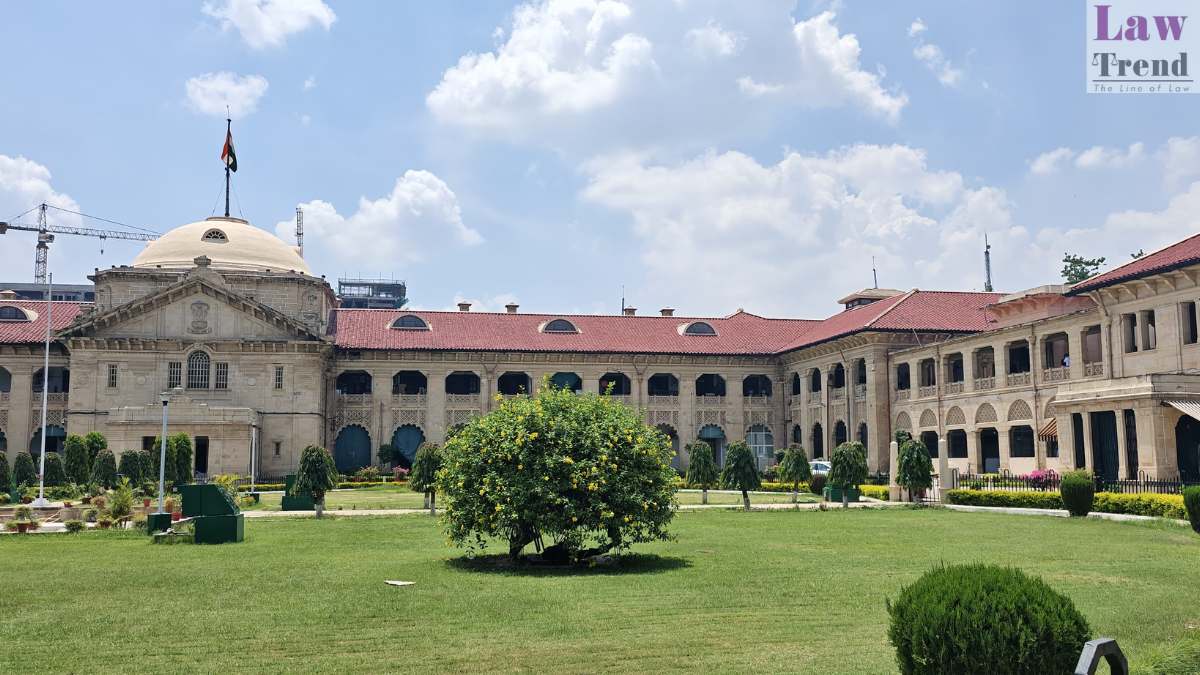
In a major intervention to safeguard India’s cultural legacy, the Allahabad High Court has issued a strict six-week deadline to both the Central and Uttar Pradesh governments to respond to a Public Interest Litigation (PIL) highlighting the crumbling state of thousands of historic monuments across the state.
A two-judge bench comprising Chief Justice Arun Bhansali and Justice Kshitij Shailendra passed the order on Monday, directing key central and state authorities to file their counter-affidavits. The directive comes amid growing alarm that irreplaceable historical landmarks are rapidly deteriorating or vanishing entirely due to systemic neglect.
A Heritage Crisis in Numbers
The PIL, filed by advocate and culture proponent Akash Vashishtha, paints a grim picture of the state’s historical preservation efforts. It seeks urgent protective measures for 5,416 heritage sites scattered across iconic cultural hubs, including Jhansi, Vrindavan, Agra, Lucknow, and Hastinapur.
The legal plea highlights a stark disparity between official records and actual ground-level protection:
- 3,500 sites exist in the official records of the State Archaeology Department but currently receive absolutely no active protection.
- Only 212 sites out of these 3,500 are officially claimed to be protected by the UP State Archaeology Department.
- The remaining thousands of documented structures are reportedly lying in shambles, vulnerable to encroachment and decay.
Call for Immediate Action
During Monday’s hearing, the petitioner’s legal team—led by senior advocate Sanjay Upadhyay alongside counsels Pawan Kumar Tiwari, Eisha Krishn, and Mansi Bachani—pressed the court for immediate, actionable relief.
Upadhyay argued that the Uttar Pradesh government must immediately begin “inventorising” the 3,500 unprotected heritage sites that it already acknowledges in its official records. He urged the bench to issue interim directions to give these structures a fighting chance at survival.
“Priceless heritage structures in Uttar Pradesh are disappearing and turning into shambles,” the PIL warns, stressing that without intervention, generations of history could be permanently lost.
Who is Accountable?
The high court had previously issued notices on March 23, granting various state departments and central ministries eight weeks to respond. With those deadlines lapsed, the court’s latest order places a strict six-week window on a wide net of respondents.
Those ordered to file counter-affidavits include:
- The Union Ministry of Culture
- The Archaeological Survey of India (ASI)
- The National Monuments Authority
- The Union Ministry of Tourism
- The Ministry of Housing and Urban Affairs
- The UP State Archaeology Department
As the six-week clock begins, the upcoming filings will likely force these departments to account for how thousands of historically significant structures were left off active protection lists—and what concrete steps will be taken to salvage Uttar Pradesh’s rapidly decaying history.




