

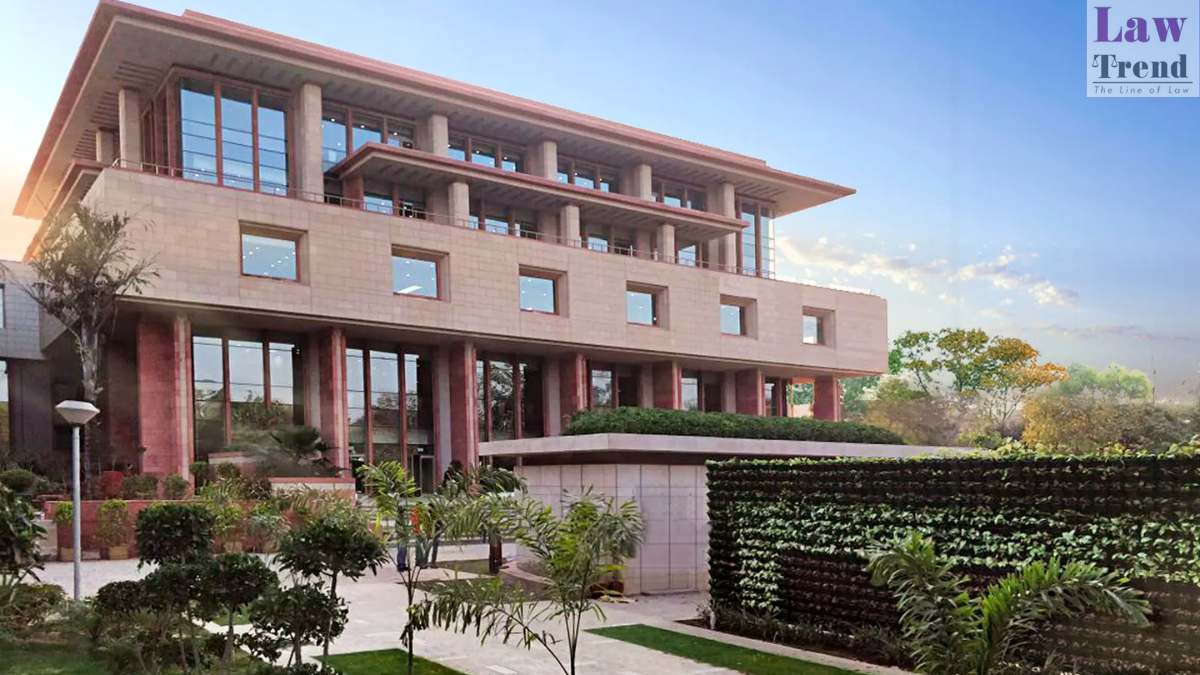
The Delhi High Court has declined to halt the central government’s move to terminate the historic lease of the Delhi Gymkhana Club (DGC), but handed its members a temporary reprieve by recording the Centre’s assurance that it will not take forceful possession of the premier Lutyens’ Delhi property by the upcoming June 5 deadline.
Justice Avneesh Jhingan, presiding over the case on Tuesday, ruled that there was no immediate need for an interim order because the authorities have not yet initiated legal eviction proceedings. Deeming the concerns of the club’s members and staff “premature and presumptive,” the court scheduled the next hearing for the end of July.
Government Pledges “Due Process” Over Prime Lutyens’ Land
The legal battle centers on a 27.3-acre prime land parcel located at 2, Safdarjung Road—an ultra-secure administrative zone situated adjacent to the Prime Minister’s official residence on Lok Kalyan Marg.
On May 22, the Land and Development Office (L&DO), functioning under the Union Housing and Urban Affairs Ministry, issued an order directing the Delhi Gymkhana Club to return the land by June 5. The ministry cited the necessity of “strengthening and securing defence infrastructure” as the ground for reclamation.
Addressing the court on Tuesday, Solicitor General Tushar Mehta, representing the central government, sought to dispel fears of an imminent, aggressive takeover.
“June 5 is the date of which we have given an option to the lessee to vacate on its own,” Mehta submitted. “Unlike the popular belief, which is going rounds in media circles, it is not that the police will rush in and forcible possession will be taken over. It will have to be taken over in accordance with the procedure established by law.”
Mehta added that if eviction proceedings do go forward, they will only begin after serving proper legal notice. He also noted that the government could offer compensation either financially or by providing alternative land.
Members Cry Foul, Labeling Defence Motive a “Sham”
Representing various Gymkhana members, senior advocate Abhishek Singhvi launched a sharp critique of the Centre’s decision to terminate the perpetual lease, which was originally executed nearly a century ago in 1928. Singhvi argued that the termination lacked a genuine “public purpose” and violated Article 300A of the Constitution, which mandates that no person shall be deprived of their property except by authority of law. He further criticized the L&DO order for remaining completely silent on the matter of compensation.
Supporting these arguments, a lawsuit led by Gymkhana member Vijay Khurana and backed by more than 500 other club members accused the government of using “vague and generalized reasons” of national security as a “sham” to bypass due process and force an eviction.
Meanwhile, senior advocate Kapil Sibal, appearing on behalf of the club’s last elected governing body, argued that the club is not an unauthorized occupant. He contended that the government cannot issue a show-cause notice for eviction after it has already declared its re-entry into the premises.
Court Addresses Collusion Fears and Issues Summons
Because the Delhi Gymkhana Club’s daily operations have been managed by 15 government-nominated directors since a 2022 National Company Law Tribunal (NCLT) order regarding alleged mismanagement, members voiced deep concern that the current leadership might act “hand-in-glove” with the Centre and quietly surrender the property.
However, Justice Jhingan dismissed this apprehension, pointing out that the current governing body has already formally written to the authorities to highlight their grievances.
While the High Court opted not to block the termination at this early stage, it issued summons to both the central government and the club’s current management regarding the lawsuits filed by the members, staff, and the last elected committee. The defendants have been given eight weeks to file their written statements.
The court noted that fundamental legal questions—including the plaintiffs’ legal standing (locus standi) to bring these suits and the statutory requirement for prior notice before terminating a lease deed—will be debated and decided at a later stage of the proceedings.
A Century of Elite History
The legal fight marks the latest chapter for an institution deeply woven into the fabric of India’s capital:
- 1913: Founded on July 3 as the “Imperial Delhi Gymkhana Club” to serve colonial administrators and military officers.
- 1928: Perpetual lease for the 27.3-acre Lutyens’ Delhi plot is executed.
- 1930s: The club’s signature existing structures are constructed.
- 1947: The word “Imperial” is officially dropped following India’s Independence.
- 2022: The NCLT permits the government to appoint 15 state nominees to the general committee following allegations of oppression and mismanagement.




