

Preliminary Partition Decree Can Be Executed if It Effectively Determines Rights and Mode of Division: Supreme Court
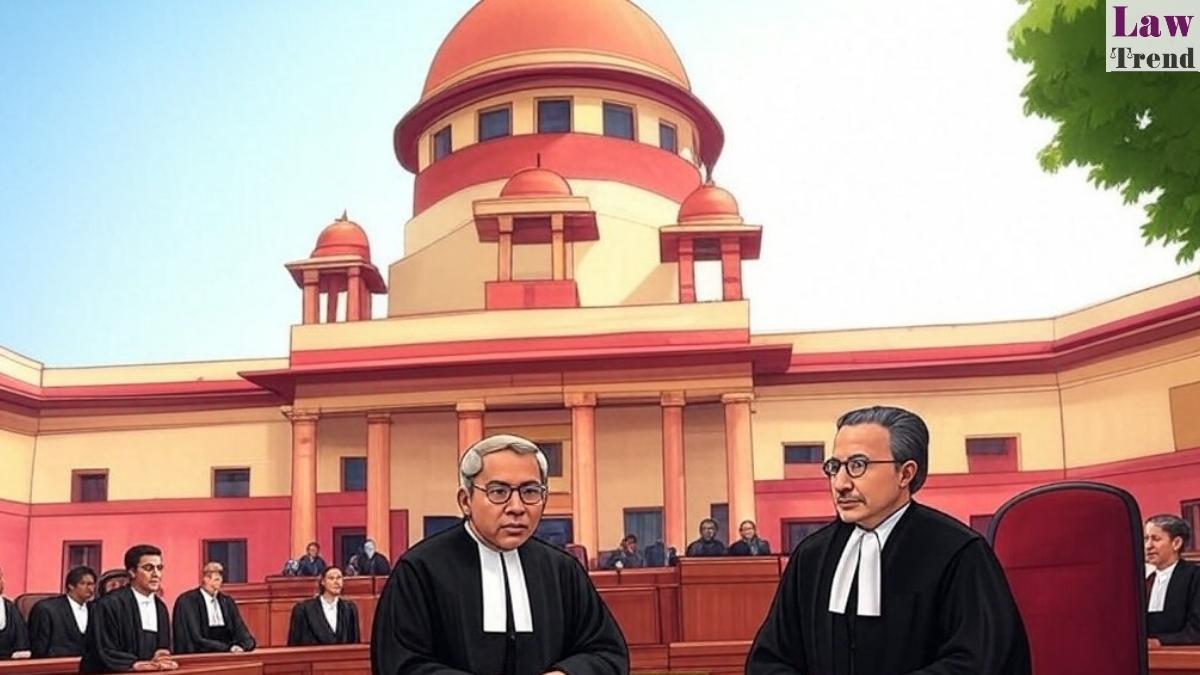

The Supreme Court of India has ruled on whether a partition decree that contains specific mechanisms for a public auction in the event of non-divisibility is directly executable, or whether a separate final decree application must be filed first. The Division Bench of Justice K.V. Viswanathan and Justice S.V.N. Bhatti held that when a decree determines shares, entitlement to possession, mesne profits, and provides a clear default course of action for a sale if physical partition is not possible, it is executable without a separate, redundant final decree application.

Accordingly, the Supreme Court allowed the civil appeals, set aside the orders of the High Court of Madhya Pradesh at Jabalpur which had halted the execution, and restored Execution Case No. EX-A-1600007/14. Keeping in view that the appellant is a septuagenarian, the Court directed the trial court to complete the execution proceedings, including the auction and apportionment of the property, within two months.

Background of the Case

The appellant, Jennifer Messias, married Peter Messias in 1980. In 1991, they purchased Flat No. 101, Amba Apartment, Civil Line, Jabalpur (also described as 101-A in the Advocate Commissioner’s Report) from their combined income. The couple was judicially separated in 2003, which was confirmed by the Supreme Court in 2004. Peter Messias remained in possession of the property.

Following the death of Peter Messias on March 26, 2014, the respondent, Leonard G. Lobo, claimed representation over the deceased’s interest under a registered Will dated March 22, 2014, and remained in possession of the flat.

Prior to this, the appellant had filed Civil Suit No. 7A/2011 for partition and separate possession of the property. On April 13, 2012, the Trial Court passed a decree (referred to as a Preliminary Decree) with the following key terms:

  • It declared the plaintiff was entitled to partition of Flat No. 101, Amba Apartment, Civil Lines, Jabalpur and to obtain possession of her one-half share.
  • It awarded the plaintiff mesne profits of Rs. 1,500/- per month in lieu of rent from the date of filing the suit until she took possession of her share.
  • It appointed an Advocate Commissioner to partition the property.
  • It directed that if the Commissioner found partition could not be made equally without prejudice to the parties’ rights and interests, the Commissioner should report the amount of compensation.

The subsequent litigation was described by the Supreme Court as a “Comedy of Errors.” The appellant initially filed an execution application to enforce the April 13, 2012 decree, which was dismissed on August 7, 2013. The appellant then filed an application under Order XX Rule 18 of the Code of Civil Procedure, 1908 (CPC), registered as Execution No. EX-A-1600007/14.

After Peter Messias died in 2014, the respondent was impleaded as his legal representative in the execution petition on July 15, 2015. Although the respondent challenged this impleadment, the High Court on May 13, 2016, dismissed Civil Revision No. 47 of 2016. However, the High Court directed that the appellant’s application under Order XX Rule 18 of the CPC be treated as an Interlocutory Application within the pending civil suit rather than a separate execution proceeding.

READ ALSO  Supreme Court Expresses Distress Over Chhattisgarh Burial Dispute

Thereafter, the Execution Court appointed an Advocate Commissioner, whose report dated April 17, 2019, concluded that the flat was too small to be physically partitioned by metes and bounds. Consequently, on July 5, 2019, the Executing Court ordered a public auction of the property. The respondent challenged this step, and on September 24, 2019, the High Court in Miscellaneous Petition No. 4893 of 2019 set aside the auction order, directing the trial court to first draw up a “final decree” considering the Commissioner’s report under Order 26 Rule 14 and Order 20 Rule 18(2) of the CPC.

In compliance, the Executing Court initiated a bidding process between the parties to allow for pre-emptive rights. The respondent offered Rs. 12,81,181/- for the appellant’s share, while the appellant submitted a higher sealed bid of Rs. 13,60,000/- to purchase the respondent’s share. Before this bidding process was finalized, the respondent moved the High Court via Miscellaneous Petition No. 2005 of 2022 to halt the execution.

On July 27, 2023, the High Court accepted the respondent’s plea, setting aside the execution proceedings. The High Court ruled that a preliminary decree cannot be executed directly, stating that the existence of a final decree is sine qua non for execution. It gave the appellant liberty to file a fresh application before the trial court for a final decree. The appellant’s review petition was dismissed on March 20, 2025. Smt. Jennifer Messias then approached the Supreme Court.

Arguments of the Parties

For the Appellant (Smt. Jennifer Messias): Advocate Abhishek Gulatee argued that the High Court’s orders dated July 27, 2023, and March 20, 2025, failed to properly appreciate the previous orders passed by the Executing Court on July 5, 2019, and the High Court on September 24, 2019. He submitted that the High Court erred by focusing entirely on the “nomenclature” of the April 13, 2012 decree.

Gulatee argued that since the Advocate Commissioner’s report dated April 17, 2019, clearly stated that the flat could not be partitioned by metes and bounds, the preliminary decree had effectively become final. He asserted that a public auction was the only practical solution and that requiring a fresh application under Order XX Rule 18(2) of the CPC was not a meaningful procedural step but a purely “academic pursuit.”

For the Respondent (Leonard G. Lobo): Advocate Siddharth R. Gupta contended that the April 13, 2012 decree was a “pure and simple Preliminary Decree.” He argued that as a matter of law, a preliminary decree is not executable because it only declares the rights of the parties, whereas an executable decree only comes into existence once a final decree is drawn.

READ ALSO  Supreme Court Quashes Bail for Two in Public Exam Fraud Case

Gupta argued that there is a strict, well-established legal distinction between preliminary and final decrees, meaning the High Court acted within its jurisdiction. Furthermore, he argued that the execution proceedings were unmaintainable, previous orders had attained finality, and the appellant was not entitled to mesne profits because she was responsible for the delays.

Court’s Analysis of the Law and Decree

The Supreme Court analyzed the statutory framework of Section 2(2) of the CPC, which defines a “decree” and outlines that a decree is preliminary when further proceedings must be taken before the suit is fully disposed of, and final when it completely disposes of the suit. It may also be partly preliminary and partly final. The Court also examined Order XX Rule 12 (mesne profits) and Order XX Rule 18 (partition suits) of the CPC.

The Court reviewed several key precedents:

  1. Shankar Balwant Lokhande v. Chandrakant Shankar Lokhande (1995) 3 SCC 413: Wherein it was established that a preliminary decree in a partition action is a declaration of the parties’ rights and shares, while the final decree specifies the division by metes and bounds.
  2. Bimal Kumar v. Shakuntala Debi (2012) 3 SCC 548: Wherein it was settled that a decree may be partly preliminary and partly final, and what is executable is a final decree “unless and until the final decree is a part of the preliminary decree.”
  3. Rachakonda Venkat Rao v. R. Satya Bai (2003) 7 SCC 452: Clarifying that a decree can be both preliminary and final in a given case.
  4. Kattukandi Edathil Krishnan v. Kattukandi Edathil Valsan (2022) 16 SCC 71: Wherein the Court held that once a preliminary decree is passed, the trial court should proceed with drawing up the final decree suo motu without requiring the parties to initiate separate proceedings.
  5. Hasham Abbas Sayyad v. Usman Abbas Sayyad (2007) 2 SCC 355: Confirming that final decree proceedings can be initiated at any point.

The Supreme Court emphasized that the nature of the decree is determined not by external authorities, but by the decree itself. The Bench stated:

“Therefore, the crux of the consideration is whether the Decree dated 13.04.2012 is a simple Preliminary Decree, or whether the Trial Court, in its wisdom, has made it both a Preliminary and a Final Decree. This is determined not by Authorities but by the very Decree.”

Evaluating the April 13, 2012 decree, the Court found that it comprehensively determined the parties’ 50% shares, the appellant’s entitlement to possession, a fixed monthly mesne profit of Rs. 1,500/-, and directed a public sale of the property if it could not be physically partitioned.

The Bench observed:

“We take note of the Trial Court’s foresight in incorporating a condition for the appointment of an Advocate Commissioner and the course to be followed if a Final Decree by metes and bounds could not be passed.”

READ ALSO  सुप्रीम कोर्ट ने उत्तराखंड को हल्द्वानी निवासियों के लिए पुनर्वास योजना विकसित करने के लिए दो महीने का समय दिया

The Supreme Court criticized the High Court’s formalistic approach:

“The High Court has proceeded by the nomenclature of the Decree without appreciating that, in certain circumstances, an Order made under Sections 2 to 4 of the Partition Act is also a deemed Decree within the meaning of Section 2(2) of the CPC.”

The Bench further pointed out that the High Court’s order directing the appellant to file a separate application for a final decree ran contrary to the very precedent it cited (Kattukandi Edathil Krishnan), which states that separate final decree proceedings are unnecessary. The Court called this “another error or Comedy of Errors” and noted:

“The Decree dated 13.04.2012, for all purposes, determined the entitlement or right to possession, mesne profits, and the first option regarding the mode and manner of working out the shares, in the event of default in the sale of the Subject Matter. The direction to file a fresh application after the passing of a Final Decree is completely unwanted.”

The Bench referenced the well-known adage that “the difficulties of a litigant in India begin when he has obtained a decree” and concluded:

“The termination of Execution Proceedings No. EX-A-1600007/14 amounts to an illegal exercise of jurisdiction and is set aside.”

Supreme Court’s Decision

The Supreme Court allowed the civil appeals with no order as to costs. The Court set aside the High Court’s orders dated July 27, 2023, and March 20, 2025, and issued the following directions:

  1. Execution Case No. EX-A-1600007/14 is restored to the file.
  2. The trial court is directed to entrust the warrant to the same Advocate Commissioner who authored the April 17, 2019 report, or appoint a new one if that is not possible, to conduct the public auction of the property.
  3. The sale proceeds will be apportioned between the parties, and the trial court must calculate and account for the appellant’s mesne profits, disbursing the remaining balance to the respondent.
  4. Both the appellant and the respondent are permitted to bid alongside external participants in the auction.
  5. In light of the fact that the appellant is a septuagenarian, the trial court is directed to complete all proceedings within two months of receiving the Supreme Court’s order.

Case Details

  • Case Title: Jennifer Messias v. Leonard G. Lobo
  • Case No.: Civil Appeal Nos. 7980-7981 of 2026 (Arising out of Special Leave Petition (Civil) Nos. 8716-8717 of 2026)
  • Bench: Justice K.V. Viswanathan and Justice S.V.N. Bhatti
  • Date: May 18, 2026

Law Trend
Law Trendhttps://lawtrend.in/
Legal News Website Providing Latest Judgments of Supreme Court and High Court

Related Articles

Latest Articles

