

Delayed Death Registration Mandatorily Requires SDM Order; Bypassing Statutory Route ‘Would Amount To Extinguishing The Existence Of A Person’: Allahabad HC
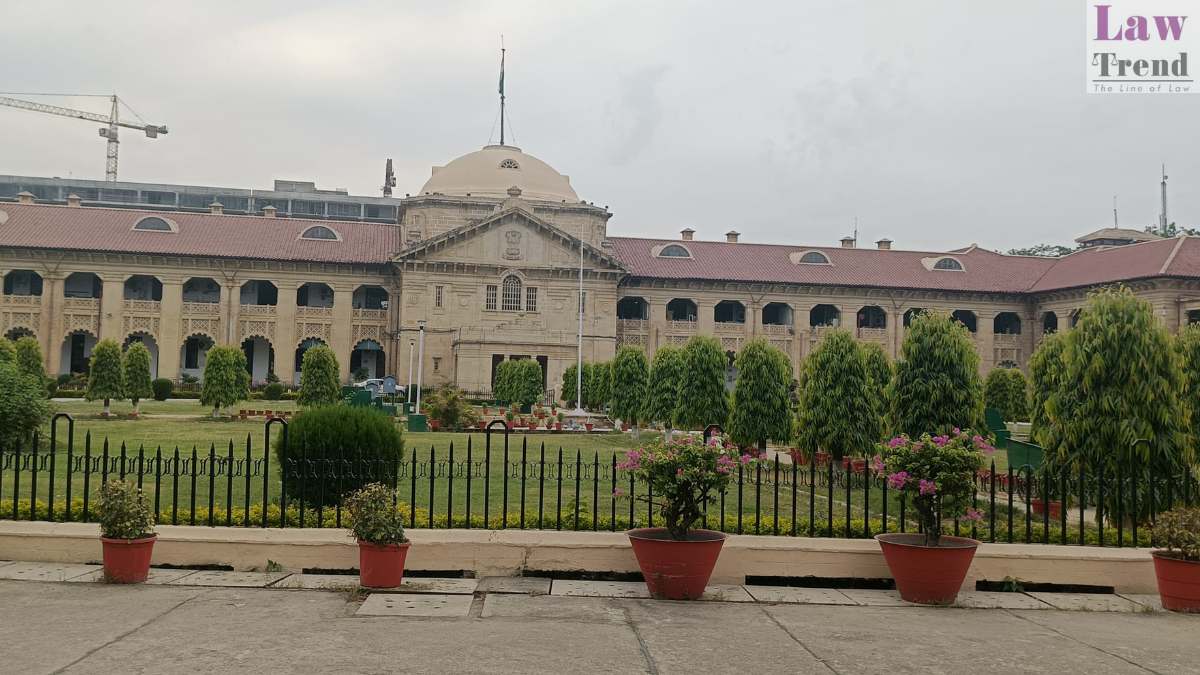

The High Court of Judicature at Allahabad has dismissed a writ petition seeking a mandamus to command the Registrar (Birth-Death), Nagar Nigam, Varanasi to issue a death certificate without obtaining a mandatory statutory order from the Sub-Divisional Magistrate (SDM) for delayed registration. The Division Bench, consisting of Justice Atul Sreedharan and Justice Vivek Saran, held that bypassing the statutory remedy to issue a death certificate straight away would undermine the purpose of the Registration of Births and Deaths Act, 1969.

Background of the Case

The petitioner, Naval Kishore Srivastava, married Smt. Madhuri Srivastava in the year 1962. According to the petitioner, she left him in the same year to reside at her maternal house in Bareilly, where she gave birth to a male child named Kamal Kishore Srivastava (also referred to as Kamal Krishna Srivastava). The petitioner filed a divorce suit in 1970, which was rejected, and a subsequent appeal was dismissed in 1974. Although they were never in touch, the petitioner, in compliance with a court order, contributed half of his salary to her from 1975 to 1985.

The petitioner took voluntary retirement from the Indian Air Force as a Squadron Leader on May 5, 1985, after which no pension contribution was provided to Madhuri Srivastava. According to the petitioner, Madhuri Srivastava passed away on January 25, 2001, while residing at her parent’s house at Ram Nagar, Varanasi.

In 2001, the petitioner married Smt. Meera Srivastava. However, her name was not entered into his service records, which continued to display the name of his first wife, Madhuri Srivastava. In 2011, the petitioner applied to delete Madhuri Srivastava’s name and substitute Meera’s name. In 2016, upon attaining 80 years of age, the petitioner disclosed the name of his spouse as Meena Srivastava (also referred to as Meera Srivastava) in a pension-related form. In response, on March 30, 2016, the Directorate of Air Veterans, Air HQ (SP), New Delhi, directed the petitioner to furnish family details, including a copy of the marriage certificate and death certificate of his first wife, or a court order granting a divorce.

Since the petitioner was out of touch with his first wife and son, he did not possess any document verifying her death. His efforts to get her medical treatment records from the Chief Medical Superintendent, Lal Bahadur Shastri Hospital, Varanasi, in March 2025, and contact with his son yielded no results. Eventually, on March 17, 2025, the petitioner procured a death certificate from the local Parshad (Councilor) of Ward No. 65, Purana Ram Nagar, Nagar Nigam, Varanasi, certifying the date of death as January 25, 2001. On the same date, he moved an application before the Sub-Divisional Magistrate (SDM) Sadar, Varanasi, and applied to Nagar Nigam, Varanasi, for the issuance of a death certificate.

READ ALSO  राजनीति में शुचिता समय की मांग: इलाहाबाद हाई कोर्ट ने धनंजय सिंह की सजा पर रोक लगाने से इनकार कर दिया

Following the application, the Zonal Officer of Nagar Nigam requested certain documents, which the petitioner did not provide. The petitioner did not disclose the outcome of his application pending before the SDM and filed the present writ petition before the High Court.

Arguments of the Parties

The learned counsel for the petitioner, Sri Rajesh Kumar Srivastava, argued that because the local Councilor/Sabhasad certified the date of death of Madhuri Srivastava, the High Court should issue a direction to the Registrar for the issuance of the official death certificate.

On the other hand, the learned counsel representing the Nagar Nigam (Sri Abhishek Kumar Yadav) and the learned Standing Counsel representing the State argued that a death certificate can only be issued in accordance with the Registration of Births and Deaths Act, 1969, and the Uttar Pradesh Registration of Births and Deaths Rules, 2002. They submitted that under these statutory provisions, any delayed registration of death beyond a period of one year must be carried out only upon receiving an order from the concerned Sub-Divisional Magistrate. They pointed out that while the petitioner had approached the SDM on March 17, 2025, the outcome of those proceedings was not disclosed in the petition, leading to a presumption of its pendency. They further argued that because the petitioner failed to fulfill the statutory requirements and provide requested documents to the Zonal Officer, no mandamus could be granted.

Court’s Analysis

The court reviewed the statutory framework governing the registration of deaths. It analyzed Section 13 of the Registration of Births and Deaths Act, 1969, which governs the “delayed registration of births and deaths.” Section 13(3) of the Act mandates:

READ ALSO  One Cannot Apply One Bail Order to All the Other Subsequent Cases: SC

“Any birth or death which has not been registered within one year of its occurrence, shall be registered only on an order made by a magistrate of the first class or a Presidency Magistrate after verifying the correctness of the birth or death and on payment of the prescribed fee.”

The court also examined Rule 9 of the Uttar Pradesh Registration of Births and Deaths Rules, 2002, which prescribes the authority for delayed registration. Rule 9(3) stipulates:

“Any birth or death which has not been registered within one year of its occurrence, shall be registered only on an order of Sub-Divisional Magistrate and on payment of late fee of rupees ten.”

Applying these provisions, the Court observed that under Rule 9(3), it is mandatory for a person to obtain an order from the concerned Sub-Divisional Magistrate for the delayed registration of death if it has not been registered within a year. Since the petitioner did not disclose the outcome of his application submitted to the SDM Sadar, Varanasi on March 17, 2025, the Court drew the presumption that there was no existing order from the SDM authorizing the registration of Madhuri Srivastava’s death.

The Bench further clarified that the certificate issued by Raj Kumar Yadav (Parshad, Ward No. 65) and the self-declaration of the petitioner were “of no consequence,” as only the Sub-Divisional Magistrate is empowered under the Act to pass such an order.

The Court noted that the Hon’ble Supreme Court had already dismissed the petitioner’s Writ Petition (Civil) No. 807 of 2025 on September 22, 2025, while granting him the liberty to approach the appropriate forum. Addressing the petitioner’s request for a direct mandate, the Court observed:

READ ALSO  Balancing Free Speech and Reputation: Calcutta High Court Grants Injunction in Defamation Case

“As the petitioner had approached the Sub-Divisional Magistrate concerned under Section 13 of the Act, any direction straight away to the Registrar for issuance of death certificate of late Madhuri Srivastava would be amounting to circumventing the statutory requirement which would be defeating the purpose of the Act in procuring relevant documents of death of late Madhuri Srivastava.”

The Bench also made it clear that “any inability or inconvenience of the petitioner as submitted by learned counsel for the petitioner can also not be any ground for bypassing the statutory remedy.”

Emphasizing the serious consequences of bypassing the legal procedure, the High Court observed:

“It is also to be kept in mind that in absence of any evidence of death of Madhuri Srivastava any direction to the Registrar straight away would be amounting to extinguishing the existence of a person.”

Decision

Concluding that the petitioner failed to fulfill the statutory requirements for the issuance of a death certificate, the High Court held the petition to be misconceived. The Division Bench dismissed the writ petition, noting that the petitioner may continue to pursue the statutory recourse he had already initiated before the concerned Sub-Divisional Magistrate. No order as to costs was passed.

Case Details:

  • Case Title: Naval Kishore Srivastava Versus State of U.P. and 6 others
  • Case No.: WRITC No. 13812 of 2026
  • Bench: Justice Atul Sreedharan and Justice Vivek Saran
  • Date: May 15, 2026

Law Trend
Law Trendhttps://lawtrend.in/
Legal News Website Providing Latest Judgments of Supreme Court and High Court

Related Articles

Latest Articles

