

Conviction Can Rest on Testimony of Solitary Reliable Witness Even if Other Witnesses Turn Hostile: Supreme Court Upholds Murder Conviction
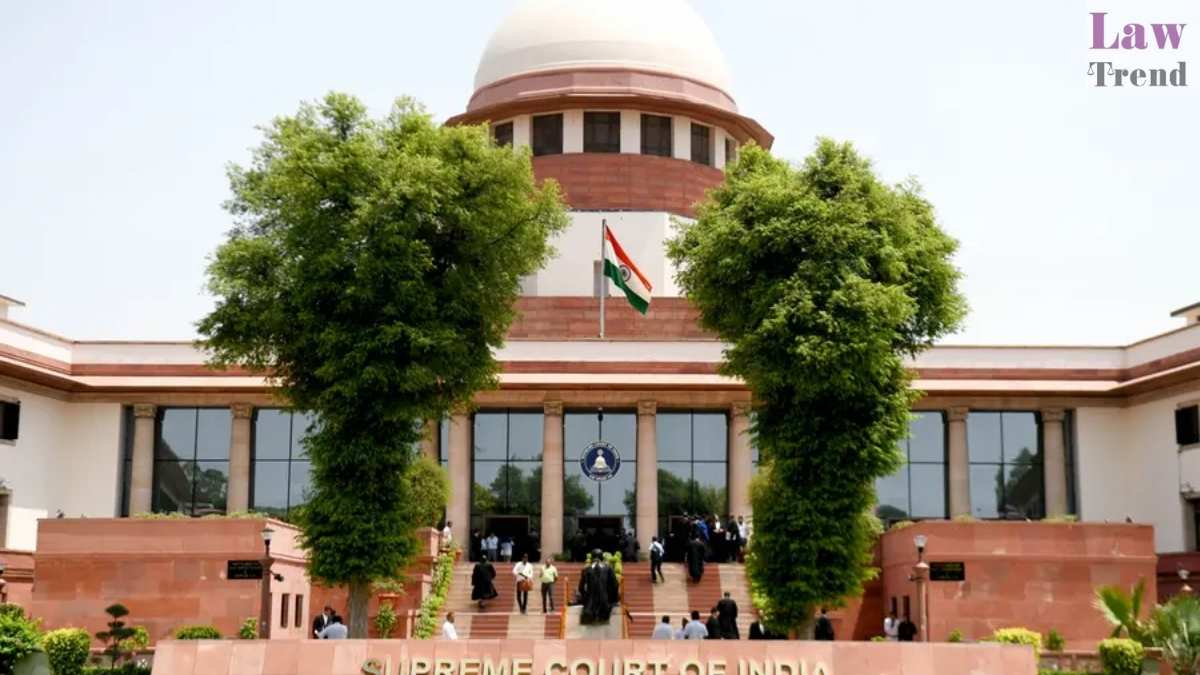

The Supreme Court of India has dismissed a criminal appeal filed by Mitesh @ T.V. Vaghela, reaffirming his conviction for a 1998 murder. The Bench, comprising Justice Aravind Kumar and Justice Prasanna B. Varale, emphasized that the quality of evidence is the primary determinant in criminal trials, holding that the testimony of a solitary reliable witness is sufficient to sustain a conviction even when other witnesses resile from their statements.

The core legal issue centered on whether a conviction could be upheld based on the testimony of a single eyewitness (PW-12) and oral dying declarations made to the deceased’s brother (PW-1), given that most other material and “panch” witnesses had turned hostile. The Court examined the sustainability of the concurrent findings of the Trial Court and the High Court of Gujarat under these circumstances.

Background of the Case

The case originated from a dispute on December 11, 1998, in Ahmedabad. The deceased, Somabhai Sankabhai Rabari, a tea stall owner, had a quarrel with the appellant, Mitesh, after the latter threw a half-burnt cigarette into a bucket used for washing cups. The deceased reported to his brother, Ishwarbhai (PW-1), that Mitesh had threatened him.

The following morning, on December 12, 1998, Somabhai was found brutally assaulted near his stall. PW-1 reached the spot and testified that the deceased identified Mitesh as the assailant. The deceased repeated this statement while being rushed to the hospital in an auto-rickshaw but was declared dead upon arrival. The Trial Court convicted the appellant on October 18, 2000, under Section 302 of the IPC and Section 135 of the Bombay Police Act, a decision later affirmed by the High Court.

Arguments of the Parties

Counsel for the appellant, K. Sarada Devi, contended that:

  • Most eyewitnesses and panch witnesses turned hostile, breaking the chain of evidence.
  • Medical evidence indicated the deceased was unconscious and could not have made oral dying declarations.
  • The conduct of the sole supporting eyewitness (PW-12) was “unnatural” as he did not immediately take the injured to the hospital.
  • There were material contradictions regarding the number of injuries and the recovery of the weapon.
READ ALSO  Allahabad HC Stays Release of Al Jazeera's Documentary "India: Who Lit the Fuse"

The State, represented by Ms. Swati Ghildiyal, argued that the testimonies of PW-1 and PW-12 were of “sterling quality” and remained unshaken despite rigorous cross-examination, thus proving the case beyond reasonable doubt.

The Court’s Analysis

The Supreme Court conducted an independent re-appreciation of the evidence, focusing on motive, mens rea, and actus reus.

1. On Motive and Mens Rea The Court found that the prior night’s quarrel over a cigarette provided a clear motive. It observed: “The proximity of time between the quarrel and the occurrence, coupled with the prior threat, clearly establishes the motive as well as the mens rea attributable to the appellant.”

2. On Oral Dying Declarations Rejecting the defense’s argument regarding the deceased’s state of mind, the Court noted that the declarations were made spontaneously to a brother (PW-1). It stated:

“It is well settled by a catena of decisions of this Court that a truthful and voluntary dying declaration, if found to be reliable, can by itself form the sole basis of conviction without the necessity of corroboration.”

3. On the Solitary Reliable Witness The Court addressed the impact of hostile witnesses by highlighting the evidentiary value of PW-12, a rickshaw driver. Citing its previous ruling in Namdeo v. State of Maharashtra, the Court held:

READ ALSO  Bombay HC Rules: Entire Managing Committee Of Registered Society Responsible For Granting Loan To A Fraud, Not Just Signing Authority

“Our legal system has always laid emphasis on value, weight and quality of evidence rather than on quantity, multiplicity or plurality of witnesses. It is, therefore, open to a competent court to fully and completely rely on a solitary witness and record conviction.”

The Court found PW-12’s testimony to be “cogent, complete and of a sterling quality,” noting that his account of seeing the appellant inflict the knife blow was natural and consistent.

READ ALSO  Unsubstantiated Allegations on Character of Husband is Cruelty by Wife, Rules Delhi HC

Decision

Finding no infirmity in the judgments of the lower courts, the Supreme Court dismissed the appeal. However, noting that the appellant had undergone a substantial part of his sentence, the Court granted him liberty to move an application for remission under the extant policy, directing that such an application be disposed of expeditiously.

Case Title: Mitesh @ T.V. Vaghela v. The State of Gujarat
Case No.: Criminal Appeal No. 212/2012
Bench: Justice Aravind Kumar, Justice Prasanna B. Varale
Date: May 11, 2026

Law Trend
Law Trendhttps://lawtrend.in/
Legal News Website Providing Latest Judgments of Supreme Court and High Court

Related Articles

Latest Articles

