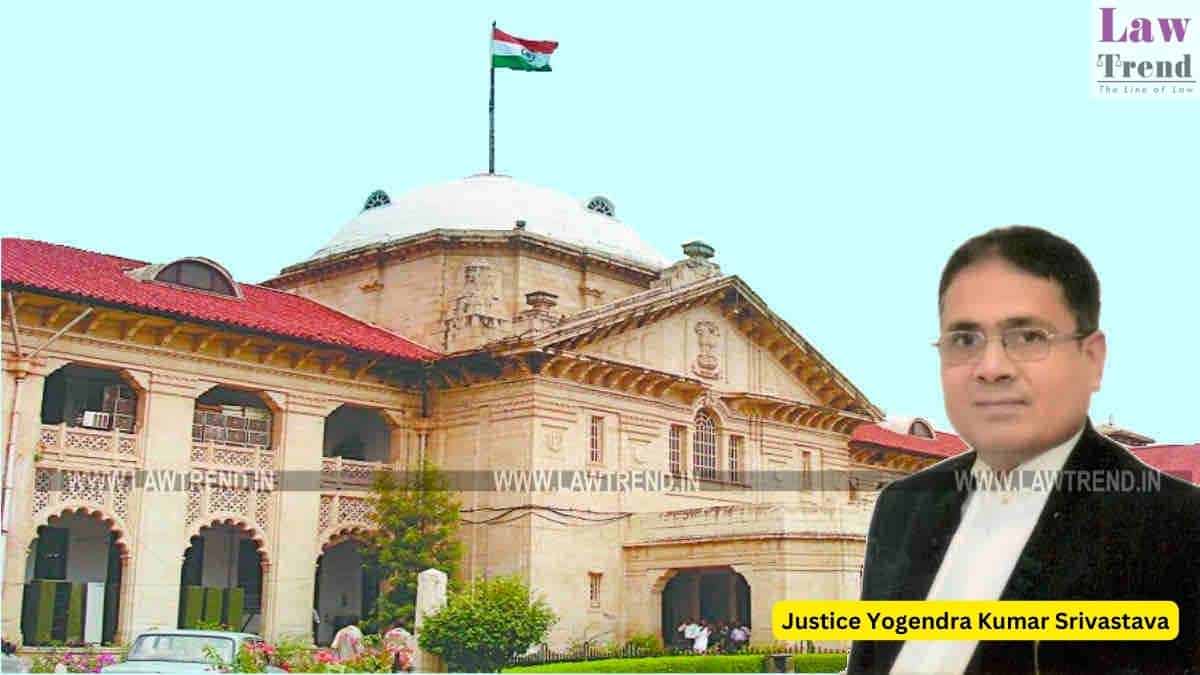
The High Court of Judicature at Allahabad has dismissed a petition seeking to quash rent proceedings where a deceased person was initially impleaded as a respondent. The High Court observed that procedural defects, if occasioned by a bona fide mistake and subsequently corrected, should not defeat an adjudication on the merits of the case.
The petition, filed under Article 227 of the Constitution of India, challenged orders passed by the Rent Authority and the Rent Tribunal which permitted the substitution of legal heirs of a deceased respondent, Divendra Kumar Saigal. The petitioners contended that since the respondent was already dead when the case was filed, the proceedings were non-existent (non est). Justice Yogendra Kumar Srivastava rejected this argument, holding that procedural rules must advance justice rather than thwart it, especially when no prejudice is shown to the opposite party. The petition was dismissed for lack of merit.
Background of the Case
The matter originated from Rent Case No. 376 of 2025 (Gaurav Shukla and others vs. Divendra Kumar Saigal and others) filed under Section 4(3) of the U.P. Act No. 16 of 2021. The landlords (respondents) impleaded Divendra Kumar Saigal, unaware that he had already passed away at the time of filing.
Upon discovering the death, the landlords moved an application for substitution to bring his legal heirs on record. On September 10, 2025, the Rent Authority allowed the substitution. This order was subsequently upheld on December 20, 2025, by the Rent Tribunal in Rent Appeal No. 225 of 2025, which viewed the correction as a routine amendment to the array of parties.
Arguments of the Parties
Counsel for the Petitioners: Sri Prateek Sinha, appearing for the petitioners, argued that initiating proceedings against a dead person is a fundamental flaw. He contended that the legal heirs could only be brought on record through a fresh “impleadment” and not through “substitution,” asserting that the proceedings were void from the start.
Counsel for the Respondents: Sri Jitendra Pratap Singh, representing the landlords, submitted that the error was a “bona fide mistake” and a result of a “misconception.” He pointed out that other joint tenants were already parties to the proceedings and that the legal heirs had been brought on record in the interest of justice without causing any prejudice to the defense.
The Court’s Analysis
The High Court noted that other joint tenants were already part of the proceedings and that it is not strictly mandatory to implead every single joint tenant in eviction suits. The Court emphasized that procedural nomenclature should not be used to defeat substantive rights.
Justice Srivastava observed:
“The law is well settled that procedural rules are intended to advance the cause of justice and not to thwart it. Procedure is the handmaid of justice and cannot be permitted to defeat substantive rights where no prejudice is shown to have been caused to the opposite party.”
The Court further clarified the status of proceedings initiated against a deceased party:
“The mere impleadment of a deceased person at the institution of proceedings, when occasioned by bona fide mistake and subsequently corrected by bringing the legal heirs on record, does not ipso facto render the proceedings non est, particularly where other necessary or joint parties were already before the authority and no prejudice is demonstrated.”
The High Court held that courts and tribunals must prioritize the “substance of the proceedings rather than the form of the application.” It ruled that a “procedural defect capable of rectification” does not warrant interference under supervisory jurisdiction unless it results in a “jurisdictional error, manifest injustice, or patent perversity.”
Decision
The High Court concluded that there was no manifest illegality or jurisdictional error in the orders permitting the substitution. Consequently, the Court found the petition lacked merit and dismissed it.
Case Details
- Case Title: Kush Saigal And 2 Others Versus Gaurav Shukla And Another
- Case No.: MATTERS UNDER ARTICLE 227 No. 2014 of 2026
- Bench: Justice Yogendra Kumar Srivastava
- Date: May 8, 2026