

Husband Cannot Seek Striking Off Wife’s Defence After Failing to Pay Litigation Expenses: Delhi HC Rejects Divorce Appeal
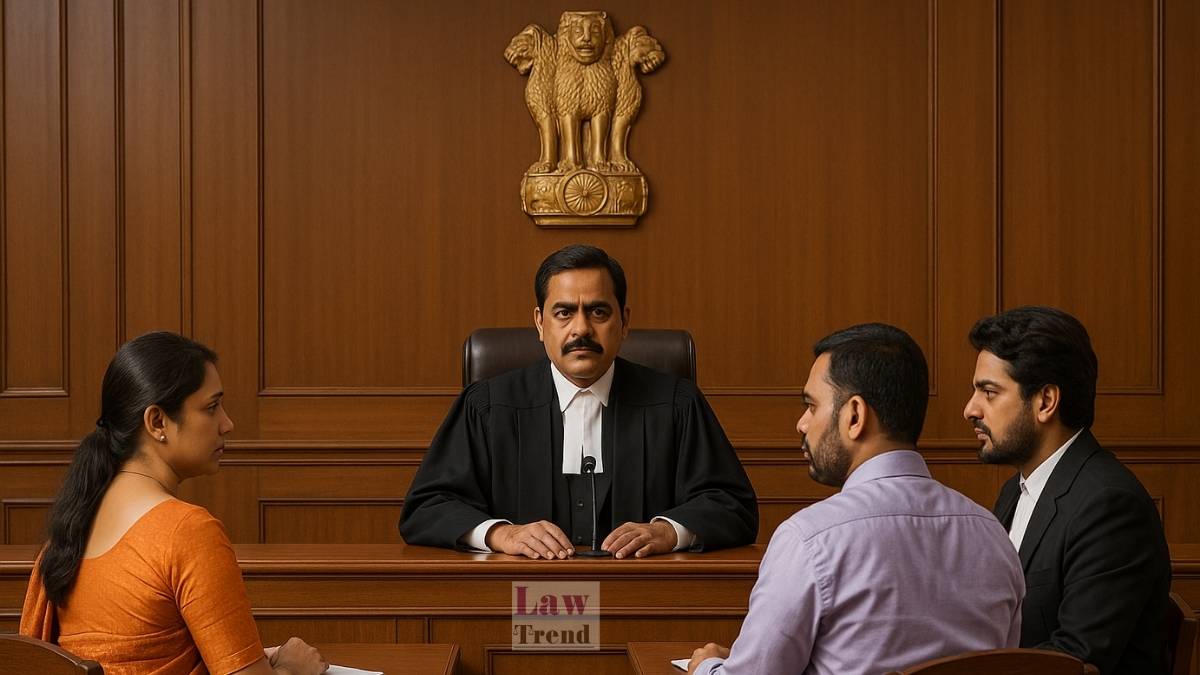

The High Court of Delhi has dismissed a matrimonial appeal filed by a husband challenging a Family Court order that restored his wife’s right to file a written statement. A Division Bench comprising Justice Vivek Chaudhary and Justice Rajneesh Kumar Gupta held that since the husband failed to pay litigation expenses within the court-mandated timeline, he could not seek to penalize the wife for the resulting delay in filing her defence.

Background of the Case

The marriage between the appellant and the respondent was solemnized on February 8, 2019. Following matrimonial discord, the respondent left the matrimonial home in late 2023. Subsequently, the appellant filed a petition for divorce under Section 13(1)(ia) of the Hindu Marriage Act, 1955 (HMA) before the Family Court in Dwarka.

On April 18, 2024, the Family Court directed the husband to pay ₹11,000 as litigation expenses within one week. Simultaneously, the wife was granted four weeks to file her written statement. However, the husband failed to pay the litigation expenses within the stipulated time, and the wife failed to file her written statement. On September 20, 2024, the Family Court struck off the wife’s defence due to the non-filing of the written statement. Notably, the husband only paid the litigation expenses after this order was passed.

Later, the wife moved an application to set aside the order dated September 20, 2024. On February 5, 2026, the Family Court allowed her application, citing that the husband was to blame for the delay as he had not paid the litigation expenses on time. The husband then challenged this restoration before the High Court.

Arguments of the Parties

The appellant’s counsel argued that the wife’s application to set aside the order was “highly belated” and filed after nearly a year without a condonation of delay application. It was contended that the statutory timeline under Order VIII Rule 1 of the CPC was defeated. The appellant further claimed that the wife had waived her right by participating in cross-examination without seeking a recall of the order for a considerable period. Reliance was placed on the judgment in Smt. K.S. Sumi Mol v. Suresh Kumar E.K. regarding the speedy disposal of matrimonial cases.

READ ALSO  Legal Representative in Motor Accident Claims Can Include Any Suffering Dependent, Not Just Family: Supreme Court

The respondent appeared in person to defend the Family Court’s decision to restore her right to file the written statement.

Court’s Analysis and Observations

The High Court observed that the appellant himself had violated the court’s direction by failing to pay the litigation expenses by April 25, 2024. The Bench emphasized the principle of equity, noting that a party seeking to enforce strict timelines must first comply with the court’s directions.

READ ALSO  Mindset of Women Must Endure Suffering Emboldens Perpetrators in Dowry Deaths: Delhi HC

Referring to Section 23 of the Hindu Marriage Act, the Court stated:

“Section 23 of the HMA embodies the principle that a party cannot be permitted to take advantage of its own wrong. Though the provision applies at the stage of final adjudication, the underlying principle is one of equity and should apply to the conduct of parties throughout the proceedings.”

The Bench noted that it was incumbent upon the appellant to pay the litigation expenses in time to enable the respondent to conduct her case properly. The Court remarked:

“Appellant cannot be permitted, by his conduct, to put the respondent at a disadvantage and thereafter claim benefit of the same.”

Regarding the statutory timelines for filing a written statement, the Court cited the Supreme Court’s ruling in Salem Advocate Bar Association, T.N. v. Union of India, which held that the upper limit for filing a written statement is directory and can be condoned in appropriate cases. Furthermore, referencing Sesh Nath Singh v. Baidyabati Sheoraphuli Coop. Bank Ltd., the Bench noted that courts have the discretion to condone delays even without a formal application if the facts warrant it.

Decision of the Court

The High Court found no infirmity in the Family Court’s order dated February 5, 2026. It concluded that the Family Court rightly exercised its discretion in equity, as the appellant was to blame for the delay.

READ ALSO  Supreme Court Quashes Rape and SC/ST Atrocities FIR, Terms Allegations as Fabricated and Vindictive

“The appellant, having failed to comply with the Court’s direction, cannot be permitted to contend that the respondent should suffer the consequences of delay. To permit such a course would amount to allowing the appellant to take advantage of his own default,” the Bench held.

The appeal and all pending applications were accordingly dismissed. The Court clarified that these observations would not prejudice the merits of the pending divorce case and directed the Family Court to decide the matter as expeditiously as possible.

Case Details Block:

  • Case Title: Sh. Nikhil Bhatiya v. Ms. Sonam Singh Bhatiya
  • Case No.: MAT.APP.(F.C.) 63/2026 & CM APPL. 12509/2026
  • Bench: Justice Vivek Chaudhary and Justice Rajneesh Kumar Gupta
  • Date: May 5, 2026

Law Trend
Law Trendhttps://lawtrend.in/
Legal News Website Providing Latest Judgments of Supreme Court and High Court

Related Articles

Latest Articles

