

Initiation of Proceedings by Original Parties to Alienation Not Permissible: Supreme Court Sets Aside Annulment of Land Sale
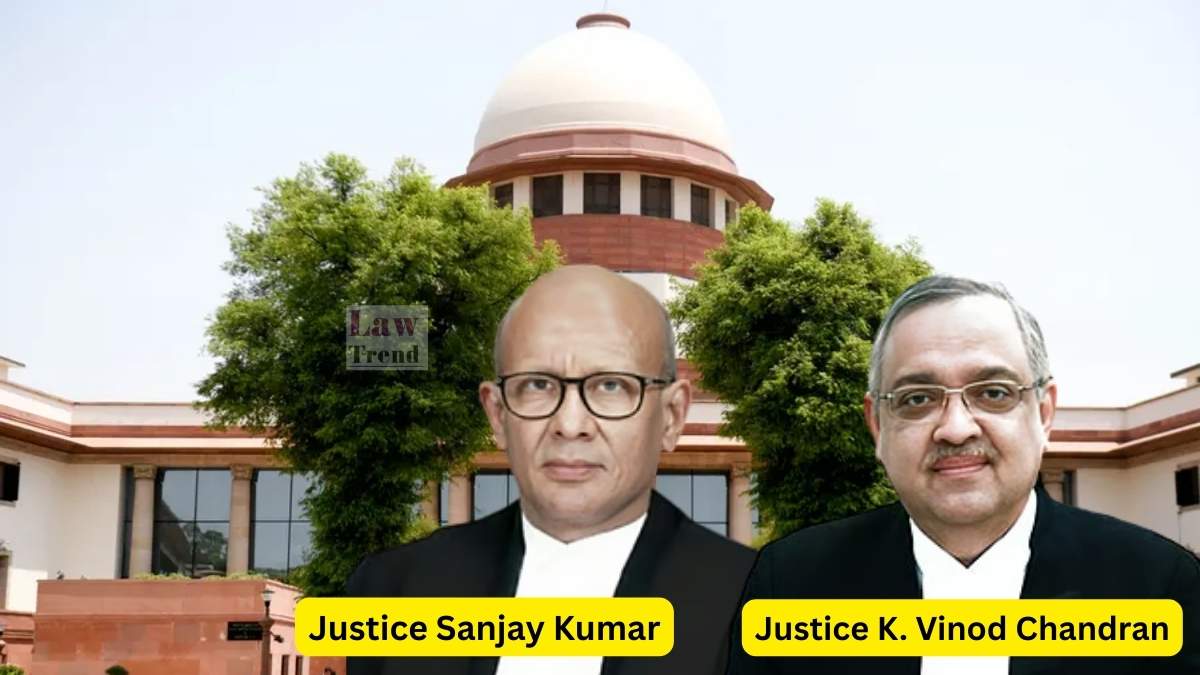

The Supreme Court of India has set aside concurrent findings of the lower authorities and the High Court which had annulled a land sale under the Karnataka Scheduled Castes and Scheduled Tribes (Prohibition of Transfer of Certain Lands) Act, 1978. A bench comprising Justice Sanjay Kumar and Justice K. Vinod Chandran observed that the proceedings were initiated by individuals who were themselves parties to the original alienation, distinguishing the case from typical instances of delayed legal action by unaware representatives.

Background of the Case

The matter pertains to a tract of land originally granted to a beneficiary in 1977, with a grant certificate issued in 1981 under Schedule E of the Land Revenue Code. This certificate carried a 15-year prohibition on alienation, effective from 1981-82.

The first transfer of the land occurred in 1997, after the 15-year non-alienation period had expired. The appellant, Seethamma, subsequently purchased the land in 2003. However, proceedings to void the sale were initiated in 2006-07 under Section 4 of the Act of 1978, which mandates previous Government permission for certain transfers.

Arguments of the Parties

The appellant’s counsel, Sri Manjunath Meled, argued that the Act of 1978 was not applicable to the subject land. He highlighted that the first transfer occurred 15 years after the grant and that the appellant was a subsequent purchaser. He relied on the precedent set in Shakuntala v. The State of Karnataka & Others.

Conversely, Sri Avishkar Singhvi, Additional Attorney General for the State of Karnataka, contended that the nine-year delay in initiating proceedings was not fatal. Citing Satyan v. Deputy Commissioner & Others, Vivek M. Hinduja & Others v. M. Ashwatha & Ors., and Dharma Naika v. Rama Naika & Another, he argued that an eight-year period should not preclude action, especially given the “beneficial legislation for ensuring preservation of lands of Scheduled Castes and Scheduled Tribes.”

READ ALSO  Voluntarily Giving Gifts to Bride and Bridegroom is not Dowry

Court’s Analysis

The Court acknowledged that the Act of 1978 is a beneficial piece of legislation intended to protect members of Scheduled Castes and Scheduled Tribes from being “enticed into parting with their lands on one pretext or the other.”

However, the Court noted a “pertinent distinction” in the facts of this case. It observed that the proceedings were initiated by the sons of the original grantee (Respondent Nos. 4 and 5), who were active parties to the first transfer in 1997. At that time, they were aged 35 and 25, respectively.

The Court observed:

“The present case is not one where the legal representatives, unaware of the earlier grant or the subsequent transfer, having initiated proceedings after a long delay, nor is it one of the village community having initiated proceedings against the illegal transfers.”

READ ALSO  सुप्रीम कोर्ट ने गंभीर अपराधों के आरोपी व्यक्तियों को चुनाव लड़ने से रोकने की मांग करने वाली जनहित याचिका पर जवाब दाखिल करने के लिए केंद्र को 2 सप्ताह का समय दिया

The Bench further emphasized that the persons seeking to invoke the Act were themselves involved in the alienation that took place after the 15-year restrictive period had concluded.

The Decision

On the “peculiar facts of the case,” the Supreme Court found the initiation of the proceedings to be illegal. The Bench allowed the appeal and set aside the impugned orders of the authorities and the High Court that had previously annulled the sale.

READ ALSO  Bombay HC Refers Advocate to Bar Council for Appearing for Multiple Litigants Without Vakalatnama

Case Details Block:

  • Case Title: Seethamma W/o Late Sathyappa v. The State of Karnataka & Ors.
  • Case No.: Civil Appeal No. of 2026 (@ SLP(C) No.19635 of 2023)
  • Bench: Justice Sanjay Kumar and Justice K. Vinod Chandran
  • Date: May 07, 2026

Law Trend
Law Trendhttps://lawtrend.in/
Legal News Website Providing Latest Judgments of Supreme Court and High Court

Related Articles

Latest Articles

