

Para-Teachers Have No Right to Regularisation but Must Be Given Periodic Opportunity for Appointment: Supreme Court Issues Directions to Jharkhand
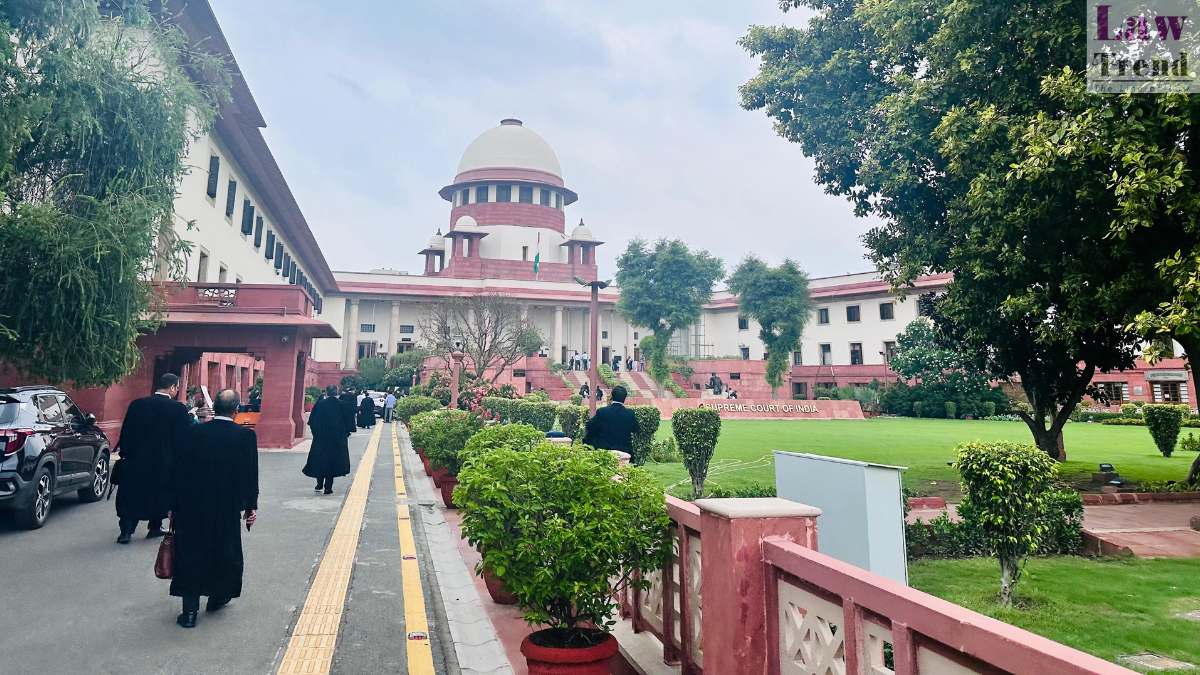

The Supreme Court of India has declined to grant a blanket direction for the regularisation of para-teachers (contractual teachers) as Assistant Teachers or Sahayak Acharyas in the State of Jharkhand. However, the Court has directed the State Government to activate and strictly adhere to its own statutory mechanism, which reserves 50% of teaching vacancies for eligible para-teachers, through a mandated annual recruitment calendar.

The Bench, comprising Justice Pankaj Mithal and Justice S.V.N. Bhatti, observed that while the claim for regularisation is a “legitimate expectation” given the para-teachers’ long-standing experience, a direct mandamus for absorption bypassing statutory rules would violate the constitutional scheme of public employment.

Background of the Case

The dispute originated from the Sarva Shiksha Abhiyan (SSA), a flagship Government of India initiative aimed at the universalisation of elementary education. To address human resource gaps, the State of Jharkhand engaged voluntary para-teachers on a contract basis starting in 2002. These teachers, many of whom served for 5 to 15 years and acquired qualifications like B.Ed. and Teacher Eligibility Test (TET) certification, sought regularisation against sanctioned posts of Assistant Teachers.

They challenged the Jharkhand Primary School Recruitment Rules, 2012, before the Jharkhand High Court, arguing the rules were unconstitutional as they failed to provide a direct route for regularisation. After the High Court dismissed their petitions on December 16, 2022, the para-teachers moved the Supreme Court.

Arguments of the Parties

The Appellants (Para-teachers) argued that:

  • They were recruited through a merit-based process identical to regular teachers.
  • There is a severe shortage of nearly 1.5 lakh teachers in Jharkhand.
  • They are paid a “meagre fixed honorarium” (₹7,400 to ₹8,400) despite performing the same duties as regular teachers.
  • Other states like Bihar and Chhattisgarh have already formulated policies for regularisation.
  • The 2012 Rules ignore their seniority and teaching experience.
READ ALSO  College Acted Carelessly, Played with Students' Futures: Allahabad High Court Orders ₹5 Lakh Compensation to Law Student

The State of Jharkhand (Respondents) contended that:

  • Para-teachers were initially engaged by local School Management Committees, not district authorities, and their roles were purely contractual and co-terminus with the SSA scheme.
  • The 2012 and 2022 Rules already provide a specific 50% quota for TET-qualified para-teachers with two or more years of experience.
  • Granting blanket regularisation would “consume the seats reserved for open-market candidates,” violating Articles 14 and 16.
  • The Union of India clarified that recruitment and service conditions remain the sole prerogative of the State Government.

The Court’s Analysis

The Court relied heavily on the Constitution Bench decision in State of Karnataka v. Umadevi (III) (2006), which prohibits regularisation of employees who bypass regular recruitment processes.

READ ALSO  ईशा फाउंडेशन मामले में देरी के लिए सुप्रीम कोर्ट ने तमिलनाडु प्रदूषण नियंत्रण बोर्ड की आलोचना की

The Bench noted the distinction between “scheme posts” under SSA and “cadre posts” under the State:

“A scheme post under the SSA is jointly funded by the Union of India and the State… and continues until the scheme ceases to exist. A cadre post under the State of Jharkhand is governed by Article 309 of the Constitution… The direct leap from one to the other, bypassing the statutory rules, would create a new mode of recruitment not sanctioned by law.”

Regarding Equal Pay for Equal Work, the Court cited State of Punjab & Ors. v. Jagjit Singh & Ors. (2017), stating that parity is not an “automatic entitlement” and claimants must demonstrate that duties and accountabilities are qualitatively identical.

The Court further observed that the State had already recognized para-teachers as a “distinct and legitimate class” by reserving 50% of vacancies for them. Therefore, the issue was not the legality of their initial entry, but the State’s failure to periodically implement its own recruitment rules.

The Decision and Mandated Calendar

The Supreme Court upheld the High Court’s refusal to grant blanket regularisation but “moulded the relief” to ensure the para-teachers’ security of employment.

“The State cannot be heard, on the one hand, to successfully resist the prayer for regularisation… while, on the other hand, not give effect to its own statutory framework,” the Court remarked.

READ ALSO  सुप्रीम कोर्ट ने न्यायाधिकरणों के लिए स्थायी बुनियादी ढांचे की वकालत की, आउटसोर्स कर्मचारियों के उपयोग की आलोचना की

Key Directions:

  1. Immediate Action: The State must determine all Assistant Teacher and Sahayak Acharya vacancies within 4 weeks and notify the 50% earmarked for para-teachers.
  2. Annual Recurring Calendar: The Court mandated a strict schedule:
    • By March 31: Determination and notification of total vacancies for the upcoming year.
    • April 1: Issue of advertisement exclusively for eligible para-teachers.
    • On or before May 31: Completion of the selection process and declaration of results.
    • Within 30 days of finalisation: Issuance of appointment letters.

The Bench concluded by emphasizing the sanctity of the teacher-student bond:

“Expecting a para-teacher, without a guarantee of their employment, to guarantee a child’s future and education is fallacious. The time has come for the executive to conduct periodic performance audits and eliminate ad hocism in public employment.”

Case Details:

  • Case Title: Sunil Kumar Yadav and Others v. The State of Jharkhand and Others
  • Case No.: SLP (C) No. 4881 of 2023)
  • Bench: Justice Pankaj Mithal and Justice S.V.N. Bhatti
  • Date: May 7, 2026

Law Trend
Law Trendhttps://lawtrend.in/
Legal News Website Providing Latest Judgments of Supreme Court and High Court

Related Articles

Latest Articles

