

Supreme Court Directs Regularisation of Daily-Wage Labourers in ISRO Unit; Set Aside 2012 ‘Gang Labourers Scheme’

The Supreme Court of India has set aside a judgment of the Madras High Court and directed the Union of India to regularise the services of daily-wage labourers engaged at the Mahendragiri Unit of the Liquid Propulsion Systems Centre (LPSC). The Court held that the “Gang Labourers (Employment for Sporadic Types of Work) Scheme, 2012” failed to comply with earlier judicial mandates requiring the creation of permanent posts for workers serving for decades.

Legal Issue

The central issue was whether the “Gang Labourers Scheme, 2012” formulated by the respondents satisfied the directions issued by the Central Administrative Tribunal (CAT) in 2010, which had reached finality. The appellants, daily-wage employees engaged between 1991 and 1997, sought regularisation and permanent status.

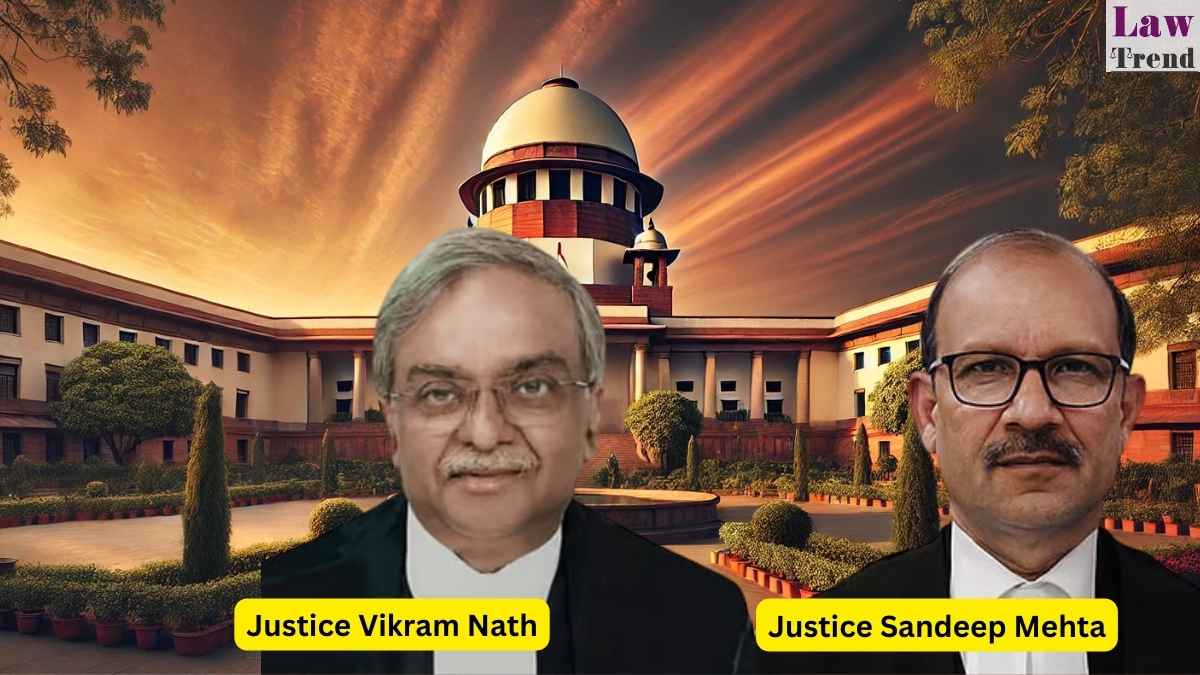
A Bench comprising Justice Vikram Nath and Justice Sandeep Mehta allowed the appeal, setting aside the Madras High Court’s 2024 judgment. The Court ordered the respondents to regularise the appellants’ services with effect from September 9, 2010.

Background of the Case

The appellants were engaged as daily-wage workers for sporadic tasks (loading, unloading, and shifting materials) at the Mahendragiri Unit, a prohibited area under the Official Secrets Act. In 2009, they approached the CAT seeking regularisation.

On March 9, 2010, the Tribunal directed the respondents to formulate a scheme or ad-hoc rules by creating required posts to employ such persons on a “permanent basis.” This order was affirmed by the Madras High Court in 2011 and subsequently by the Supreme Court when it dismissed the respondents’ Special Leave Petition.

READ ALSO  सुप्रीम कोर्ट कॉलेजियम ने मद्रास हाईकोर्ट के न्यायाधीशों के रूप में नियुक्ति के लिए 4 जिला न्यायाधीशों के नामों की सिफारिश की

In purported compliance, the respondents framed the “Gang Labourers Scheme” in 2012. However, the appellants challenged this scheme, arguing it only provided “temporary status” until age 60 and did not create permanent posts as mandated. The Tribunal and later the Madras High Court (in 2024) dismissed the appellants’ claims, citing the decision in State of Karnataka v. Umadevi (2006).

Arguments of the Parties

Appellants: Counsel for the appellants argued that the 2010 Tribunal order unequivocally mandated regularisation through post creation. They contended that the 2012 Scheme was contrary to this mandate and that continuing daily-wage engagement for perennial work violated Article 23 of the Constitution.

Respondents: Shri S.D. Sanjay, Additional Solicitor General, argued that the appellants were engaged for sporadic, intermittent work on a need basis. He maintained that no employer-employee relationship existed in the strict legal sense and that the 2012 Scheme, which allowed engagement until age 60, was in full consonance with the Tribunal’s directions.

Court’s Analysis and Observations

The Supreme Court observed that the 2010 Tribunal directions had two facets: the institutionalisation of engagement due to security threats in a sensitive R&D unit, and the preferential consideration of workers with 14 to 26 years of experience.

READ ALSO  सुप्रीम कोर्ट ने पश्चिम बंगाल के साथ कर प्रोत्साहन विवाद में मॉरीशस स्थित फर्म के पक्ष में मध्यस्थ निर्णय को बरकरार रखा

The Court noted:

“The essence of the directions issued in the earlier round of litigation was to bring about a transition from an ad hoc, daily-wage arrangement to a structured regime founded upon duly created posts… Any scheme that falls short of this requirement… cannot be said to be in compliance with the letter and spirit of the said directions.”

The Bench criticised the High Court for reopening the merits of regularisation under Umadevi when the specific directions for these appellants had already attained finality.

Referring to the history of India’s space program, the Court remarked:

“To disregard or discriminate against such individuals… would be to undermine the collective ethos that propelled India to the Moon and beyond. The State, as a model employer, cannot afford to treat a segment of its workforce… with arbitrariness or indifference.”

Final Decision

The Court concluded that Clause 4 and other provisions of the 2012 Scheme contemplating only “temporary basis” engagement were inconsistent with the 2010 mandate.

READ ALSO  Order XVIII Rule 17 CPC Cannot Be Used by Parties to Fill Lacunae; Power to Recall Witness Lies Exclusively with Court: Delhi High Court

The Court ordered:

  1. The “Gang Labourers Scheme, 2012” is set aside insofar as it is inconsistent with the direction for permanent engagement.
  2. Respondents are directed to regularise the appellants and grant them permanent status effective from September 9, 2010.
  3. This benefit shall also enure to all similarly situated persons engaged under the said Scheme.
  4. The exercise must be completed within four weeks.

Case Details:

  • Case Title: R. Iyyappan & Ors. v. Union of India & Ors.
  • Case No.: Civil Appeal No. ___ of 2026 (@ SLP (C) No. 7138 of 2025)
  • Bench: Justice Vikram Nath and Justice Sandeep Mehta
  • Date: April 29, 2026

Law Trend
Law Trendhttps://lawtrend.in/
Legal News Website Providing Latest Judgments of Supreme Court and High Court

Related Articles

Latest Articles

