

Widowed Daughter-in-law Status Must Exist Relative to Date of Employee’s Death for Compassionate Appointment Eligibility: Allahabad High Court
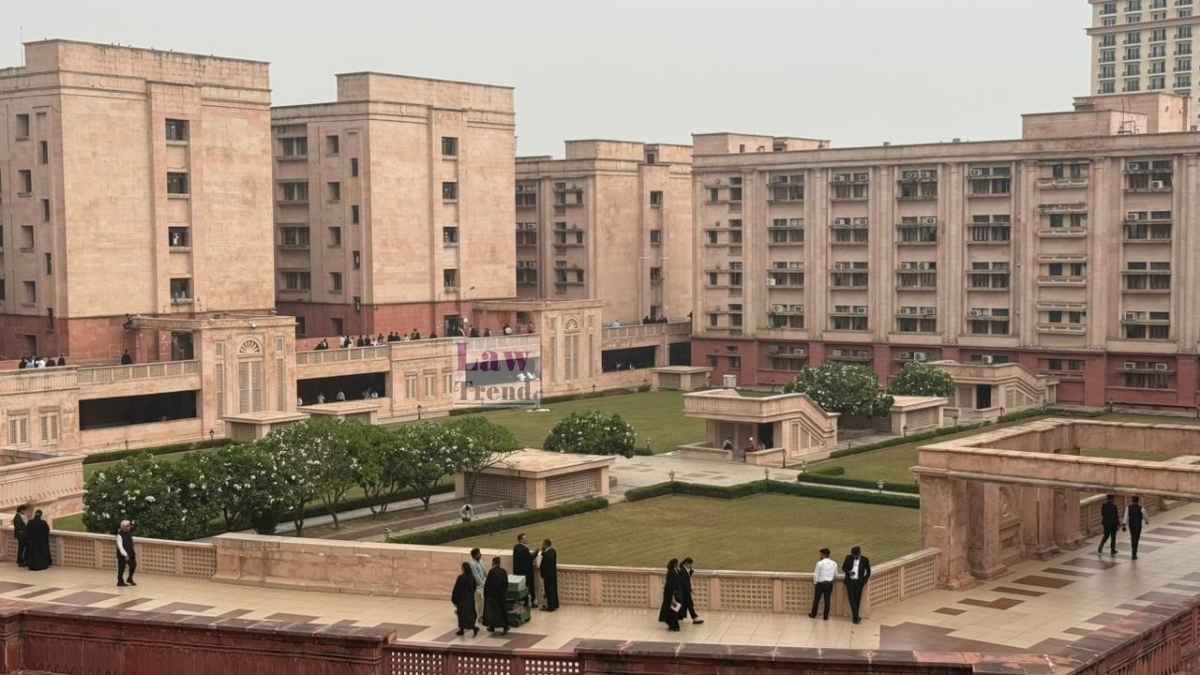

The High Court of Judicature at Allahabad (Lucknow Bench) has dismissed a special appeal, holding that the status of a “widowed daughter-in-law” must be assessed relative to the date of the government employee’s death to qualify for a compassionate appointment. The Division Bench ruled that a person who was not a member of the “family unit” at the time the employee died in harness cannot claim eligibility based on subsequent events like marriage or widowhood.

Legal Issue

The case centered on whether a woman who married the son of a deceased government employee nearly two years after the employee’s death—and subsequently became a widow—could claim a compassionate appointment. The court was tasked with interpreting Regulations 103 to 107 of the U.P. Intermediate Education Act, 1921, to determine if the “widowed daughter-in-law” status must exist at the time of the employee’s demise.

Background of the Case

Smt. Sangeeta Bajpayee, an Assistant Teacher at Nari Shiksha Niketan Inter College, Lucknow, died in harness on April 23, 2021. She was survived by her husband, a pensioner, and her unemployed son, Nikhil Bajpayee. The son’s initial application for a compassionate appointment was rejected on April 10, 2023, on the ground that his father was a pensioner.

In the interim, Nikhil Bajpayee married the appellant, Smt. Deepika Tiwari, on February 15, 2023. Shortly thereafter, on May 13, 2023, Nikhil passed away. Following his death, the appellant applied for a compassionate appointment in the capacity of a “widowed daughter-in-law” of Smt. Sangeeta Bajpayee. While she initially obtained an appointment order following a court-directed reconsideration, the institution raised objections, leading to the cancellation of her appointment. A learned Single Judge dismissed her subsequent challenge, leading to this Special Appeal.

Arguments of the Parties

Appellant’s Arguments: The appellant’s counsel argued that Regulation 103 explicitly includes a “widowed daughter-in-law” within the definition of family without specifying a marriage date qualification. He contended that a liberal interpretation should be adopted to protect widows from destitution and argued that the appellant had “stepped into the shoes of her husband,” who was originally eligible. The appellant cited the Full Bench judgment in U.P. Power Corporation Urban Electricity Transmission Division-II, Allahabad Vs Urmila Devi (2011) and Vibha Tiwari V/s State of U.P & Others (2024) to support a humanitarian approach.

READ ALSO  Allahabad High Court Puts Spotlight on Lack of Safeguards for Women in Gyms with Male Trainers

Respondents’ Arguments: The Additional Chief Standing Counsel for the State and the counsel for the institution argued that the appellant was not a member of the deceased’s family at the time of death. They submitted that the family did not face an immediate financial crisis, as the son was able to marry two years later, which “in itself entails significant expenditure.” Furthermore, they highlighted that the son’s initial rejection had attained finality as it was never challenged.

The Court’s Analysis

The Division Bench, comprising Justice Rajan Roy and Justice Abdhesh Kumar Chaudhary, focused on the phrase “widowed daughter-in-law” in Regulation 103. The Court observed that while the regulation includes a widowed daughter-in-law, it conspicuously omits a “daughter-in-law.”

READ ALSO  Sec 482 CrPC | When Prima Facie Case of Ingredients of Offence Are Present No Interference is Required: Allahabad HC

The Bench observed:

“In order to gain the status of a ‘widowed daughter-in-law’, the said person has to first be a ‘daughter-in-law’. … Technically while the government servant was alive and on the date of her death, the appellant was not even her daughter-in-law and therefore, no question arises of her being the ‘widowed daughter-in-law’.”

The Court emphasized that Regulation 104 requires a report of family members within seven days of death, indicating that the status is fixed at the time of the employee’s demise. Citing Director Of Education (Secondary) & Anr vs Pushpendra Kumar & Others (1998), the Court noted:

“The object underlying a provision for grant of compassionate employment is to enable the family of the deceased employee to tide over the sudden crisis resulting due to death of the bread earner which has left the family in penury and without any means of livelihood.”

The Court further held that “member of family” must be interpreted to mean those who existed as dependents at the time of death, as they constitute a “composite family unit.” The Bench reasoned that the appellant was “transplanted” into the family only through marriage in 2023 and was not part of the unit that suffered the “sudden crisis” in 2021.

Regarding the son’s prior rejection, the Court remarked:

READ ALSO  Separate Investigations Violate Justice in Counter-Cases: Madras High Court

“How can the wife (Appellant) be held to be eligible for the same, keeping in view that the claim of being the widowed daughter-in-law flows from the son of the deceased only.”

Decision of the Court

The High Court upheld the decision of the learned Single Judge and dismissed the Special Appeal. It concluded that the appellant had no right to claim employment because she was not even a daughter-in-law at the time of Smt. Sangeeta Bajpayee’s death. Citing Bihar Industrial Area Development Authority & Ors. V/s M/s SCOPE Sales Pvt. Ltd. & Anr. (2026), the Bench noted that interference in intra-court appeals is only warranted where a judgment is demonstrably erroneous or perverse, which was not the case here.

Case Details:

  • Case Title: Smt. Deepika Tiwari Versus State of U.P. Thru.its Prin. Secy. Secondary Education Lko. and 3 others
  • Case No.: SPECIAL APPEAL No. 353 of 2025
  • Bench: Justice Rajan Roy and Justice Abdhesh Kumar Chaudhary
  • Date: 24.04.2026

Law Trend
Law Trendhttps://lawtrend.in/
Legal News Website Providing Latest Judgments of Supreme Court and High Court

Related Articles

Latest Articles

