

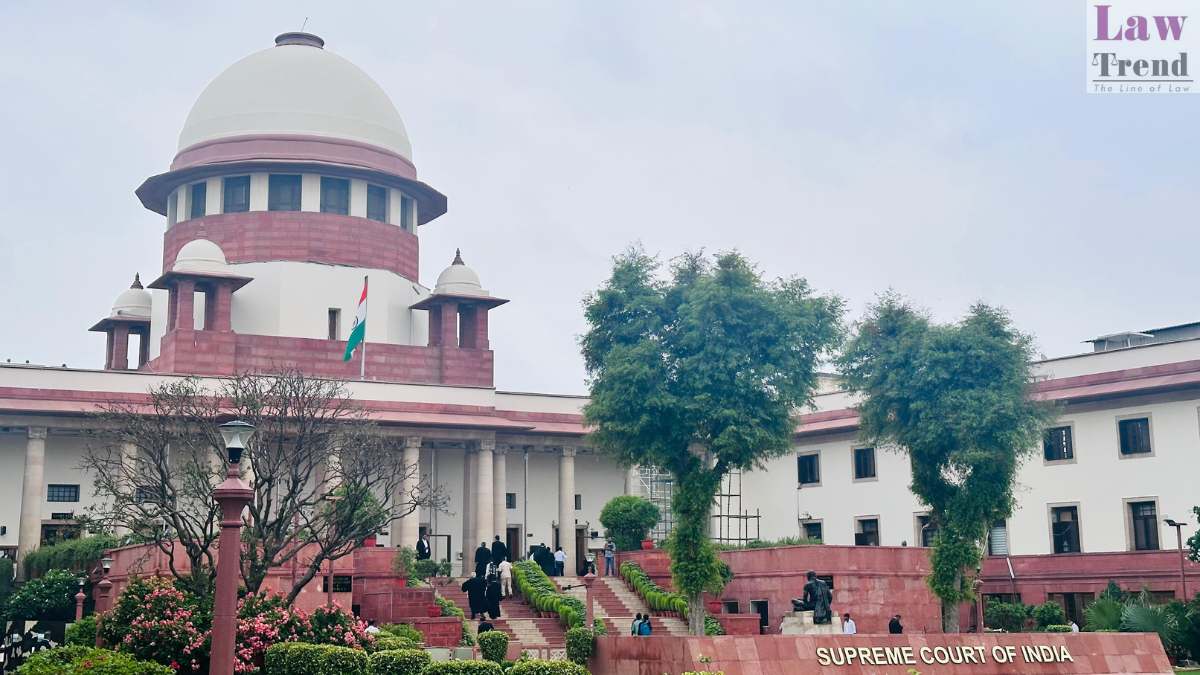
The Supreme Court on Friday declined to entertain petitions filed by several individuals from West Bengal, including 65 personnel currently on election duty, who challenged the deletion of their names from the voter list following a Special Intensive Revision (SIR) of electoral rolls.
A bench comprising Chief Justice Surya Kant and Justices Joymalya Bagchi and Vipul M Pancholi directed the petitioners to approach the specialized appellate tribunals established specifically to adjudicate disputes regarding the exclusion of names from the voter list.
The apex court was hearing two separate petitions involving a total of 77 individuals. The core of the grievance rested on the “arbitrary” nature of the deletions. Counsel for the petitioners argued that the deletions were carried out without issuing any show-cause notices, violating the principles of natural justice.
A significant point of contention involved 65 petitioners who are currently serving on election duty. Counsel argued that their official election duty orders explicitly listed their Electors Photo Identity Card (EPIC) numbers—numbers that were subsequently deleted from the rolls.
“Now, the people on election duty cannot vote. This, on the face, is arbitrary,” the counsel argued before the bench, seeking a direction to the Election Commission to permit those with pending appeals to cast their votes in the ongoing state elections.
The Supreme Court maintained that the proper forum for these grievances is the appellate tribunal system. “You have to raise these arguments before the (appellate) tribunal,” the bench noted, adding that “appropriate orders will be passed” by said bodies.
While the court acknowledged the gravity of the situation, stating, “We will examine the more valuable right to remain on the rolls,” it reiterated its previous stance on the limits of judicial intervention during the active election cycle.
The bench referenced its April 13 order, which invoked Article 142 of the Constitution to streamline the process. Under that directive:
- Appellate tribunals must decide appeals by April 21 or April 27, depending on the phase.
- The Election Commission must issue a supplementary revised electoral roll to include voters whose appeals are successful.
- The court explicitly clarified that the “mere pendency of appeals… shall not entitle them to exercise their right to vote.”
To handle the volume of appeals resulting from the Special Intensive Revision (SIR), the Chief Justice of the Calcutta High Court has established 19 tribunals. These are headed by former High Court Chief Justices and judges to ensure expedited resolution.
West Bengal is currently in the midst of a multi-phase election. The first phase concluded on April 23, with the final phase scheduled for April 29. The results of the election are slated for declaration on May 4.


