

Supreme Court Refuses to Intervene in Contempt Proceedings Against Advocate Over Allegations Against Sitting Judge
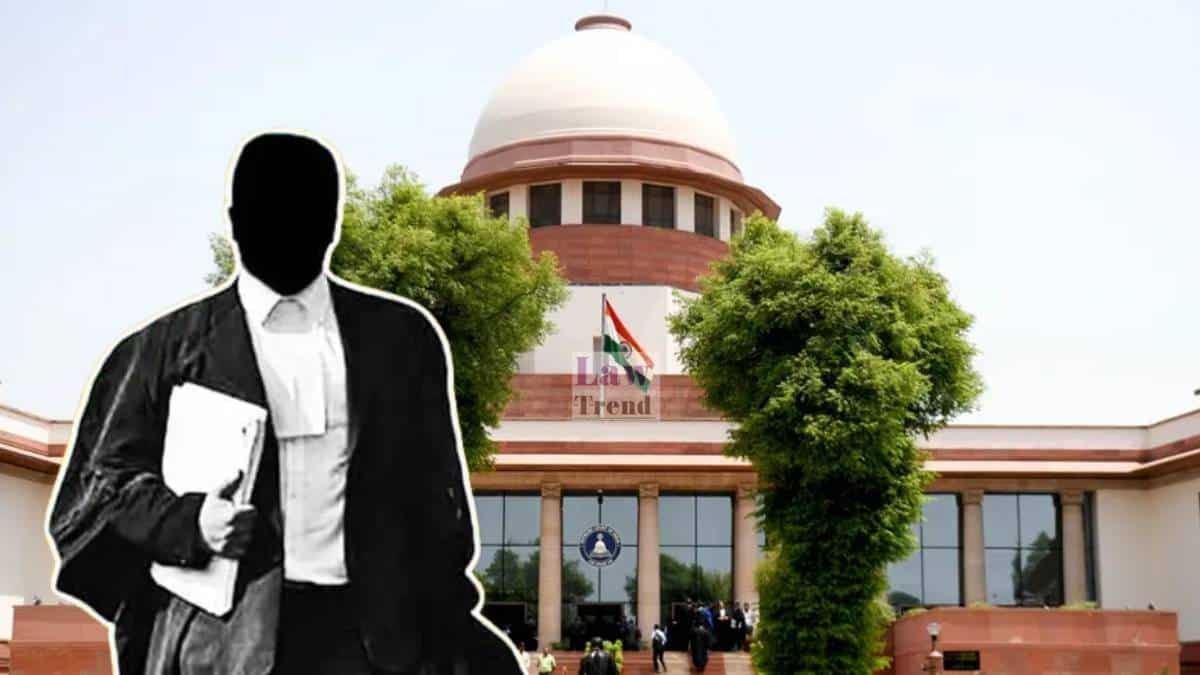
The Supreme Court of India has dismissed appeals filed by an advocate against orders of the Bombay High Court in a suo motu criminal contempt case. The Apex Court held that allegations of a personal nature against a sitting Judge, if left unchecked, have an inherent tendency to “erode public confidence in the administration of justice.”

The appeals were preferred under Section 19 of the Contempt of Courts Act, 1971, challenging two orders passed by a five-Judge Bench of the Bombay High Court. The High Court had rejected the appellant’s prayer to implead a sitting Judge (“Justice X”) as a respondent and subsequently dismissed a recall application, while also initiating a second suo motu contempt case against him. The Supreme Court, bench comprising Justice Vikram Nath and Justice Sandeep Mehta, declined to interdict the proceedings, requesting the High Court to adjudicate all issues independently.

Background of the Case

The matter originated from Criminal Writ Petition No. 1612 of 2025, filed by the appellant on behalf of a client regarding an investigation into a death. On April 1, 2025—a day before the matter was to be heard by a Division Bench including “Justice X”—the appellant held a press conference. He alleged that “Justice X” was disqualified from hearing the case because her sister was an accused in an FIR lodged by his client.

“Justice X” addressed a letter to the Chief Justice of the High Court on April 4, 2025, stating the aspersions had tarnished her reputation and maligned her in the judicial fraternity. The Chief Justice took suo motu cognizance, leading to Criminal Suo Motu Contempt Petition No. 1 of 2025.

During the proceedings, the appellant filed an application (I.A. No. 3297 of 2025) seeking the impleadment of “Justice X.” The High Court dismissed this on September 17, 2025, noting that a person furnishing information to the Chief Justice is not a “complainant” or a necessary party. Furthermore, the High Court took additional cognizance of “disparaging and scandalous” imputations within that application, registering a second contempt case (No. 4 of 2025).

READ ALSO  “High Court Should Not Casually Suspend Sentence Awarded by Court”-SC

Arguments of the Parties

The appellant-contemnor argued that the High Court’s exercise of jurisdiction was “excessive” and beyond settled contours. Counsel contended that:

  • The legal submissions were a “bona fide legal defence.”
  • Reliance was placed on P.N. Duda v. P. Shiv Shankar (1988) 3 SCC 167, arguing that earlier precedents like C.K. Daphtary v. O.P. Gupta were “statutorily eclipsed.”
  • Referencing In re: C.S. Karnan (2017) 7 SCC 1, it was argued that imputations against a Judge founded on “demonstrable truth” and made in public interest do not automatically constitute contempt.
  • The High Court’s finding of professional misconduct against sixteen advocates was “void ab initio,” as such power rests exclusively with the Bar Council under the Advocates Act, 1961.
READ ALSO  Land Acquisition Act| Claimant Not Entitled to Statutory Benefits Including Interest While Condoning Delay in Appeals: Supreme Court

The Respondent (High Court) opposed the appeals, asserting that the orders were necessary for the “proper administration of justice” and did not suffer from illegality or perversity.

Court’s Analysis

The Supreme Court emphasized that judicial independence is a “foundational and non-derogable feature” of the Constitution. The Court observed:

“The strength and legitimacy of the judiciary lie not in any capacity to command or compel, but in the confidence of the people in its integrity, neutrality, and institutional independence.”

Citing Shanti Bhushan v. Supreme Court of India (2018) 8 SCC 396, the Bench noted that the “faith of the people is the bedrock” of judicial review.

Regarding the appellant’s conduct, the Court remarked:

“The act of carrying a pending judicial controversy into the public domain in a manner that tends to sensationalise the proceedings or scandalise the institution or its constitutional component, i.e., the Judges, is wholly inconsistent with the discipline expected of an advocate.”

The Court distinguished between “bona fide criticism” of judicial decisions and “reckless aspersions” directed at the integrity of a Judge. It held that while a litigant is entitled to challenge an order in a higher forum, such challenges must be based on “civilised and temperate criticism” rather than attributing improper motives to the Judge.

READ ALSO  बिहार जाति सर्वेक्षण पर पटना हाई कोर्ट के आदेश को चुनौती देने वाली याचिकाओं पर सुप्रीम कोर्ट छह अक्टूबर को सुनवाई करेगा

The Decision

The Supreme Court concluded that no case for interference was made out at this stage. It requested the High Court to proceed expeditiously and adjudicate all issues—including the legal defenses raised—independently on their merits. The Court clarified that its observations were confined to a prima facie consideration and should not influence the High Court’s final judgment.

The appeals were dismissed, and all pending applications were disposed of.

Case Details

  • Case Title: Nilesh C. Ojha v. High Court of Judicature at Bombay Through Secretary & Ors.
  • Case No.: Criminal Appeal Nos. 5673-5674 of 2025
  • Bench: Justice Vikram Nath and Justice Sandeep Mehta
  • Date: April 20, 2026

Law Trend
Law Trendhttps://lawtrend.in/
Legal News Website Providing Latest Judgments of Supreme Court and High Court

Related Articles

Latest Articles
