

Participation in Tender Process Does Not Confer Vested Right to Award of Contract: Chhattisgarh High Court
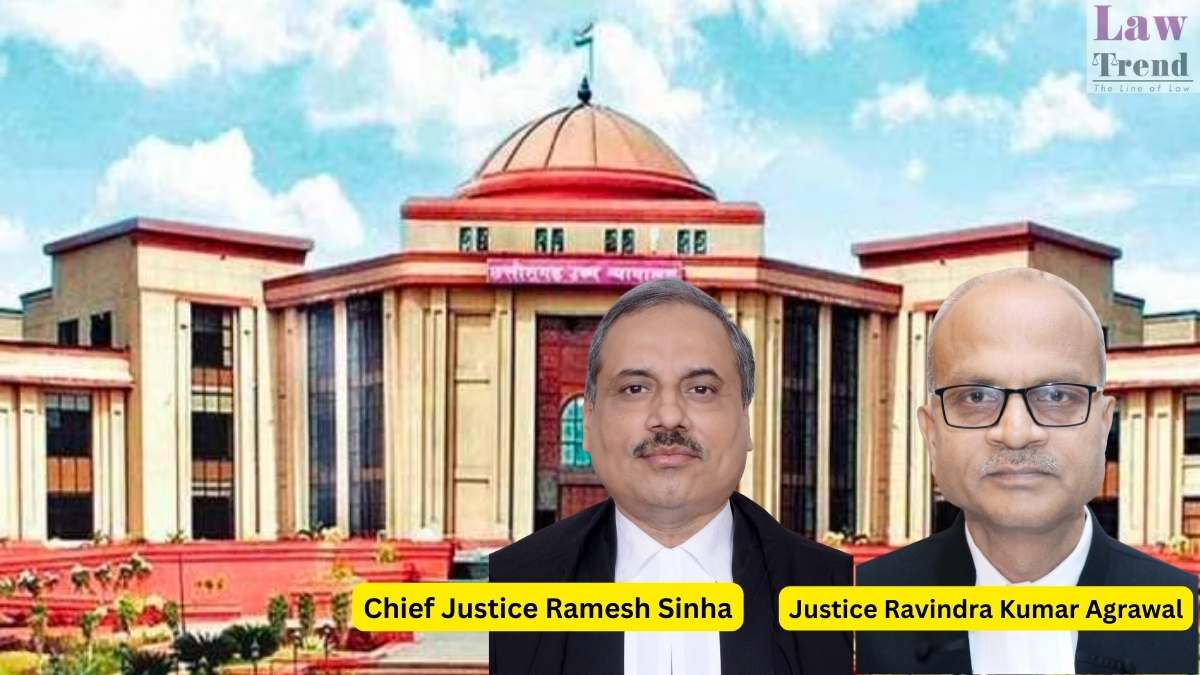

The High Court of Chhattisgarh has dismissed a writ petition challenging the cancellation of a tender process, ruling that mere participation or being declared the lowest bidder (L-1) does not confer any vested or enforceable right to the award of a contract in the absence of a concluded agreement. The Division Bench, comprising Chief Justice Ramesh Sinha and Justice Ravindra Kumar Agrawal, held that a tendering authority is entitled to cancel the process in furtherance of a bona fide policy decision taken in public interest.

Background of the Case

The petitioner, M/s Global Services, a proprietorship firm, participated in a tender notice dated November 17, 2025, issued by the Municipal Council, Janjgir-Naila, for the engagement of 95 manpower personnel. The petitioner was found technically qualified, and upon the opening of financial bids on January 30, 2026, emerged as the lowest (L-1) bidder.

However, despite being declared L-1, no work order was issued. Subsequently, on March 17, 2026, the respondent authorities cancelled the tender process. The cancellation was based on executive communications dated February 27, 2026, and March 9, 2026, which mandated that such procurements be undertaken through the Government e-Marketplace (GeM) portal instead of the State e-procurement portal.

Arguments of the Parties

Petitioner’s Submissions: Counsel for the petitioner argued that the cancellation was arbitrary and illegal, as the tender process had already concluded with the petitioner being declared L-1. It was contended that the respondents sought to give retrospective operation to executive instructions issued after the tender process began. The petitioner further claimed a “legitimate expectation” that the contract would be awarded and argued that significant resources had been mobilized in anticipation of the work order. Reliance was placed on Subodh Kumar Singh Rathour v. Chief Executive Officer & Others and City and Industrial Development Corporation of Maharashtra Ltd. v. Shishir Realty Private Limited.

Respondents’ Submissions: Counsel for the Municipal Council and the State opposed the petition, stating that no vested right accrues to a bidder merely by being declared L-1. They argued that the decision to cancel was a policy-driven administrative action aimed at ensuring transparency and compliance with updated procurement frameworks (GeM portal). They maintained that the tendering authority retains absolute discretion to cancel the process at any stage prior to the issuance of a work order.

READ ALSO  Recording of Satisfaction Before Holding Departmental Inquiry is Mandatory: Supreme Court 

Court’s Analysis

The Court observed that judicial review in tender matters is limited to examining the decision-making process and not the merits of the decision itself. Citing Master Marine Services (P) Ltd. v. Metcalfe & Hodgkinson (P) Ltd. and Tata Cellular v. Union of India, the Court reiterated that unless a concluded contract exists, no enforceable right accrues to the bidder.

Regarding the “legitimate expectation” and retrospective application of policy, the Court stated:

READ ALSO  Filing Two Arbitration Petitions for the Same Relief Is Not Permissible: Chhattisgarh High Court

“Legitimate expectation cannot operate against statutory policy or override the authority’s power to modify or cancel a tender process in public interest.”

The Bench found that the respondents did not act in a “capricious or unreasoned manner” but followed a conscious policy decision to use the GeM portal for greater transparency and accountability. The Court noted:

“The policy requiring adoption of GeM portal is an institutional reform measure intended to streamline procurement practices, and once such policy is brought into force, the authorities are well within their rights to align ongoing or pending procurement processes to ensure compliance…”

The Court also distinguished the precedents cited by the petitioner, noting that in this case, the cancellation was rooted in a bona fide policy shift serving public interest rather than extraneous or non-existent grounds.

READ ALSO  Teacher's Sexual Act with Student is a Grave POCSO Offence, Not Just Professional Misconduct: Chhattisgarh HC

Decision

The High Court concluded that the impugned order of cancellation dated March 17, 2026, did not suffer from any illegality, irrationality, or procedural impropriety. The Court held that the petitioner failed to establish any enforceable legal right that would justify the issuance of a writ of mandamus.

The Court dismissed the writ petition, stating:

“In absence of issuance of a formal work order or execution of a contract, no binding legal obligation can be fastened upon the respondents, and consequently, no mandamus can be issued compelling award of contract in favour of the petitioner.”

Case Details Block:

  • Case Title: M/s Global Services v. State of Chhattisgarh & Others
  • Case No.: WPC No. 1714 of 2026
  • Bench: Hon’ble Shri Ramesh Sinha, Chief Justice & Hon’ble Shri Ravindra Kumar Agrawal, Judge
  • Date: April 13, 2026

Law Trend
Law Trendhttps://lawtrend.in/
Legal News Website Providing Latest Judgments of Supreme Court and High Court

Related Articles

Latest Articles

