

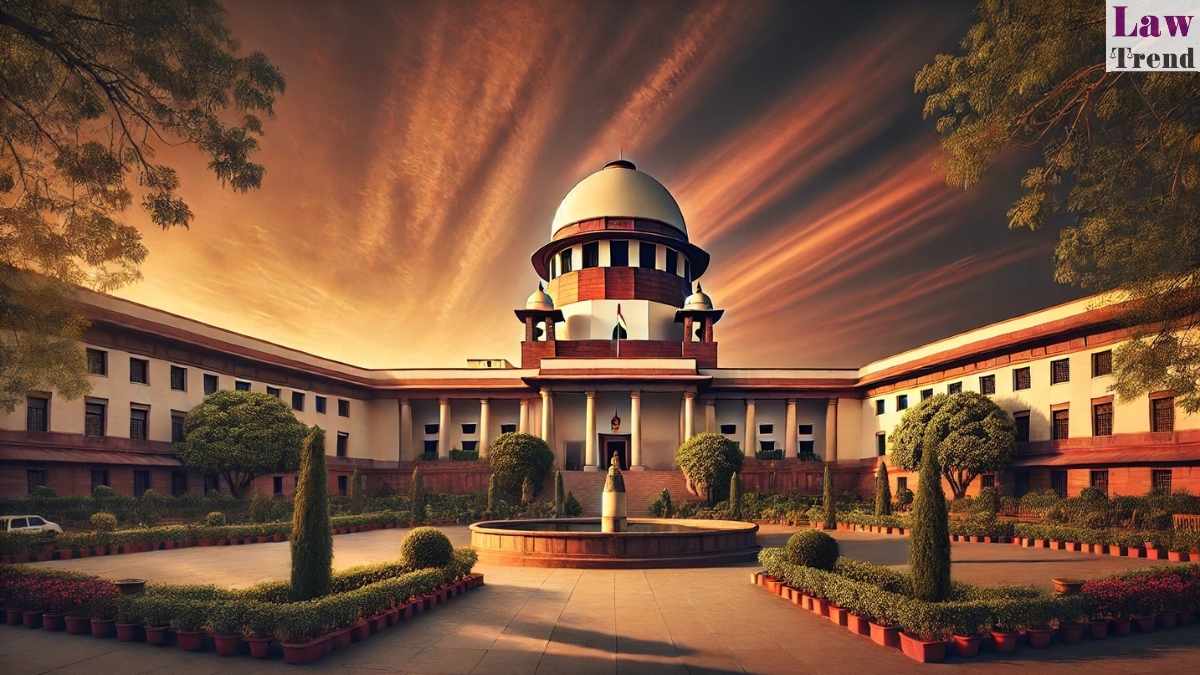
The Supreme Court on Monday expressed grave concern over the “reluctance” shown by the Ghaziabad police in registering an FIR and investigating the brutal rape and murder of a four-year-old girl. A bench comprising Chief Justice Surya Kant and Justice Joymalya Bagchi questioned the initial handling of the case, while also demanding accountability from two private hospitals that allegedly refused life-saving treatment to the bleeding child.
The top court’s intervention comes following a petition filed by the victim’s father, a daily wager, who is seeking a court-monitored probe by a Special Investigation Team (SIT) or the Central Bureau of Investigation (CBI), alleging a botched and insensitive local inquiry.
During the hearing, the bench noted a pattern of hesitation from law enforcement. “There was reluctance in lodging FIR, reluctance in investigation, everything,” the Chief Justice observed.
Senior Advocate N. Hariharan, representing the victim’s father, highlighted significant lapses in the timeline. The incident occurred on March 16, when the child was allegedly lured away by a neighbor under the guise of buying chocolates. Despite the father finding the child unconscious and soaked in blood later that day, an FIR was not registered until 3:30 AM on March 17.
Furthermore, the initial FIR reportedly only mentioned murder, omitting charges of rape or aggravated sexual assault. It was only later that the police filed a charge sheet, dated April 3, which included enhanced sections under the Protection of Children from Sexual Offences (POCSO) Act.
The case has also turned a spotlight on medical ethics and the legal obligation to provide emergency care. The apex court directed two private facilities — Khajan Singh Mannvi Health Care and St. Joseph Hospital — to file affidavits responding to allegations that they denied treatment to the minor.
The petitioner argued that the child might have survived had she received timely medical intervention. The minor was eventually declared dead at a government hospital. “The apex court has repeatedly said that medical treatment cannot be refused,” Hariharan argued, accusing the police of attempting to shield the private hospitals.
While the police, represented by Additional Solicitor General Aishwarya Bhati, informed the court that a charge sheet has been filed and cognisance has been taken by the concerned trial court, the Supreme Court issued several immediate directions:
- Charge Sheet Access: The police must immediately supply a copy of the charge sheet to the victim’s family.
- Affidavits Required: The implicated private hospitals must explain their alleged refusal to treat the victim.
- Victim Privacy: The police and hospitals are mandated to redact all information that could disclose the identity of the victim or her family.
- Protection from Harassment: The state police were explicitly warned not to harass the grieving family members.
Regarding the demand for an SIT, the bench remained cautious about further delays. “In our over-anxiety of constituting the SIT, let us not delay the process,” the court remarked. The bench instructed the petitioner to examine the charge sheet for any “gaps” before deciding on a transfer of the investigation.
The matter is scheduled for further hearing next week.




