

Probation of Offenders Act Benefit Extends to Sentences Involving Only Fine; Supreme Court Grants Relief to Convicts
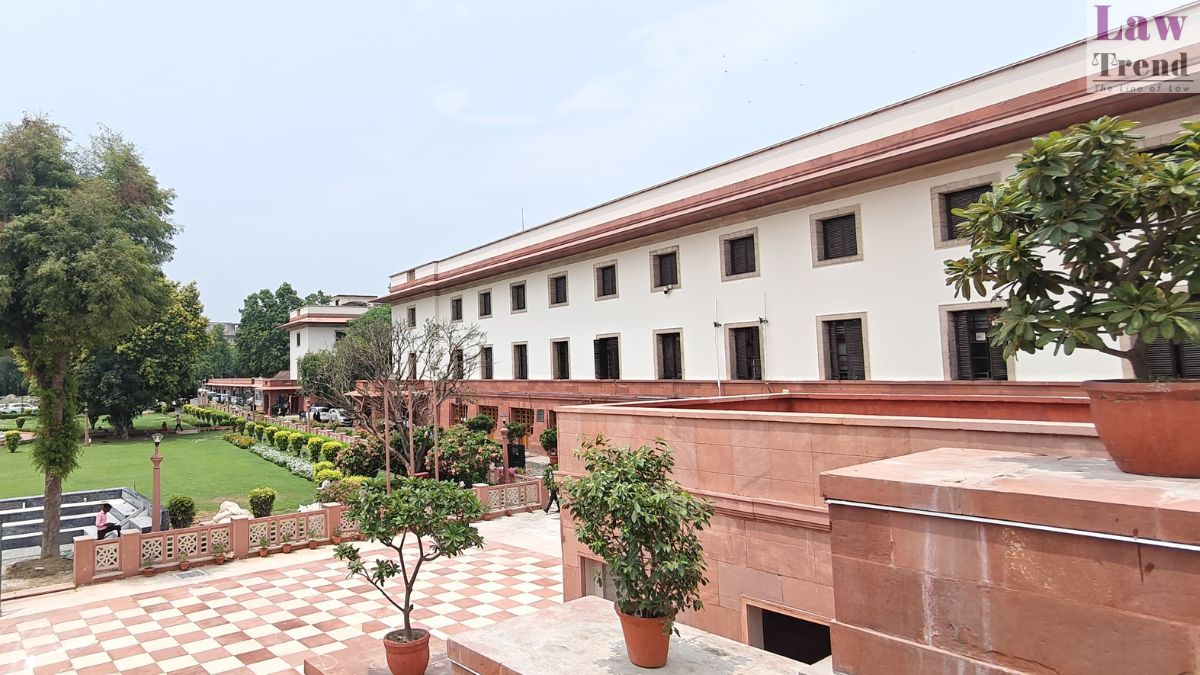

The Supreme Court of India has held that the benefit of Section 4 of the Probation of Offenders Act, 1958 (1958 Act) is available to offenders who have been sentenced only with a fine and not a term of imprisonment. A Bench of Justice J.K. Maheshwari and Justice Atul S. Chandurkar set aside the sentencing of four appellants, directing their release on probation and admonition, while clarifying that such release removes any disqualification affecting their service careers under Section 12 of the Act.

Case Background

The matter arose from an incident on November 2, 2019, involving an assault on a 17-year-old girl and her father. According to the prosecution, Appellant No. 1 (A-1) pressurized the victim for a relationship, leading to a confrontation involving her grandmother and sister. Later, the appellants attacked the victim’s father.

The Special Judge (POCSO), Beed, convicted the appellants under Sections 323 and 324 read with Section 34 of the Indian Penal Code (IPC). A-1, A-2, and A-3 were directed to pay fines of ₹500 and ₹2000 respectively, while A-4 was fined ₹500. The High Court of Judicature at Bombay, Bench at Aurangabad, upheld this conviction and sentence on February 26, 2024. In the present appeal, the appellants did not challenge the conviction on merits but sought the benefit of the 1958 Act.

Arguments of the Parties

Counsel for Appellants: Mr. Amol B. Karande argued that the 1958 Act recognizes the “reformative theory of punishment” and that the object of penal law is to reform rather than punish. He relied on Rattan Lal v. State of Punjab and Ved Prakash v. State of Haryana, contending that the court has a duty to be “activist enough to collect such facts bearing in mind the rehabilitative approach.” He further cited Mohd. Hasim v. State of Uttar Pradesh to argue that the word ‘expedient’ in Sections 3 and 4 should be construed in its widest amplitude.

Counsel for the State: The State contended that A-1, A-2, and A-3 fell outside the scope of Section 3 as they were convicted under Section 324 IPC. Regarding Section 4, the State argued that the provision is meant to shield offenders from the “deleterious effects of jail life.” Since the appellants were only fined and not imprisoned, the State claimed the “very premise underlying Section 4 is absent.”

READ ALSO  Allahabad High Court Quashes Criminal Proceedings Against Doctor and Advocate Citing Malafide Intent

Court’s Analysis

The Court addressed whether the benefit of Section 4 is available when only a fine is imposed. It noted that the 1958 Act is “beneficial legislation” and must be interpreted in a purposive manner.

Definition of Punishment: The Bench referred to Section 53 of the IPC and Section 4 of the Bhartiya Nyaya Sanhita (BNS), noting that “fine” is explicitly included as a form of punishment. The Court observed:

“Since Sections 3 and 4 of the 1958 Act govern acts committed by an offender in relation to the specific punishments prescribed under the IPC, BNS and any other law, these provisions must naturally extend to sentences including fine.”

Interpretation of ‘Release’: Addressing the State’s argument that an offender cannot be ‘released’ if they are not in custody, the Court clarified:

READ ALSO  Compassionate Appointment Cannot Be Claimed After 18 Years; Object is to Tide Over Sudden Crisis: Patna High Court

“‘Release’ cannot mean release only from custody. It has to be read as releasing from the obligation to serve sentence of payment of fine… ‘release’ as contained in Section 4 of 1958 Act should be read as to set the offender at liberty from receiving sentence, even of fine only.”

Reformative Approach: The Court emphasized that the object of the Act is to reintegrate offenders into society without the “stigma of conviction.” Referring to Ved Prakash, it noted factors such as age, antecedents, and social background are relevant. In this case, A-1 and A-4 were government employees (PWD and Education Department), and none of the appellants had prior criminal involvements or committed offences involving moral turpitude.

READ ALSO  Medical Termination Pregnancy Act 1971 | Chhattisgarh HC Declines to Terminate the Pregnancy of a Married Lady Conceived Through Her Husband

The Decision

The Supreme Court confirmed the conviction but modified the sentence:

  1. A-1, A-2, and A-3: Granted benefit under Section 4(1) of the 1958 Act. They are to be released on entering a bond for one year for good behavior, under the supervision of a Probation Officer.
  2. A-4: Granted benefit under Section 3 of the 1958 Act and ordered to be released after due admonition.
  3. Compensation: The fines already directed are to be treated as compensation for the victim(s).
  4. Service Career: Invoking Section 12 of the 1958 Act, the Court declared:
    “They shall not incur any disqualification affecting their service career, if any, arising out of the conviction.”

Case Details Block

  • Case Title: Milind S/o Ashruba Dhanve and Ors. v. The State of Maharashtra
  • Case No.: Criminal Appeal No. [To be assigned] of 2026 (Arising out of SLP (Crl.) No. 6843 of 2024)
  • Bench: Justice J.K. Maheshwari and Justice Atul S. Chandurkar
  • Date: April 10, 2026

Law Trend
Law Trendhttps://lawtrend.in/
Legal News Website Providing Latest Judgments of Supreme Court and High Court

Related Articles

Latest Articles

