

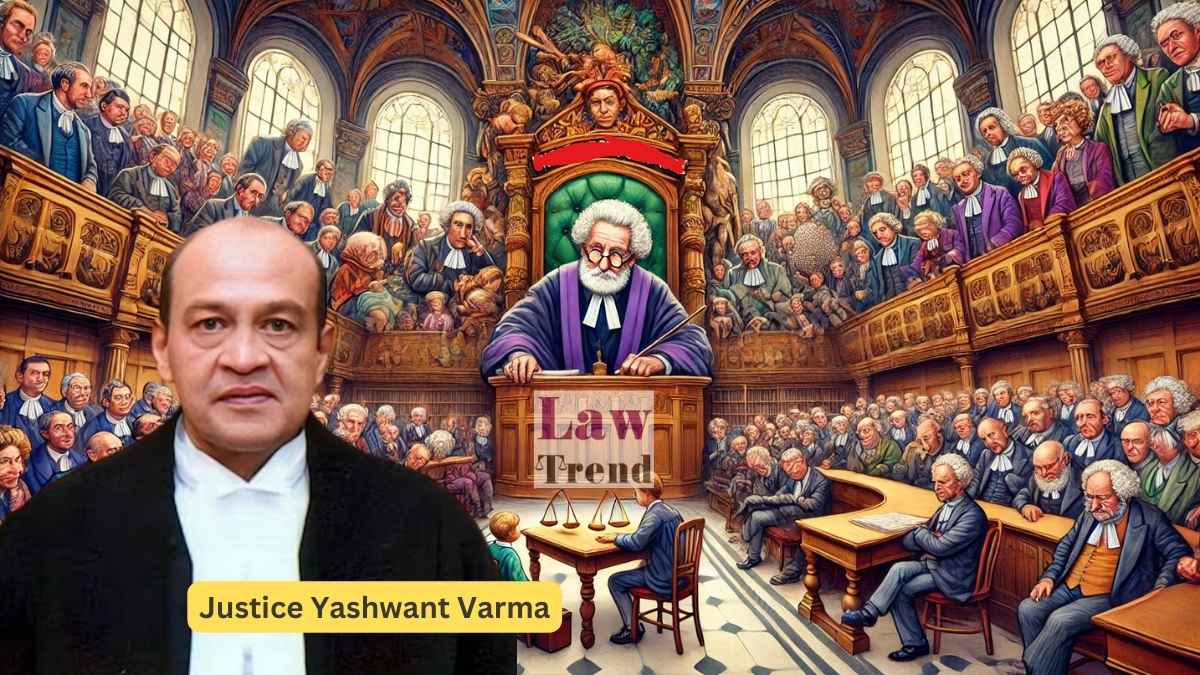
Justice Yashwant Varma, a sitting Judge of the Allahabad High Court, has resigned from his constitutional office and announced his immediate withdrawal from the proceedings of the Judges Inquiry Committee. In a 13-page letter addressed to the Committee on April 9, 2026, the Judge alleged “shocking” procedural lapses and an “impermissible reversal of the burden of proof,” stating that the inquiry had turned into an adversarial contest where evidence favorable to him was systematically excluded.
Following his decision to withdraw from the inquiry, Justice Varma submitted his resignation to the President of India. In his communication, he expressed “profound anguish,” noting that continuing in the office while being subjected to an unfair process would do the institution a “great disservice.”
The case pertains to the discovery of alleged cash in a detached storeroom at Justice Varma’s former official residence at 30 Tughlaq Crescent, New Delhi, following a fire incident in March 2025. This discovery led to an In-House Committee (IHC) inquiry and the subsequent constitution of a Judges Inquiry Committee under the Judges (Inquiry) Act, 1968, to investigate charges of misbehaviour. Justice Varma has now withdrawn from these proceedings, citing the selective dropping of 22 out of 31 witnesses and the Committee’s failure to establish a prima facie case before calling upon him to lead his defense.
Background
The incident occurred on March 12, 2025, while Justice Varma was on a pre-planned vacation. A fire broke out in a storeroom located within the government residence allotted to him. During the fire-fighting operations, videos were recorded by emergency services showing what appeared to be currency notes in the storeroom.
Justice Varma has consistently maintained that the storeroom was a detached structure, physically separated from his living quarters and office, and accessible via an unmanned back gate. He asserted that the space was used for routine storage by domestic staff and maintenance personnel and was rarely visited by him.
The Three Articles of Charge
The Inquiry Committee framed three specific charges against Justice Varma:
- Charge I: Possession of unaccounted Indian currency in a “secured” residence.
- Charge II: Acquiescence in the alteration or removal of evidence before a lawful inspection could take place.
- Charge III: Providing an “evasive explanation” by denying the presence of cash.
Arguments and Grievances Raised by Justice Varma
In his letter, Justice Varma challenged the foundational evidence for each charge:
- Failure to Establish a Prima Facie Case: Justice Varma argued that “no proof was ever produced that what was discovered… was genuine Indian currency.” He further argued that the premises were not “secured,” as CRPF testimony confirmed the back gate was unmanned and the storeroom was not monitored.
- Selective Dropping of Witnesses: The Judge highlighted that out of 31 witnesses cited, 22 were dropped—including senior Delhi Fire Services and Delhi Police officers—immediately after cross-examination revealed that decisions not to record the cash were taken by superiors before Justice Varma was even aware of the fire.
- Exclusion of Favorable Evidence: He alleged that the statutory Fire Report, which notably made no mention of cash, was excluded from the record without explanation.
- PSO Credibility: Justice Varma claimed his Personal Security Officers (PSOs) made false entries in official registers to claim presence at the site. When he sought their location data to disprove this, the prosecution dropped all three PSOs as witnesses the next day.
- Reversal of Burden of Proof: Justice Varma contended that the proceedings required him to “disprove allegations and assumptions backed by no evidence,” effectively placing an “onerous obligation of proving multiple negatives.”
Justice Varma’s Analysis of the Charges
Regarding Charge II, the Judge noted that senior officials had decided not to seize the alleged cash by 12:15 a.m. on March 15, 2025, whereas he only learned of the fire at 1:10 a.m. He stated, “This by itself would exclude any hint of wrongdoing at my end.”
Addressing Charge III, he clarified that he never denied the discovery of cash but only stated that the cash did not belong to him and that he had no knowledge of its presence. He claimed the charge proceeded on a “misreading” of his initial response.
Decision to Withdraw
Justice Varma concluded that continuing to participate would “legitimize a process” that calls upon him to “answer the unanswerable—where did the money come from,” when no link to him has been established.
“I withdraw with the deepest sadness… with the hope that history will one day record the unfairness with which a sitting High Court Judge was treated,” the letter stated. The Judge has also addressed a separate communication to the President of India regarding the matter.


