

Registrar General Has No Suo-Motu Authority to Initiate Disciplinary Action Against Judicial Officers; Action Void Ab Initio Without Chief Justice’s Approval: Supreme Court
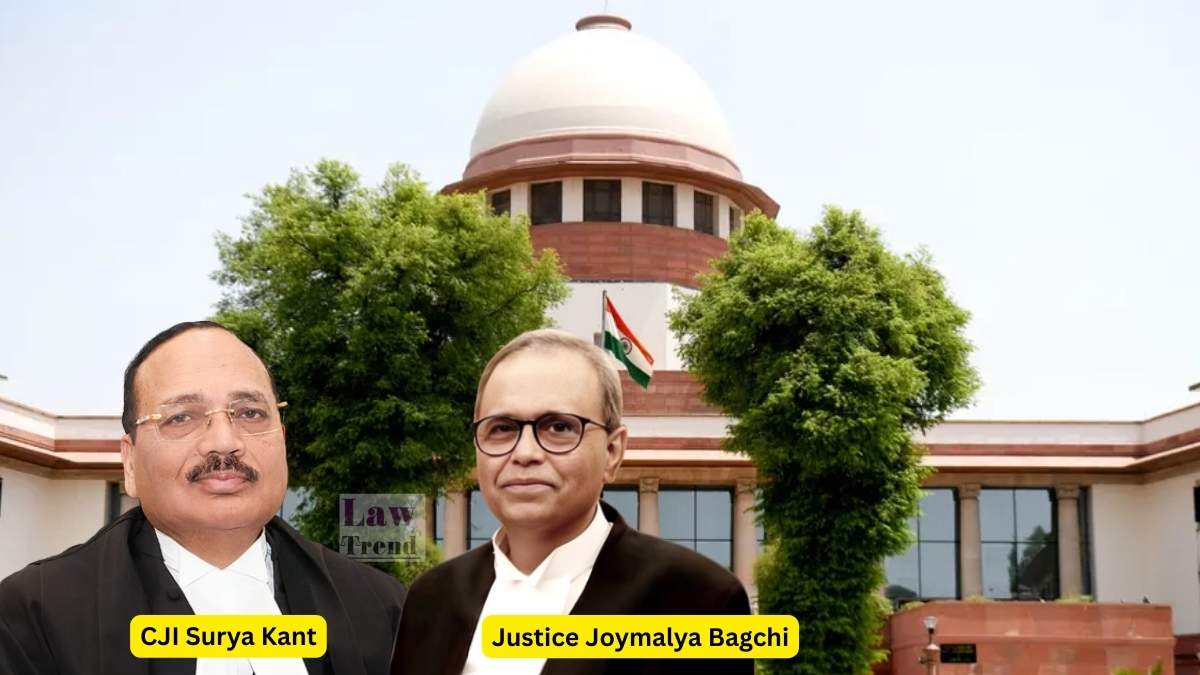

The Supreme Court of India has dismissed an appeal filed by the High Court of Uttarakhand at Nainital, ruling that a Registrar General has no suo-motu authority under the constitutional scheme or statutory rules to initiate disciplinary action against a judicial officer. The Bench, comprising Chief Justice Surya Kant and Justice Joymalya Bagchi, held that the power under Article 235 of the Constitution is vested in the “High Court” (comprising the Chief Justice and companion Judges). Consequently, any disciplinary proceeding initiated without the express approval of the Chief Justice or their delegated committee of judges is void ab initio and non-est in law.

Background of the Case

The first respondent, Deepali Sharma, was appointed as a Judicial Officer in the state of Uttarakhand in the year 2008. Following a domestic inquiry, she was removed from judicial services after serious charges of misconduct were found proved against her.

She challenged her removal by filing a Writ Petition (WPSB No. 266/2021) before the High Court of Uttarakhand. On January 6, 2026, a Division Bench of the High Court, comprising the then Chief Justice and a Puisne Judge, allowed her Writ Petition. Through a detailed judgment, the High Court exonerated the officer of all charges and ordered her reinstatement into service. The High Court of Uttarakhand, acting as the appellant, subsequently filed the present civil appeal before the Supreme Court challenging the Division Bench’s judgment.

Arguments of the Parties

Representing the appellant High Court, Senior Advocate Mrs. Madhavi Divan argued that the departmental inquiry and attending circumstances demonstrated “gross misconduct” on the part of the judicial officer. The appellant contended that the respondent judicial officer had allegedly “victimised the minor girl, who was kept as a domestic help and was rescued with over 20 injuries on her body.”

On the other hand, the respondent judicial officer maintained from the outset that she was a “victim of the harassment at the hands of some senior officers.”

READ ALSO  सुवेंदु अधिकारी ने अपने खिलाफ एफआईआर पर कलकत्ता हाई कोर्ट के आदेश के खिलाफ सुप्रीम कोर्ट का रुख किया, याचिका पर 4 अगस्त को सुनवाई होगी

Court’s Analysis and Legal Observations

The Supreme Court primary focused on the procedural and constitutional validity of the disciplinary proceedings. While the Court observed that “in a departmental inquiry held in accordance with law and prescribed procedure, if such kind of allegations are proved, there can be no exception but to approve the imposition of major punishment,” it found a fundamental constitutional lacuna in how the inquiry was initiated.

The Court noted with concern that the inquiry proceedings against the judicial officer were initiated solely at the “behest and instance of the Registrar General of the High Court.” The Registrar General was neither examined during the proceeding, nor was any primary material produced to show that he had obtained any authorization or order from the Chief Justice of the High Court or from any disciplinary committee of High Court Judges.

Analyzing Article 235 of the Constitution of India, the Supreme Court observed:

“We have no reason to doubt that the power under Article 235 of the Constitution has been expressly vested in the “High Court”, which necessarily shall be comprising the Hon’ble Chief Justice and the companion Judges. Unless the disciplinary action is approved by the Chief Justice of the High Court or the Committee comprising Judges, constituted by him as his delegates, the purported disciplinary action, for all intents and purposes, shall be void ab initio.”

The Bench clearly defined and restricted the administrative boundaries of the Registrar General, observing:

“The Registrar General of the High Court has absolutely no authority either in terms of the constitutional scheme or the statutory rules governing the service conditions of the judicial officers, to suo-moto initiate disciplinary action against any judicial officer. He can only act on behalf of Hon’ble the Chief Justice and the Judges of the High Court.”

Because this essential constitutional procedure was bypassed, the Supreme Court held that “the very foundation of the disciplinary action against respondent No.1 was non-est in law.”

In light of this fatal legal defect, the Court found it unnecessary to delve into the factual findings recorded by the High Court in the impugned judgment. It also chose not to address the broader question of law regarding whether a High Court, under its powers of judicial review, could act as an appellate authority over the findings of an inquiry officer that had been approved by the Full Court.

READ ALSO  Courts are temple of justice, must remain open for tired & weary litigants: Justice Kaul

Supreme Court’s Decision

The Supreme Court granted leave and dismissed the appeal filed by the High Court of Uttarakhand. Taking into account the overall circumstances—specifically the respondent’s consistent claim of harassment by senior officers and the fact that she had already been reinstated following the High Court’s judgment—the Supreme Court declined to interfere with her reinstatement or the setting aside of the disciplinary action.

The Bench explicitly clarified that its decision rested on entirely different legal grounds than those of the High Court, stating:

READ ALSO  Supreme Court Grants Travel Permission to ED Officer Ankit Tiwari Amid Bribery Charges

“We deem it necessary to clarify that we are disapproving of the disciplinary action on entirely different grounds, i.e., the question of law as discussed above and not on the facts, as discussed by the High Court in the impugned judgment.”

All other questions of law raised in the matter were kept open by the Court.

Case Details

  • Case Title: High Court of Uttarakhand at Nainital v. Deepali Sharma & Anr.
  • Case No.: Civil Appeal No. ____ of 2026 (Arising out of SLP (Civil) No. 16520 of 2026)
  • Bench: Chief Justice Surya Kant and Justice Joymalya Bagchi
  • Date: May 18, 2026

Law Trend
Law Trendhttps://lawtrend.in/
Legal News Website Providing Latest Judgments of Supreme Court and High Court

Related Articles

Latest Articles

