

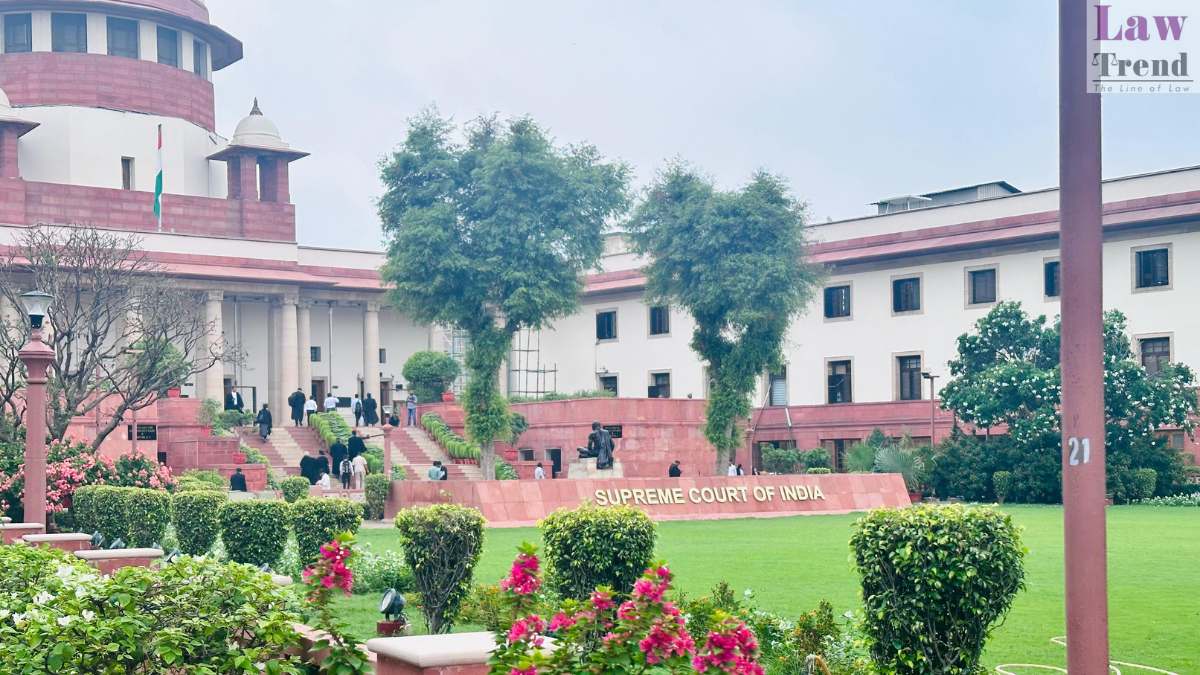
The Supreme Court of India on Wednesday affirmed its authority to determine whether a religious practice constitutes a “superstition,” countering arguments from the Central Government that secular courts lack the scholarly expertise to judge matters of faith.
A landmark hearing led by a nine-judge Constitution bench, headed by Chief Justice of India Surya Kant, is currently examining the scope of religious freedom under the Constitution. The bench is deliberating on petitions involving discrimination against women at various places of worship, a legal journey that gained momentum following the 2018 Sabarimala temple verdict.
The day’s proceedings were marked by a sharp exchange between the bench and Solicitor General Tushar Mehta, representing the Centre. Mehta argued that judges, as experts in law rather than religion, are not equipped to label religious practices as superstitions.
“Even assuming that there is a superstitious practice, it is not for the court to determine that it is superstition,” Mehta submitted. He contended that under Article 25(2)(b) of the Constitution, the power to define and reform such practices lies solely with the legislature. He cited existing statutes against black magic as examples of the legislature stepping in to enact reform.
“Something religious for Nagaland may be a superstition for me,” Mehta added, emphasizing India’s vast cultural diversity.
The bench, which includes Justices B.V. Nagarathna, M.M. Sundresh, Ahsanuddin Amanullah, Aravind Kumar, Augustine George Masih, Prasanna B. Varale, R. Mahadevan, and Joymalya Bagchi, challenged this “simplistic” view.
Justice Ahsanuddin Amanullah asserted the court’s jurisdiction, stating, “In court, you cannot say that whatever the legislature decides is the last word. That cannot be.”
Justice Joymalya Bagchi further tested the Solicitor General’s logic by using the example of witchcraft. He questioned whether the court could remain a silent spectator if a religious practice involving witchcraft was challenged under Article 32 (right to constitutional remedies) while the legislature remained inactive. Justice Bagchi suggested the court could use the “doctrine of unoccupied field” to issue directions based on “health, morality, and public order.”
While Mehta conceded that judicial review is permissible when “health, morality, and public order” are at stake, he maintained that the court should not intervene based on a practice being labeled a “superstition.”
Justice B.V. Nagarathna offered a nuanced perspective on how the judiciary should approach these sensitive matters. She suggested that when determining what constitutes an “essential religious practice,” the court must view the issue through the lens of that specific religion’s philosophy.
“You cannot apply the views of some other religion and say this is not essential religious practice,” Justice Nagarathna observed. “The approach of the court is to apply the philosophy of that religion, subject to health, morality, and public order.”
The current deliberations are the culmination of years of legal dispute over gender-based discrimination in religious spaces. In September 2018, a five-judge bench lifted the ban on women of menstruating age (10 to 50 years) from entering the Sabarimala Ayyappa temple in Kerala, declaring the practice unconstitutional.
However, in November 2019, following review petitions, a majority of another five-judge bench referred broader questions regarding the freedom of religion to a larger bench. This nine-judge panel is now tasked with establishing a definitive legal framework for how the state and the judiciary should interact with the religious rights of multiple faiths in India.
The hearing is ongoing.




