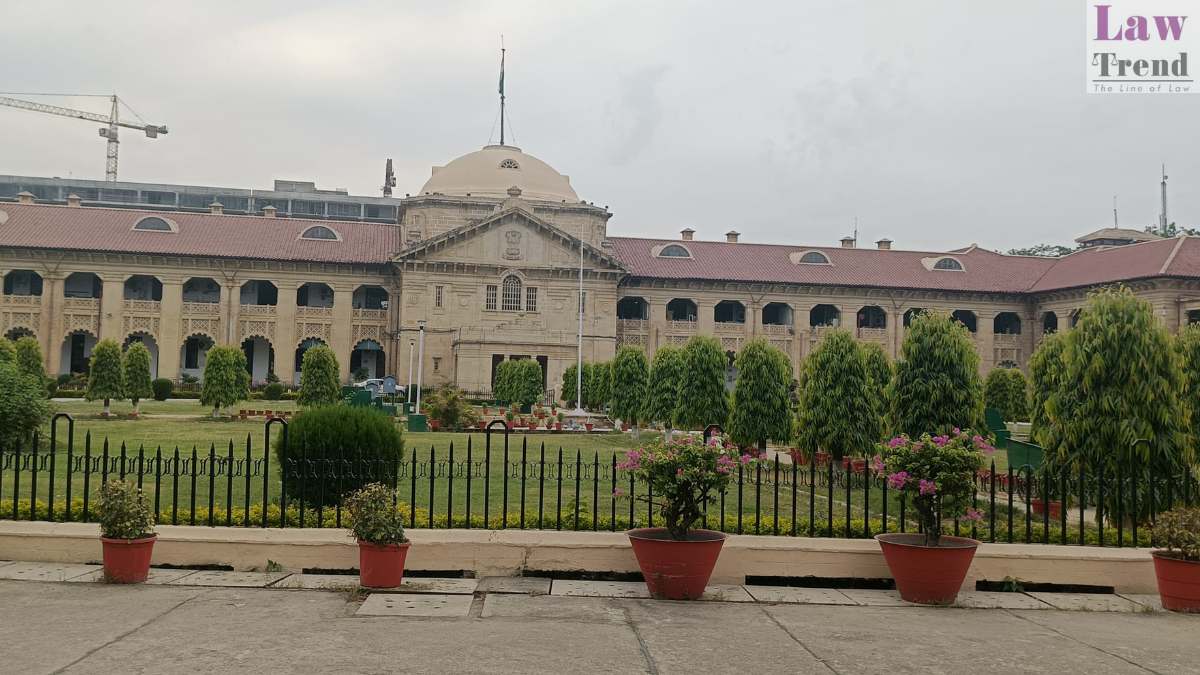
The High Court at Allahabad has quashed orders passed by the State and Regional Level Caste Scrutiny Committees that sought to repeatedly reopen the caste verification of two individuals despite multiple prior clearances by competent authorities. The Division Bench, comprising Justice Neeraj Tiwari and Justice Garima Prashad, held that administrative and quasi-judicial proceedings cannot continue indefinitely, as doing so defeats the principle of finality and results in harassment.
Background
The case, Afjaal Ahmad and another v. State of U.P. and 4 others, originated from a complaint filed on December 14, 2011, by one Late Nazmuddin. The complainant alleged that the petitioners, who claimed to belong to the “Bhishti Abbasi” (Other Backward Class) category, had obtained fraudulent caste certificates.
Following the complaint, the State Government directed the District Level Caste Scrutiny Committee, Prayagraj, to conduct an inquiry. On April 3, 2014, the District Level Committee found the complaint baseless and upheld the validity of the certificates. Despite the death of the original complainant in 2013, his son (Respondent No. 5) continued to challenge the findings. Although the District Level Committee reiterated its findings in 2016 and the State Government formally closed the proceedings in 2015, the Regional and State Level Committees continued to remand the matter for fresh inquiries, leading to the present writ petition.
Arguments of the Parties
The petitioners, represented by Senior Advocate V.K. Singh, argued that their caste status had been examined repeatedly and cleared by the District Level Committee twice. They contended that the State Government had already consigned the matter to record in 2015 and 2022, and the continued proceedings at the behest of a third party (the complainant’s son) constituted harassment.
Respondent No. 5 argued that the petitioners had obtained government posts through fraud by claiming an OBC status they did not possess. Relying on Supreme Court precedents, the respondent’s counsel argued that the validity of a caste certificate is a matter of public importance and can be raised by a third party to prevent “fraud on the Constitution.”
The Standing Counsel for the State supported the petitioners’ timeline, confirming that the State Government had dismissed the original complaint as baseless as early as April 28, 2015, and had issued directions to terminate all related proceedings.
Court’s Analysis and Observations
The Court observed that the controversy revolved around the legality of “repeated reopening of caste verification proceedings.” Referencing the landmark Supreme Court decision in Kumari Madhuri Patil v. Addl. Commissioner, Tribal Development (1994), the Bench noted that while a mechanism for scrutiny exists, the determination must reach finality.
The Court held:
“Administrative and quasi-judicial proceedings cannot be permitted to continue indefinitely as that would defeat the principle of finality and would result in unnecessary harassment of the parties.”
The Bench further clarified that while a false caste claim is indeed a “fraud on the Constitution” (as held in CMD, FCI v. Jagdish Balaram Bahira), this principle cannot be invoked mechanically. The Court noted that in this specific case, no finding of fraud was ever recorded despite multiple inquiries.
On the issue of locus standi, the Court cited Dr. Duryodhan Sahu v. Jitendra Kumar Mishra (1998) and Hari Bansh Lal v. Sahodar Prasad Mahto (2010), observing that:
“Strangers have no locus standi to challenge appointments or service benefits and such disputes are essentially between the employer and the employee.”
The Court found that Respondent No. 5, as a co-villager, had not demonstrated any direct legal injury and could not “perpetually re-agitate a matter which has already been examined and concluded by the competent statutory authorities.”
Decision
The High Court quashed the impugned orders dated December 18, 2016, July 18, 2017, and November 27, 2020. It directed that the proceedings pending before the Regional and District Level Caste Scrutiny Committees be closed immediately. The Court affirmed that the findings of the District Level Committee from 2014 and 2016, which declared the petitioners’ caste certificates valid, shall remain operative.
Case Details:
- Case Title: Afjaal Ahmad and another Versus State of U.P. and 4 others
- Case No: WRIT-C No. 12679 of 2022
- Bench: Justice Neeraj Tiwari and Justice Garima Prashad
- Date: April 6, 2026