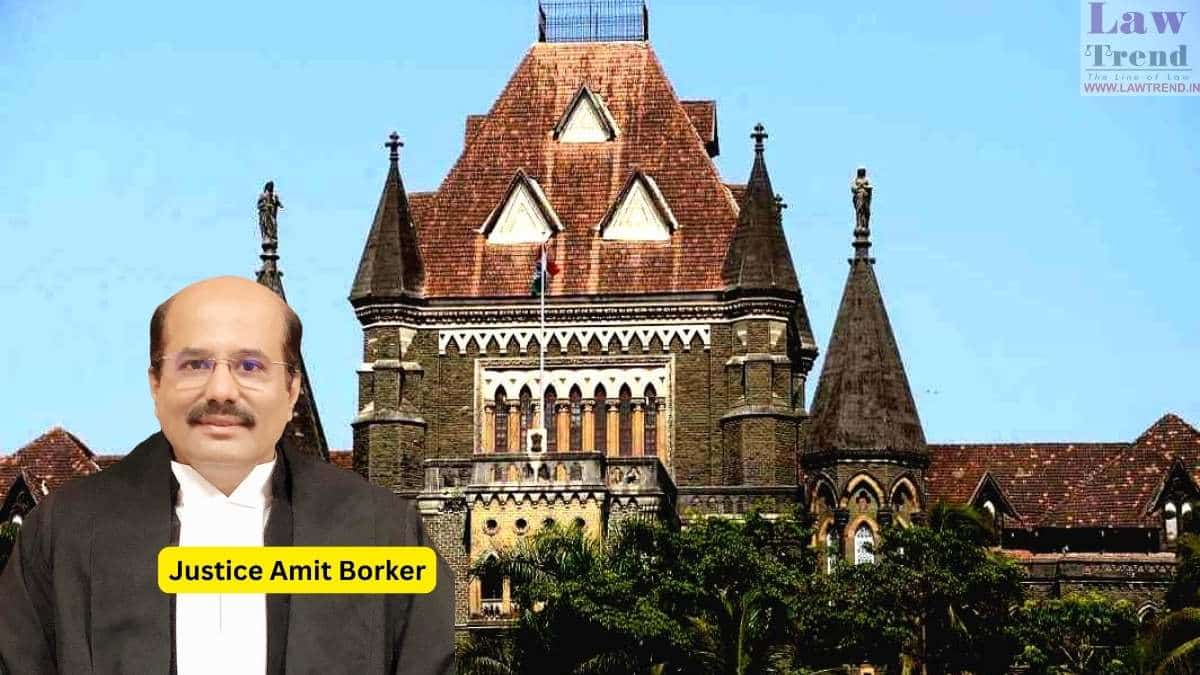
The Bombay High Court has set aside the dismissal of a Mumbai Port Trust (MBPT) employee, observing that the departmental inquiry was marred by “unexplained and inordinate delay” and lacked evidence independent of a criminal case that had already ended in the employee’s acquittal. Justice Amit Borkar, presiding over a Single Judge Bench, ruled that while criminal and departmental proceedings operate on different standards, an acquittal based on a “possibility of false implication” cannot be ignored when the disciplinary action relies on the same set of evidence.
Background
The Petitioner, Shri Babasaheb Rayappa Waghmare, joined the Mumbai Port Trust as a Shore Worker in July 1979. On February 14, 1994, he was allegedly found in an open area near the New Sewree Warehouse carrying a chocolate-colored leather handbag containing four electronic parts valued at approximately ₹4,000. Following a report to the Shivdi Police Station, an FIR was registered under Section 379 of the Indian Penal Code.
While the criminal case was pending, the Petitioner continued his duties for four years. However, on February 10, 1998—when the criminal trial had reached an advanced stage—the Port Trust initiated departmental proceedings by issuing a Charge Memo. On July 22, 1998, the Metropolitan Magistrate at Dadar acquitted Waghmare, noting “serious material contradictions” and specifically recording that the “possibility of false implication could not be ruled out.”
Despite this acquittal, the departmental Enquiry Officer submitted a report holding that the charges stood proved. Consequently, on December 18, 1998, the Deputy Manager (Hamallage) imposed the penalty of dismissal from service. The Central Government Industrial Tribunal (CGIT) later upheld the dismissal in awards delivered in 2003 and 2007, which the Petitioner challenged before the High Court in the present writ petition.
Arguments of the Parties
Petitioner’s Contentions: Advocate S. A. Rajeshirke, representing Waghmare, argued that initiating departmental proceedings after a delay of nearly four years from the date of the incident was “arbitrary, unreasonable and actuated by mala fides.” He contended that the Respondent sought to rely on a purported report dated February 14, 1994, which was introduced only during the inquiry stage to “fill the lacunae” of the prosecution’s case. Relying on Capt. M. Paul Anthony v. Bharat Gold Mines Ltd., he argued that since the charges and evidence were identical, the acquittal—which was not merely on “benefit of doubt”—should have concluded the matter.
Respondent’s Contentions: Advocate Dhruva Gandhi for the Mumbai Port Trust argued that the standard of proof in departmental inquiries is “preponderance of probabilities,” which is distinct from the strict “beyond reasonable doubt” standard in criminal trials. He maintained that the Petitioner was found in possession of trust property and that the Inquiry Officer’s findings were founded upon available material. He cited Noida Entrepreneurs Association v. Noida to assert that departmental proceedings can proceed independently of criminal outcomes.
Court’s Analysis
The High Court meticulously analyzed the distinction between the two types of proceedings. Justice Borkar noted that while an acquittal does not automatically terminate disciplinary action, the nature of the acquittal is a guiding factor.
The Court observed:
“The findings recorded by the criminal court are not based on a mere technical benefit of doubt. They indicate weaknesses in the prosecution case… The departmental findings therefore appear to rest on the same material that had been rejected by the criminal court.”
Regarding the four-year delay in issuing the charge sheet, the Court stated:
“Such a long delay in initiating disciplinary action requires an explanation… In the present case the record does not disclose any satisfactory explanation for the long period of inaction. When serious charges are framed after many years without any justification, the delay becomes a relevant factor while assessing the fairness of the disciplinary action.”
The Court also took exception to the sudden introduction of documents during cross-examination that were not part of the original charge sheet, stating:
“If documents are produced suddenly at a late stage and are treated as evidence without giving opportunity to examine them, the fairness of the enquiry becomes doubtful. This issue becomes even more serious when the documents appear to address gaps which had led to the criminal acquittal.”
Decision
Allowing the Writ Petition, the High Court quashed the CGIT awards and the 1998 dismissal order. Since Waghmare had attained the age of superannuation during the pendency of the petition, reinstatement was not possible. Consequently, the Court ordered that he be deemed to have continued in service until his retirement.
The Court directed the Mumbai Port Trust to:
- Pay full back wages from the date of dismissal (December 18, 1998) until the date of superannuation.
- Grant all consequential benefits, including increments and continuity of service for pensionary purposes.
- Compute and pay all retiral dues, including pension and gratuity, within twelve weeks.
The Court further stipulated that if the amounts are not paid within the stipulated period, they shall carry an interest rate of six percent per annum from the date of the judgment until realization.
Case Details Block:
- Case Title: Babasaheb Rayappa Waghmare v. The Chairman, Mumbai Port Trusts
- Case Number: Writ Petition No. 1778 of 2018
- Bench: Justice Amit Borkar
- Date: March 27, 2026