

Allahabad High Court Reads Down Rule 16 of Medical Attendance Rules to Allow Reimbursement Claims by Legal Heirs
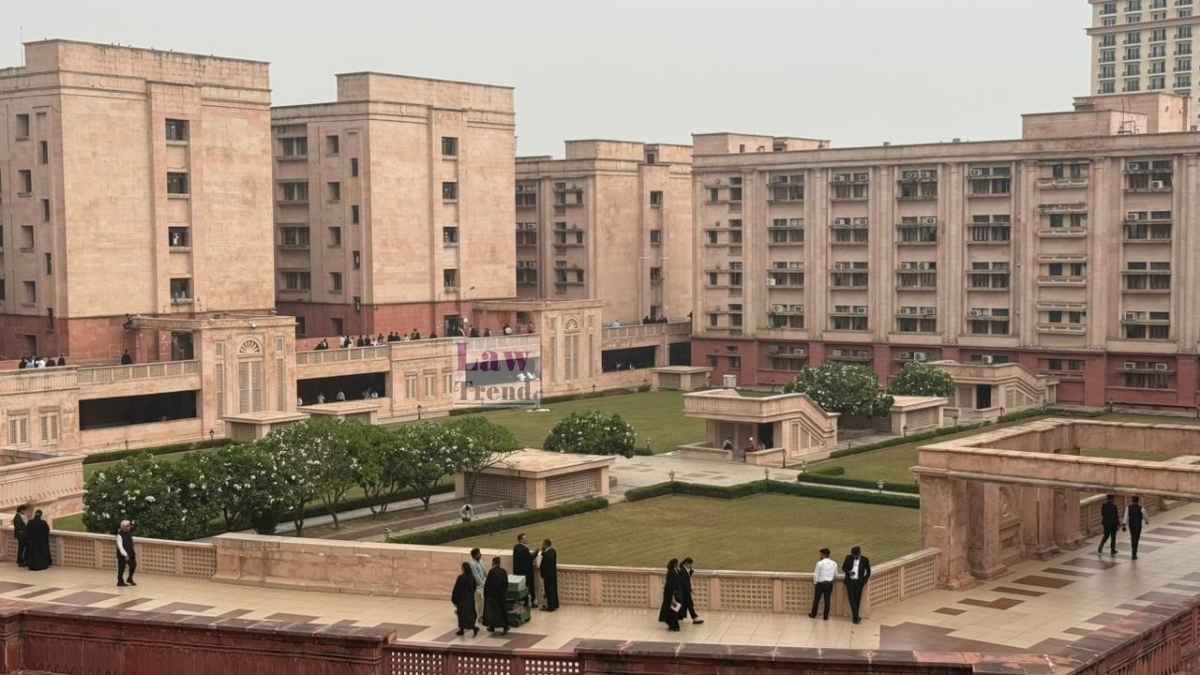

The Lucknow Bench of the Allahabad High Court has ruled that legal heirs are entitled to submit medical reimbursement claims in cases where the primary beneficiary dies or is incapacitated during treatment. A Division Bench comprising Justice Alok Mathur and Justice Amitabh Kumar Rai held that restricting such claims solely to the defined “beneficiary” is arbitrary and violative of Article 14 of the Constitution of India.

Background

The petitioner, Chandra Choor Singh, challenged the rejection of a medical reimbursement claim for the treatment of his father, Rudra Pratap Singh. The father, a retired Deputy Registrar, underwent treatment at private medical centers in Lucknow from July 30, 2017, to August 26, 2017, and passed away on August 28, 2017.

Following the death, the petitioner applied for reimbursement under the Uttar Pradesh Government Servant (Medical Attendance) Rules, 2011. Although the Chief Medical Officer, Gorakhpur, verified the claim for approximately ₹12.18 lakhs, the Deputy Inspector General of Registration rejected it on May 9, 2019. The rejection was based on the ground that the petitioner did not fall within the definition of “beneficiary” and that his succession certificate was limited to ₹5,000. After a prior round of litigation before the U.P. State Public Services Tribunal, the claim was rejected again on January 10, 2023, prompting the present writ petition.

Arguments of the Parties

Sri Sumeet Tahilramani and Ms. Aahuti Agarwal, appearing for the petitioner, argued that Rule 16 of the 2011 Rules is arbitrary as it fails to account for situations where a government servant dies during treatment. They contended that excluding legal heirs from filing claims in such eventualities discriminates against those who do not survive their treatment or are incapacitated. The counsel further submitted that since the father was entitled to medical treatment under service rules, his death should not extinguish the right to reimbursement for expenses already incurred.

READ ALSO  Complaint filed u/s 138 of NI Act for dishonor of cheque does not bar a subsequent case for cheating u/s 420 and 406 IPC: P&H HC

The learned Standing Counsel, appearing for the State-respondents, supported the impugned order. It was argued that the right to claim reimbursement is strictly governed by the 2011 Rules, which define “beneficiary” under Rule 3(b) as government servants, retirees, and their family members eligible for family pension. The State maintained that Rule 16 explicitly provides that the “beneficiary” shall submit the claim, and since the petitioner does not fall within this definition, the authorities correctly rejected his application.

Court’s Analysis

The High Court observed that Rule 16, on its face, appeared “unreasonable and arbitrary.” The Bench noted that the government failed to consider scenarios where a government servant dies without any other surviving “beneficiary” as defined by the rules.

READ ALSO  Paying Rs 150 Per Month is Forced Labour and Violates Article 21: Allahabad HC Directs to Pay Minimum Pay Scale to Chowkidar

“It cannot be said that the medical expenses would not be liable to be reimbursed… if the government servant during his treatment or due to his illness is incapacitated from making any claim, for example if he is in a vegetative state or totally paralysed,” the Court remarked.

The Court applied the “twin test of reasonableness” under Article 14, citing the Supreme Court’s decisions in The State of West Bengal v. Anwal Ali Sarkar (1952) and Sukanya Shantha v. Union of India (2024). It found no reasonable classification for excluding legal heirs when a beneficiary dies or is incapacitated.

To save the provision from being struck down, the Court employed the principle of ‘reading down’, referencing Central Bank of India v. Shanmugavelu (2024). The Bench stated:

“The rule of ‘reading down’ is only for the limited purpose of making a provision workable and its objective achievable.”

The Court further emphasized that the 2011 Rules constitute “beneficial legislation,” which, according to Urmila Dixit v. Sunil Sharan Dixit (2025), must receive a liberal construction in favor of the intended beneficiaries.

Regarding the succession certificate, the Court held that if there is no dispute about the identity of the legal heir, a monetary limit in a certificate issued by a Tehsildar should not bar a larger claim. “A person should not be forced to obtain a succession certificate declaring him to be a legal heir in a situation where no such dispute exists,” the Bench added.

READ ALSO  Allahabad HC Refuses To Grant Anticipatory Bail Plea To Jitendra Tyagi Who is Accused Of Raping His Driver’s Wife

Decision

The High Court allowed the writ petition and quashed the rejection order dated January 10, 2023. The Bench directed:

  1. Rule 16 of the Rules, 2011 shall be read to include claims by legal heirs where the beneficiary dies or is incapacitated and no other defined beneficiary survives.
  2. The Inspector General of Registration (Respondent No. 2) must reconsider the petitioner’s claim as a valid application under Rule 16.
  3. A decision must be made within two months, and if found in order, payment must be disbursed within one month thereafter.

Case Details:

  • Case Title: Chandra Choor Singh v. State Of U.P. Thru. Prin. Secy. Stamp And Registration Deptt. Lko And 2 Others
  • Case Number: WRITA No. 12693 of 2024
  • Bench: Justice Alok Mathur and Justice Amitabh Kumar Rai
  • Date: March 11, 2026

Law Trend
Law Trendhttps://lawtrend.in/
Legal News Website Providing Latest Judgments of Supreme Court and High Court

Related Articles

Latest Articles

