

Assessment of IAF Women Officers for Permanent Commission Vitiated by “Structural Distortion”; Supreme Court Grants Pensionary Benefits to Released Officers
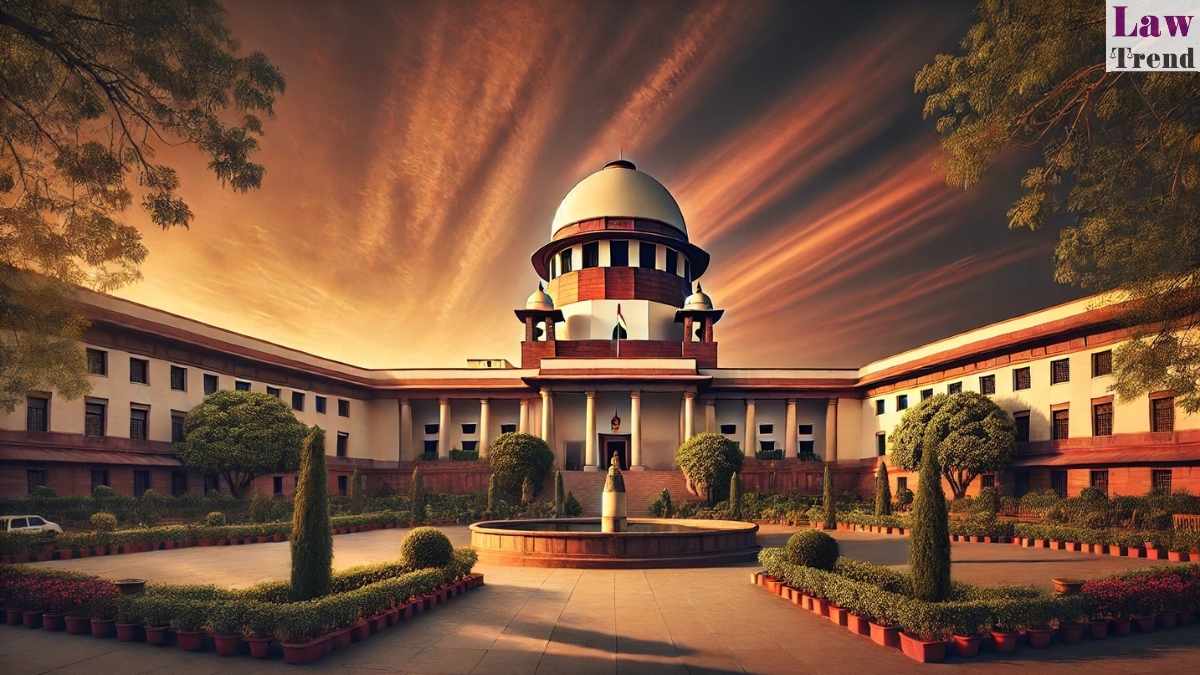

The Supreme Court of India has held that the evaluation process used by the Indian Air Force (IAF) to deny Permanent Commission (PC) to several Short Service Commission Women Officers (SSCWOs) was “inherently unfair and arbitrary.” A three-judge bench comprising Chief Justice of India Surya Kant, Justice Ujjal Bhuyan, and Justice Nongmeikapam Kotiswar Singh observed that relying on Annual Confidential Reports (ACRs) written when the officers had no prospect of long-term retention created a “structural distortion” in the selection process. While the Court declined to reinstate the officers who were released in 2021, it directed that they be deemed to have completed 20 years of qualifying service to entitle them to pensionary benefits.

Background

The case involved a batch of appeals filed by six SSCWOs commissioned into the IAF in 2007. At the time of their induction, a policy embargo (HRP 21/2006) suspended the grant of PC to all SSCOs commissioned after May 25, 2006. This embargo was suddenly lifted in 2019 through Human Resource Policy (HRP) 01/2019, allowing these officers to compete for PC in their 11th, 12th, and 13th years of service.

However, the Appellants were denied PC across three successive Selection Boards (2019, 2020, and 2021) on grounds of failing to meet “Minimum Performance Criteria” or low comparative merit. They challenged the fairness of HRP 01/2019 before the Armed Forces Tribunal (AFT) and the Delhi High Court, both of which dismissed their pleas, leading to the present appeals before the Supreme Court.

Arguments of the Parties

The Appellants, represented by Senior Advocate Dr. Menaka Guruswamy, argued that the 2019 policy was implemented in “undue haste,” leaving officers with barely 1.5 months to meet newly prescribed criteria like “Categorisation” grades. They further contended that their ACRs were authored in an environment where they were expected to be released after 14 years, leading to “casual grading” not oriented toward evaluating long-term potential. They cited Lt. Col. Nitisha v. Union of India (2021) to argue that officers assessed without a career horizon are structurally disadvantaged.

READ ALSO  S.138 NI Act | Issuer Personally Liable for Cheque Drawn on Personal Account Even if Debt Alleged to be of Society: Delhi HC

The Union of India, represented by Additional Solicitor General Aishwarya Bhati, defended the policy as an administrative prerogative essential for maintaining a “youthful and combat-ready force.” The Respondents argued that the ACR thresholds remained navigator-neutral and consistent across different policies and that the Appellants’ non-selection was purely a result of lower comparative merit in a highly competitive environment with limited vacancies.

The Court’s Analysis

The Supreme Court identified three core issues: the alleged casual grading of ACRs, the abrupt introduction of new eligibility criteria (MISCs and Categorisation), and the overall fairness of the 2019 assessment framework.

1. Structural Distortion in ACRs

The Court noted that for the bulk of the Appellants’ service, they were ineligible for PC. Consequently, their assessing officers only evaluated their suitability for short-term extensions, not for permanent absorption or leadership roles.

READ ALSO  Article 142 Cannot Be Invoked to Reduce Statutory Minimum Sentence; Sanction Under PC Act Valid If Prima Facie Case Exists: Supreme Court

“An assessment undertaken to evaluate performance within a limited service horizon cannot be treated as an assessment of suitability for permanent absorption. To do so would be to overlook the basic premise upon which the appraisal was originally conducted.”

The Bench concluded that using such reports to determine PC eligibility was “inherently unfair,” as the appraisal process itself became “structurally distorted.”

2. Hurried Implementation of New Criteria

The Court found that HRP 01/2019 introduced mandatory performance markers—such as a minimum CGPA in In-Service Courses (MISCs) and a “Category C” qualification—that were previously voluntary or irrelevant to career progression. By holding the first Board in March 2019, just two months after the policy’s release, the IAF deprived officers of a “meaningful opportunity” to meet these requirements.

“The precipitous conduct of the first Board in March 2019 deprived the Appellants of one of the three promised and evidently, precious, opportunities for consideration for PC.”

3. Transparency and Vacancies

Referencing its judgment in Yogendra Kumar Singh v. Union of India, the Court reiterated that the failure to disclose evaluation criteria and vacancy computation methodology prior to Selection Boards violates “basic norms of fairness and transparency.”

The Decision

The Supreme Court allowed the appeals in part, setting aside the judgments of the AFT and the Delhi High Court. The Court issued the following key directions:

  1. Pensionary Benefits: As a “one-time measure,” all SSCOs considered in the 2019-2021 Boards who were denied PC shall be deemed to have completed 20 years of substantive qualifying service. They are entitled to pension and consequential benefits (excluding arrears of pay) starting from January 1, 2025.
  2. No Reinstatement: Reinstatement was denied in the interest of the “operational effectiveness of the Air Force.”
  3. Future Boards: The IAF must issue “appropriate General Instructions” before future Selection Boards, detailing available vacancies per branch/batch and the specific apportionment of marks for evaluation criteria.
  4. Intervenors: Officers commissioned in 2011 who are currently serving under interim stay orders may continue their legal challenges before the AFT or High Court.
READ ALSO  When External Aid of Interpretation Can be Used? Explains Supreme Court

In two related matters, the Court dismissed the appeal of two male SSCOs (Neeraj Kumar v. UOI) due to “belated” approach and voluntary release, while clarifying in Sqn. Ldr. Nitu Thapliyal v. UOI that deemed service does not entitle officers to “notional time-scale promotions” to higher ranks like Wing Commander if they never actually served in those ranks.

Case Details

  • Case Title: Wg. Cdr. Sucheta EDN v. Union of India and others
  • Case Number: Civil Appeal arising out of Diary No. 28412 / 2024 (and connected matters)
  • Bench: CJI Surya Kant, Justice Ujjal Bhuyan, and Justice Nongmeikapam Kotiswar Singh
  • Date: March 24, 2026

Law Trend
Law Trendhttps://lawtrend.in/
Legal News Website Providing Latest Judgments of Supreme Court and High Court

Related Articles

Latest Articles

