

Acquittal Entitles Employee to Full Pay for Suspension Period: Madras HC Directs TANGEDCO to Treat Suspension as Duty
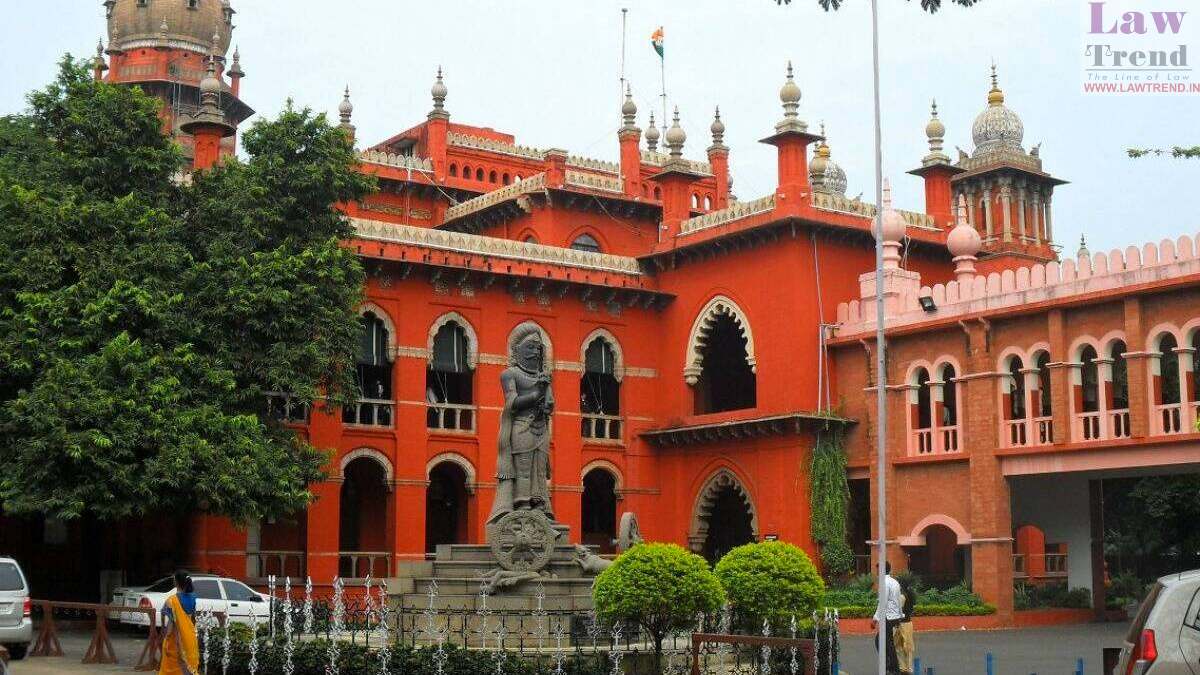

The Madurai Bench of Madras High Court has set aside orders passed by the Tamil Nadu General and Distribution Corporation Limited (TANGEDCO) that treated a former employee’s suspension period as leave. The court held that under the relevant service regulations, an employee acquitted of criminal charges is entitled to have their suspension period treated as duty for all purposes, including full pay and allowances.

Background

The petitioner, Palaraman, was working as an Assistant Executive Engineer at TANGEDCO when he was placed under suspension on October 20, 2010. The suspension followed his involvement in a criminal case registered under Sections 7, 13(2) r/w 13(1) and 19(1)(c) of the Prevention of Corruption Act, 1988.

While his suspension continued, the petitioner reached the age of superannuation on May 31, 2015. However, he was not permitted to retire due to the pending criminal proceedings. On June 30, 2022, the Special Judge-cum-Chief Judicial Magistrate, Srivilliputhur, acquitted the petitioner in Spl.S.C. No. 56 of 2014. Following this, TANGEDCO revoked the suspension on June 14, 2023, and allowed him to retire retrospectively from May 31, 2015.

The dispute arose when the respondents issued orders on December 4, 2024, and January 30, 2025, regularizing the suspension period (20.10.2010 to 31.05.2015) by treating it as various types of leave, including Earned Leave and Extraordinary Leave (EOL) without pay, instead of duty.

READ ALSO  Mere Naming of Husband’s Relatives Without Specific Role Not Enough to Prosecute Under Section 498A: Supreme Court

Arguments of the Parties

The petitioner’s counsel, Mr. R. Karunanidhi, argued that the case was squarely covered by Ruling 9 of Regulation 57(A) of the TNEB Service Regulations. He contended that since the petitioner was acquitted of all criminal charges and the board dropped departmental proceedings, he is entitled to full pay and allowances as if he had never been suspended. He also cited a Division Bench judgment in W.A.No.1434 of 2018.

Per contra, the Standing Counsel for TANGEDCO, Mr. S. Arivazhagan, argued that Ruling 9 was inapplicable because the petitioner had attained superannuation before his acquittal, meaning there was no actual “reinstatement” into service. He further invoked the principle of “no work, no pay” and claimed the regulations applied only to workmen, not Grade II Officers like the petitioner.

READ ALSO  Accused Absent from Crime Scene Still Fully Accountable Under NDPS Act: Punjab & Haryana High Court

Court’s Analysis

Justice Mummineni Sudheer Kumar rejected the respondents’ technical objections. The court observed that revoking a suspension order and permitting retirement retrospectively amounts to a “deemed reinstatement.”

The court noted:

“Once the suspension order is revoked that amounts deemed reinstatement and then permitting him to retire from service. If the reinstatement is not read into the said order, the respondent Board permitting the petitioner to retire from service… does not arise.”

The court heavily relied on Ruling 9 of Regulation 57-A, which states that where an employee is suspended due to a criminal trial and is subsequently acquitted, they “must be regarded as having been prevented from discharging his duties and the period of his absence including the period of suspension shall be treated as duty for all purposes.”

The Bench also noted that the respondents themselves had cited Regulation 57-A in their impugned order, making it contradictory for them to later argue its inapplicability.

Regarding the “no work, no pay” principle, the court found it irrelevant in light of the specific service regulations. It also noted that TANGEDCO had already paid approximately ₹21,00,000 as subsistence allowance during the suspension period on its own volition.

READ ALSO  Does RERA Act Bars Jurisdiction of Consumer Court? SC Answers

The Decision

Allowing the writ petition, the Court quashed the impugned orders passed by the Chief Engineer and Superintending Engineer of TANGEDCO.

The Court ordered:

“This writ petition is allowed directing the respondents to treat the entire period of suspension from 20.10.2010 till 31.05.2015 as duty period and pay all pay and allowances as expeditiously as possible, at any rate within a period of two months.”

The court clarified that the subsistence allowance already paid to the petitioner during the suspension period should be adjusted against the final settlement of pay and allowances.

Case Details Block:

  • Case Title: Palaraman vs. The Chairman Cum Managing Director, TANGEDCO & Others
  • Case Number: WP(MD). No. 6343 of 2025
  • Bench: Justice Mummineni Sudheer Kumar
  • Date of Judgment: 11/03/2026

Law Trend
Law Trendhttps://lawtrend.in/
Legal News Website Providing Latest Judgments of Supreme Court and High Court

Related Articles

Latest Articles

