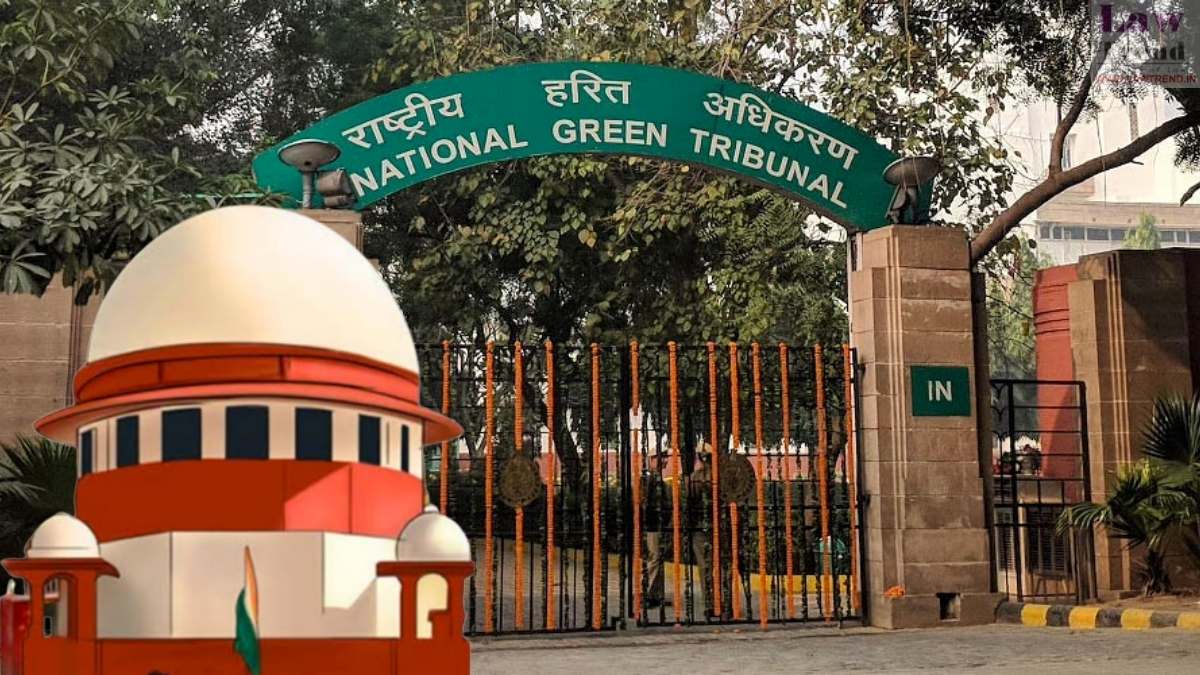
The Supreme Court of India has set aside two orders of the National Green Tribunal (NGT) that stalled the establishment of a petrol pump in Haridwar for nearly six years. The Court characterized the litigation as a “classic case of how a busy body stalled the commencement of a petrol pump,” resulting in the frustration of a commercial enterprise and a public utility outlet.
The Bench, comprising Justice Sanjay Kumar and Justice K. Vinod Chandran, delivered the judgment in Indian Oil Corporation Ltd. v. Deepak Sharma and Ors. (Civil Appeal No. 3042 of 2023), emphasizing that the NGT cannot abdicate its adjudicatory functions to expert committees or dispense with the principles of natural justice.
Background of the Case
The dispute originated when the 1st Respondent, Deepak Sharma, filed an application before the NGT alleging that a proposed petrol pump in Haridwar was being set up in violation of Central Pollution Control Board (CPCB) guidelines. Specifically, the respondent claimed the site was adjacent to a gas agency and a play school, and offended siting criteria requiring a 50-meter distance from schools, hospitals, and residential areas.
The NGT, via an order dated February 1, 2021, directed a committee to take a final decision and kept the No Objection Certificates (NOCs) for the petrol pump in abeyance. Later, in an execution petition on November 11, 2022, the NGT—without issuing notice to the project proponents—directed the District Magistrate to ensure compliance with the committee’s report, which had suggested the outlet could not be allowed.
Arguments of the Parties
Appellants (Indian Oil Corporation & Grantees): Senior Counsel Mr. Neeraj Malhotra and ASG Mr. Raghavendra P. Shankar argued that all statutory compliances were met. They pointed out that:
- The site is located in a commercial area according to the Haridwar Master Plan 2025.
- The play school mentioned was non-operational and subsequently closed.
- The only house within the immediate vicinity belonged to the husbands of the petrol pump allottees.
- The NGT passed orders in violation of natural justice and failed to independently adjudicate the matter.
Respondents: Counsel for the 1st Respondent argued that the authorities acted in total violation of environmental guidelines. They alleged that the appellants had suppressed the NGT’s orders from statutory authorities and that the project threw “to winds the precautionary principle and the safety of the nearby residents.”
The Court’s Analysis
The Supreme Court raised significant concerns regarding the NGT’s procedural conduct and its failure to exercise its legal mandate.
1. Abdication of Adjudicatory Functions The Court observed that the NGT had delegated its judicial duties to a committee. Referring to Sanghar Zuber Ismail v. Union of India (2021) and Kantha Vibhag Yuva Koli Samaj Parivartan Trust v. State of Gujarat (2023), the Bench noted:
“The constitution of an Expert Committee does not absolve the NGT of its duty to adjudicate and that such adjudicatory functions cannot be assigned to committees… the role of an expert committee appointed by an adjudicatory forum is only to assist and not to adjudicate.”
2. Violation of Natural Justice The Court criticized the NGT’s order dated November 11, 2022, which was passed on the date of admission without notice to the appellants. The Bench stated:
“The second order is starker insofar as the principles of natural justice having been given a complete go by and the execution petition having been disposed of on the first date… in clear violation of the statutory prescription under Section 19 (1) [of the NGT Act].”
3. Locus Standi and Merit of Allegations The Court questioned the locus standi of the 1st respondent, noting he failed to prove he resided in the vicinity. Upon reviewing the CPCB guidelines, the Court found that the 50-meter distance rule applies to “residential areas designated as per the local laws.” Since the Haridwar Master Plan demarcated the area as “commercial,” the siting criteria were not violated.
Regarding the NGT’s findings on pollution, the Court remarked:
“We are also a little perturbed by the bland finding, without reference to any studies, of fumes emitted on fuel dispensation leading to environmental depredation, when definitely burning it would result in a more onerous consequence.”
The Decision
The Supreme Court allowed the appeals and set aside the NGT orders dated February 1, 2021, and November 11, 2022. The Court directed the District Magistrate, Haridwar, to consider the issue afresh, stating: “The establishment of the petrol pump shall be permitted, if in compliance of the extant laws.”
The Court concluded by expressing disapproval of the 1st respondent’s bona fides, noting that the “busy body” had kept the establishment in limbo despite all statutory clearances being obtained years prior.
Case Details:
- Case Title: Indian Oil Corporation Ltd. vs. Deepak Sharma and Ors.
- Case Number: Civil Appeal No. 3042 of 2023 (with C.A. Nos. 4991-4992 of 2024)
- Bench: Justice Sanjay Kumar and Justice K. Vinod Chandran
- Date: March 23, 2026