

No Post-Retiral Benefits for Employees of Self-Financing Institutes Without Specific Rules: Allahabad High Court
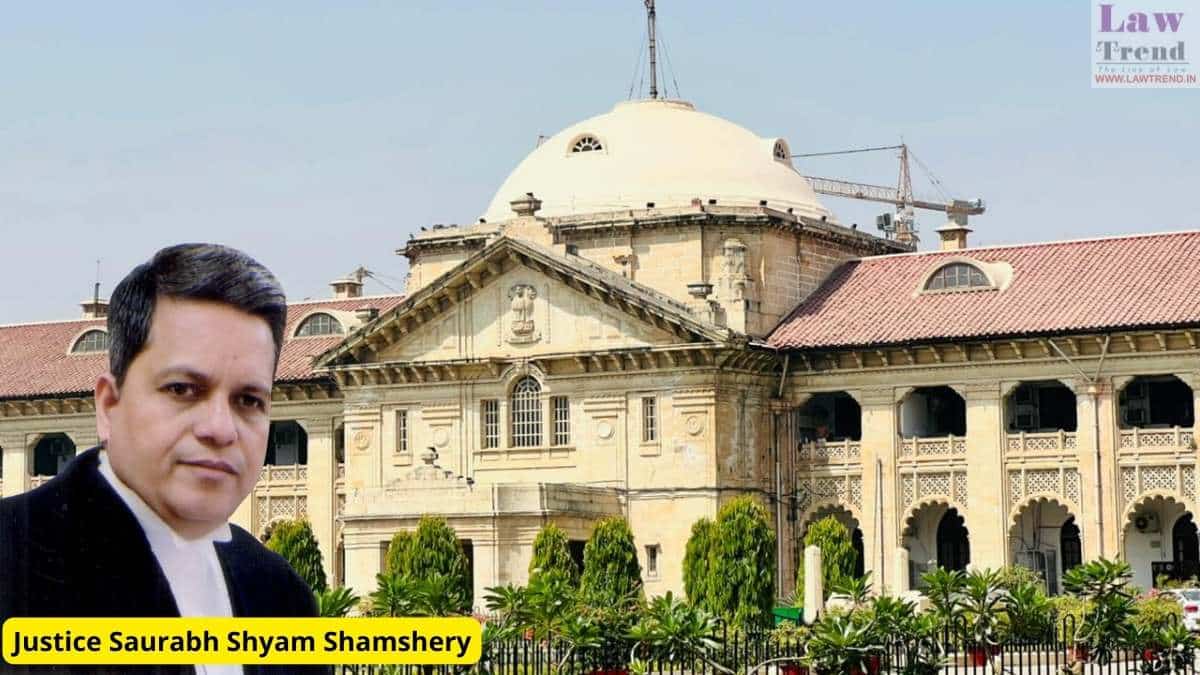

The Allahabad High Court has ruled that employees of self-financing institutes within a university are not entitled to post-retiral benefits, such as pension and gratuity, in the absence of specific service rules or statutory provisions. The court emphasized that the mere status of an institute as an “integral part” of a university does not automatically confer a right to pensionary benefits, especially when the financial burden for such benefits cannot be shifted to the public exchequer.

The judgment was delivered by Justice Saurabh Shyam Shamshery in the case of Rekha Singh vs. Union of India and Others (WRIT – A No. 4877 of 2021).

Background of the Case

The petitioner, Rekha Singh, served as an Assistant Director and later as Director at the Institute of Correspondence Courses and Continuing Education (ICC&CE), University of Allahabad. Following her retirement on August 31, 2017, she sought post-retiral dues including pension, gratuity, and provident fund.

The petitioner had previously approached the High Court in 2016 for arrears of salary. In that instance (Writ-A No. 31696 of 2016), the court had directed the university to pay her salary from November 2014 until her retirement in 2017. The court had then noted that since ICC&CE was a self-financing institute, the liability to pay salary should not fall on the public exchequer or the government.

When the university rejected her claim for post-retiral benefits via an office order dated May 30, 2019, the petitioner filed the present writ petition. The university’s rejection was based on the grounds that the institute was temporary, self-financed, and that Ordinance XXXII of the University Ordinances did not provide for post-retiral dues for ICC&CE staff.

READ ALSO  Judicial Officers with Seven Years’ Bar Experience Eligible for District Judge Appointment Under Bar Quota: Supreme Court

Arguments of the Parties

For the Petitioner: Senior Advocate Sri G.K. Singh argued that under the original Ordinances of the State University, the ICC&CE was considered an “integral part of the University” and its staff were borne on the strength of respective University departments. He further contended that when Allahabad University became a Central University in 2005, the petitioner’s service conditions and rights to pension and gratuity were protected under Section 5(d) of the University of Allahabad Act, 2005. Additionally, the petitioner cited documents suggesting that other employees of the same institute had been granted such benefits.

For the Respondent-University: Senior Advocate Sri Manish Goyal submitted that the ICC&CE had always maintained a temporary and self-financing status, which was continued under Section 30(2) of the Act of 2005. He pointed out that under Ordinance XXXII, the funds of the institute consisted only of fees and other student-related receipts. He argued that no provision existed for post-retiral dues and that none of the employees of the institute received such benefits as a matter of right.

READ ALSO  Allahabad High Court Lawyers will not work on January 22 due to Shri Ram Mandir Pran Pratistha program

Court’s Analysis and Observations

The court examined the statutory framework and the nature of the institute. It noted that while the ICC&CE might be an integral part of the university, this does not equate to an entitlement for post-retiral benefits unless supported by specific rules.

Addressing the requirement of a legal basis for pension, the court cited the Supreme Court decision in Prabhu Narain vs. State of U.P. (2004) 13 SCC 662, quoting:

“No doubt pension is not a bounty, it is a valuable right given to an employee, but, in the first place it must be shown that the employee is entitled to pension under a particular rule or the scheme, as the case may be.”

The court further observed that the petitioner failed to bring any service rule on record that specifically provided for post-retiral benefits for employees of this self-financing institute.

Regarding the petitioner’s claim of parity with other employees who allegedly received benefits, the court invoked the doctrine of “negative equality.” Citing R. Muthukumar and others vs. Chairman and Managing Director, TANGEDCO (2022) and Basawaraj v. Special Land Acquisition Officer, the court observed:

“It is a settled legal proposition that Article 14 of the Constitution is not meant to perpetuate illegality or fraud, even by extending the wrong decisions made in other cases… if some other similarly situated persons have been granted some relief/benefit inadvertently or by mistake, such an order does not confer any legal right on others to get the same relief as well.”

The Decision

The court concluded that the petitioner could not establish a legal provision to support her claim and could not rely on negative parity.

“In aforesaid circumstances, since petitioner is not able to show that there is any legal provision to support her claim for post retiral benefits and she cannot get any benefit of negative parity also, therefore, there is no ground to interfere with impugned order,” the court held.

READ ALSO  High Court Exercising Supervisory Jurisdiction under Article 227 of the Constitution Does not act as a Court of First Appeal to Re-appreciate Evidence: AP HC

The writ petition was accordingly dismissed.

Case Details

  • Case Title: Rekha Singh vs. Union of India and others
  • Case No.: WRIT – A No. 4877 of 2021
  • Bench: Justice Saurabh Shyam Shamshery
  • Counsel for Petitioner: Anurag Khanna (Senior Adv.), Mohd. Atif, Pradeep Kumar Upadhyay, Rahul Sahai, Sanjay Singh
  • Counsel for Respondents: A.S.G.I., Chandan Sharma, Rijwan Ali Akhtar

Law Trend
Law Trendhttps://lawtrend.in/
Legal News Website Providing Latest Judgments of Supreme Court and High Court

Related Articles

Latest Articles

