

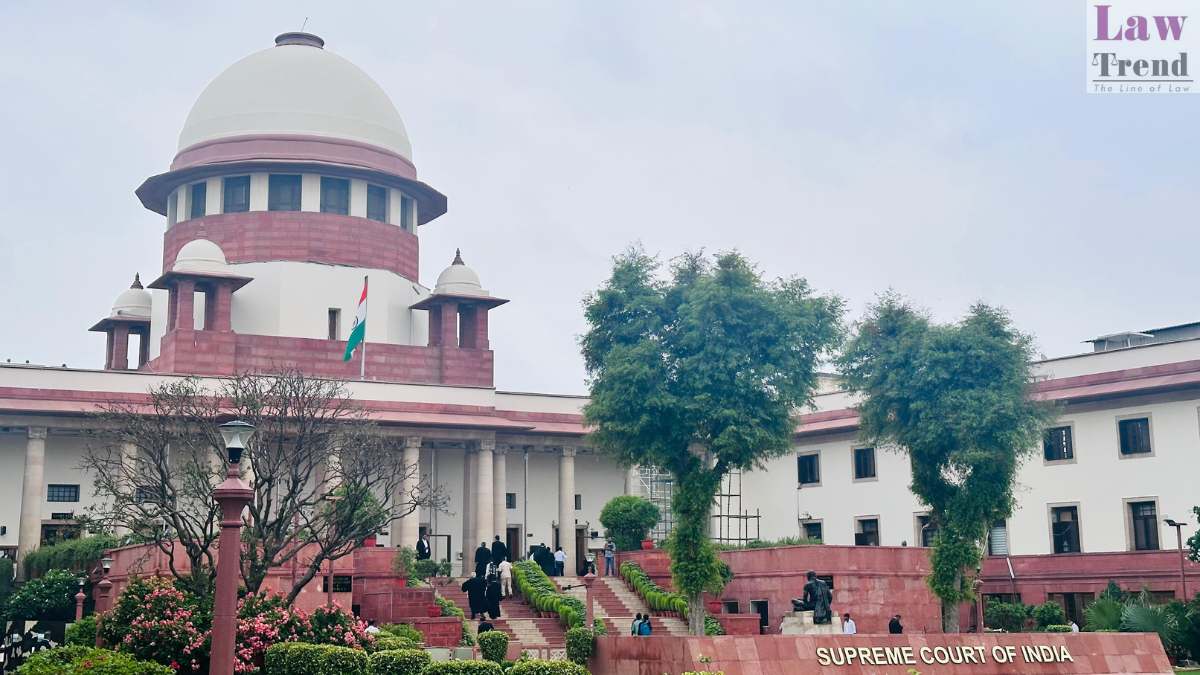
The Supreme Court on Friday cautioned that granting environmental clearances (EC) for sand mining without first conducting a proper study of riverbeds would severely harm ecological balance.
A bench of Justices P.S. Narasimha and A.S. Chandurkar underscored that the demand for construction-grade sand is rising at an alarming pace, with experts warning that the world could face a shortage of this critical resource by 2050.
The bench observed that while sand is a vital provisioning ecosystem service found in rivers and aquatic environments, even regulated extraction negatively impacts both physical and biological systems.
“In the physical environment, the primary effects are riverbed widening and lowering. In the biological environment, the overarching effect is reduced biodiversity, affecting aquatic and shoreline flora and fauna as well as the entire floodplain area,” the court noted.
It further said that depending on mining methods and river characteristics, unchecked sand mining could lead to bank erosion, bed degradation, and irreversible damage to river ecosystems.
Highlighting the importance of sustainable practices, the court stressed the necessity of conducting replenishment studies before granting ECs.
“It has therefore been held that a detailed study leading to the preparation of a replenishment report is an integral part of the District Survey Report. If the District Survey Report becomes the foundation for the consideration of an application for an environmental clearance, then it is compelling to ensure that replenishment studies are undertaken in advance,” the bench said.
The court explained that a District Survey Report (DSR) — prepared by local geology, irrigation, forest, public works, or mining departments — must comprehensively assess areas for mining, identify prohibited zones, calculate replenishment rates, and recommend rest periods after mining.
The bench made it clear that issuing clearances without incorporating replenishment studies in the DSR would be detrimental to the ecology and could aggravate the environmental crisis caused by excessive sand extraction.




