

Typewritten Cheque Not Prohibited by Law; Mere Format Cannot Discredit Cheque Bounce Complaint: Kerala High Court
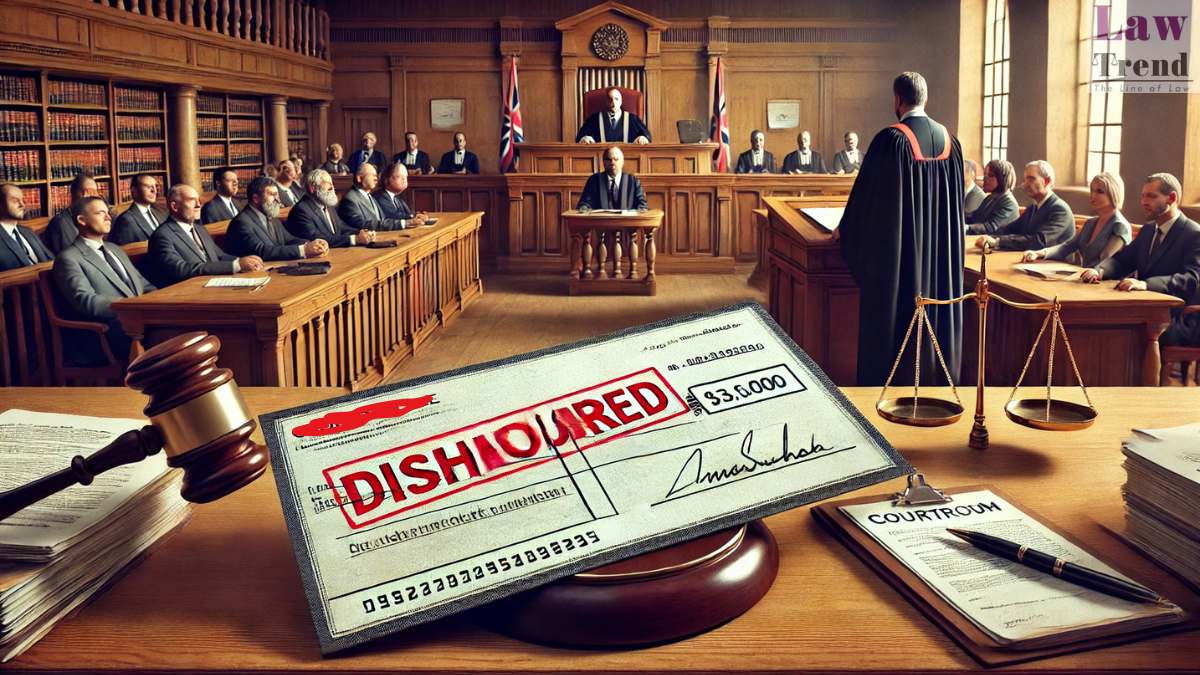
The High Court of Kerala, presided over by Justice A. Badharudeen, has held that the issuance of a typewritten cheque, though not common, is not prohibited by law, and the mere fact that a cheque is typewritten cannot be a reason to disbelieve a complainant’s case under Section 138 of the Negotiable Instruments Act, 1881 (NI Act). Reversing a trial court order of acquittal, the High Court convicted the accused under Section 138 of the NI Act and sentenced her to undergo simple imprisonment till the rising of the court along with a fine of Rs. 4,75,000 as compensation to the complainant.

Background of the Case

The case originated from a complaint filed by Shiny S. Nair (complainant) alleging that her relative, Sreekala (accused), borrowed Rs. 1,75,000 on June 14, 2012. Subsequently, on November 12, 2012, the accused borrowed a further sum of Rs. 3,00,000. Towards repayment of the total liability of Rs. 4,75,000, the accused issued a typewritten cheque (Ext.P1) dated December 13, 2012, drawn on the Indian Overseas Bank, Mavelikkara Branch.

Upon presentation for encashment, the cheque was dishonoured with the endorsement “Drawer’s signature differs.” The complainant issued a statutory demand notice on January 10, 2013, which was received by the accused on January 12, 2013. Following the failure of the accused to make payment within the statutory period, a complaint was instituted under Section 138 of the NI Act.

During trial before the Judicial First Class Magistrate Court – III, Mavelikkara, the complainant examined PW1 to PW4 and marked Exts.P1 to P6, along with bank records Exts.X1 and X2. On December 30, 2014, the trial court acquitted the accused, holding it improbable for the complainant to have advanced a second substantial amount when the earlier loan remained unpaid. Aggrieved by the acquittal, the complainant preferred an appeal under Section 378 of the Code of Criminal Procedure, 1973 (Cr.P.C.).

Arguments of the Parties

The appellant contended that through the testimony of PW1 to PW4 and documentary evidence, she had discharged her initial burden of proving the transaction and execution of the cheque. It was submitted that since the parties were relatives, advancing a further sum upon request was natural, and the trial court erred in refusing to draw the statutory presumptions under Sections 118 and 139 of the NI Act.

READ ALSO  Section 148 IT Act: Merely Digitally Signing the Notice Won’t Amount to Issuance of Notice, Rules Allahabad HC 

Conversely, the second respondent (accused) argued that the complainant’s case was improbable, emphasizing that Ext.P1 was a typewritten cheque despite both parties being capable of writing. In her statement under Section 313 Cr.P.C., the accused maintained that she had borrowed Rs. 2,00,000 in 2010, paid interest, and that a blank cheque given during that earlier transaction had been misused.

Court’s Analysis and Observations

The High Court evaluated the evidence on record and addressed the key legal questions surrounding typewritten cheques, loans between relatives, and dishonour due to signature mismatch.

READ ALSO  सबरीमला मंदिर स्वर्ण गबन मामला: एसआईटी ने केरल हाईकोर्ट से तंत्री कंदरारु राजीवारु की जमानत रद्द करने की मांग की

Addressing the contention regarding the typewritten cheque, the High Court observed:

“although it is contended by the learned counsel for the accused that issuance of a typewritten cheque when both parties were capable of writing the cheque would create a doubt as regards to the transaction and execution of the cheque, issuance of a typewritten cheque though not common, is not prohibited by law.”

The court further noted:

“Thus, in the case of a cheque issued as typewritten, when the complainant succeeds in establishing the transaction and execution of the cheque, merely because the cheque was a typewritten one, shall not be a reason to disbelieve the case of the complainant.”

On the issue of advancing a second loan to a relative during a subsisting liability, the court held:

“Advancing a loan to a relative, even during subsistence of an earlier liability by itself is not a sufficient reason to disbelieve the complainant’s case that she had advanced a further sum of Rs.3,00,000/- (Rupees Three Lakh Only) to the accused when the earlier loan of Rs.1,75,000/- (Rupees One Lakh Seventy-five Thousand Only) remained outstanding, when the parties are admittedly relatives.”

Regarding the ground of dishonour, the court reiterated settled law:

“It is now well settled that the dishonour of a cheque on the ground of “Drawer’s signature differs” also attracts an offence of Section 138 of the NI Act, when there was no sufficient fund in the account of the drawer to honour the same, provided the other statutory requirements are satisfied.”

Bank records (Ext.X2) established that the accused had a balance of only Rs. 554.55 as on December 15, 2012, confirming insufficiency of funds. The court held that as the complainant established the transaction and execution of Ext.P1, the twin presumptions under Sections 118 and 139 of the NI Act were available in her favour.

Decision of the Court

The High Court allowed the appeal and set aside the judgment of acquittal. The accused was found guilty and convicted under Section 138 of the NI Act.

READ ALSO  Automatic Cancellation of Bail Violates Fundamental Rights: Madhya Pradesh High Court"

The court sentenced the accused to undergo simple imprisonment for a day till the rising of the court and to pay a fine of Rs. 4,75,000, to be disbursed to the complainant as compensation under Section 357(1)(b) Cr.P.C. In default of payment, the accused must undergo simple imprisonment for six months. The accused was directed to appear before the trial court within two weeks to undergo the sentence.

Case Details:

Case Title: Shiny S. Nair v. State of Kerala & Anr.
Case No.: Crl.A No. 705 of 2015
Bench: Justice A. Badharudeen
Date: 16.07.2026

Law Trend
Law Trendhttps://lawtrend.in/
Legal News Website Providing Latest Judgments of Supreme Court and High Court

Related Articles

Latest Articles
