

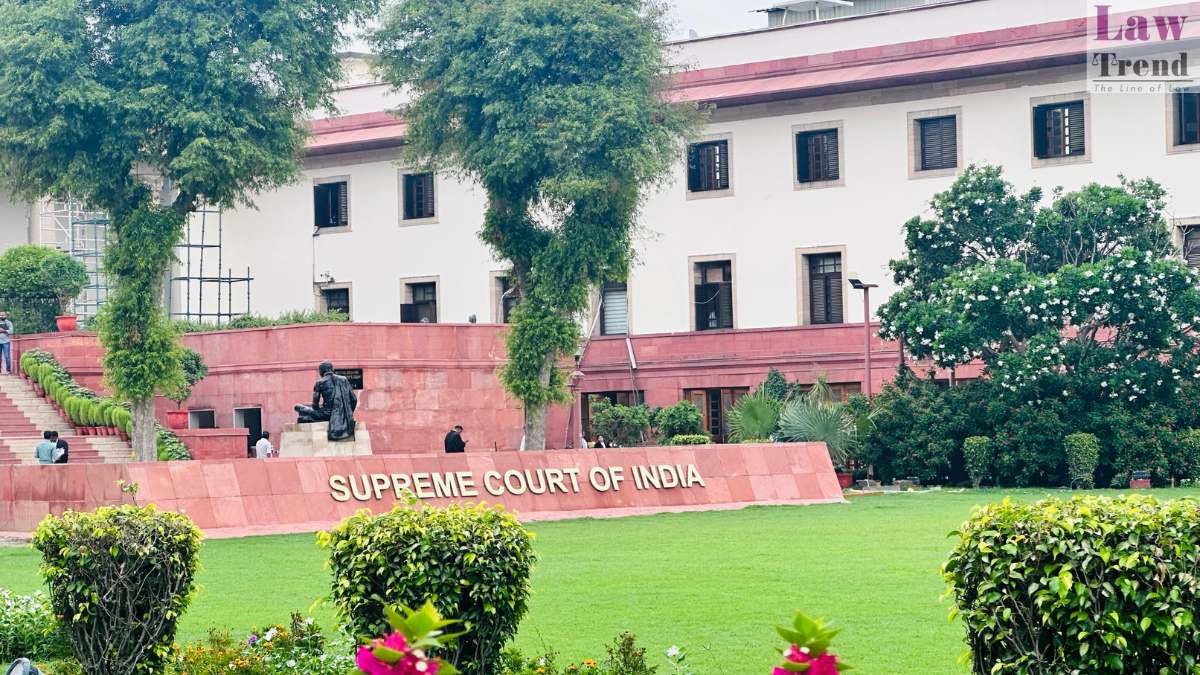
The Supreme Court of India on Monday agreed to fast-track a high-stakes corporate battle, scheduling day-to-day hearings this July to decide on the execution of a Rs 500 crore UAE court decree against Hyderabad-based industrialist Nimmagadda Prasad. The decision comes after a court-mandated mediation process led by former Chief Justice of India (CJI) U U Lalit failed to reach an amicable settlement.
A three-judge bench comprising Chief Justice Surya Kant, Justice Joymalya Bagchi, and Justice Vipul M Pancholi announced that the court will bypass any further interim applications and dive straight into the main case starting in the second week of July.
Mediation Collapse Triggers Court Intervention
The dispute centers on a civil judgment passed by a UAE court in favor of the Ras Al Khaimah Investment Authority (RAKIA), a sovereign entity seeking to recover 267,941,374 dirhams. This amount translates to a principal of approximately Rs 543 crore, which escalates to Rs 643 crore when factoring in accrued interest.
During Monday’s proceedings, senior advocate Abhishek Singhvi, representing RAKIA, officially informed the bench that the mediation efforts had collapsed, urging the apex court to take over the matter directly.
On March 16, the Supreme Court had appointed former CJI U U Lalit as the sole mediator, hoping to resolve the dispute out of court. Because of the security situation in the Gulf region, the mediation was conducted in a hybrid format, allowing RAKIA representatives to participate via videoconferencing. Despite these efforts, negotiations ended without a resolution.
The Roots of the Dispute: The Failed ‘Vanpic Project’
The multi-crore legal battle traces its origins back to 2008 and the “Vanpic Project”—a highly ambitious but ultimately failed joint venture aimed at developing modern ports and an airport in Andhra Pradesh.
RAKIA has alleged that Prasad, in collusion with the investment authority’s former CEO Khater Massaad, misappropriated USD 120 million that had been earmarked specifically for the infrastructure project.
Security Deposits and Asset Freezes
To proceed with his plea against the foreign decree, Prasad was previously ordered by the Supreme Court to furnish a security package totaling Rs 600 crore.
Representing Prasad, senior advocate Gopal Subramanium informed the bench that the industrialist has complied with key aspects of the court’s financial directives:
- Cash Deposit: Prasad has deposited Rs 125 crore in cash security. Under the court’s direction, this sum is to be held in a high-interest-bearing Fixed Deposit Receipt (FDR) at the Supreme Court’s UCO Bank branch for an initial period of six months with auto-renewal.
- Property Collateral: The industrialist has surrendered the original, unencumbered title deeds of a 37-acre land parcel located in Devarayamjal village, Medchal-Malkajgiri district, Telangana (referred to as the “Medchal Land”). Prasad’s team claims this land is worth Rs 408 crore. While previously attached by the Enforcement Directorate (ED), the land was released subject to an indemnity bond.
- Additional Assets: Prasad also offered shares and other assets valued at Rs 212 crore, which are currently attached by commercial courts under orders from late 2023.
While the legal battle intensifies, the Supreme Court clarified that Prasad is permitted to utilize company funds to manage the “day-to-day affairs” of his firms—including the payment of employee salaries. However, he remains strictly prohibited from alienating or selling any immovable properties without prior authorization from the court.
With mediation efforts officially exhausted, all eyes will now turn to the Supreme Court in the second week of July, when daily hearings are set to decide the final execution of the massive UAE decree.




