

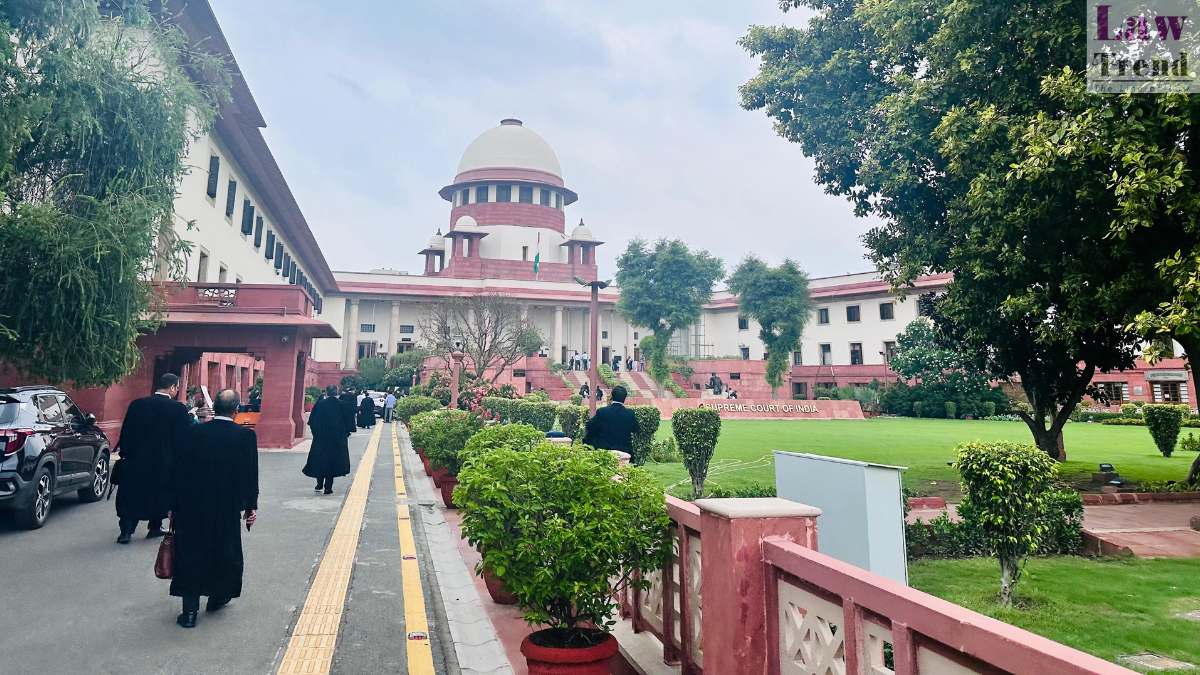
In a powerful push for educational equity, the Supreme Court of India on Monday declared that no girl should be forced to drop out of school and sit at home doing domestic work simply because of a lack of sanitary napkins and functional, gender-segregated toilets. The apex court directed the Central government to ensure that its landmark directives on menstrual hygiene are strictly implemented across all states and Union Territories in “letter and spirit.”
The bench, comprising Justices J. B. Pardiwala and R. Mahadevan, issued these instructions during a follow-up hearing to monitor the progress of its landmark January 30 judgment, which linked menstrual health directly to the fundamental Right to Life.
“Make Good Use of It”: Court Demands Strict Compliance
During Monday’s proceedings, the Centre informed the Supreme Court that its January 30 judgment has successfully “galvanised” efforts across states and Union Territories (UTs). Representing the Centre, Additional Solicitor General Archana Pathak Dave stated that the government has already compiled roughly two to two-and-a-half months of compliance data.
Acknowledging this progress, the bench urged the Centre to push further.
“Make good use of it. It is for the good of women and girls of this country. Girls should not give up education and sit at home and do some domestic work only for this reason,” the bench observed. “Now, it is for you to make the most of it and see that as far as possible, the benefits are extended in terms of our judgment.”
To ensure continuous progress, the Supreme Court established a strict monitoring timeline:
- Nodal Agency: The Ministry of Education has been designated as the nodal ministry responsible for filing all future compliance reports.
- State Deadlines: All states and UTs must submit their detailed status reports to the Centre by August 15. The court warned that “there shall not be any lapse” on the part of any state in meeting this deadline.
- Three-Month Reviews: The Supreme Court will actively monitor compliance every three months, requiring the Centre to submit fresh progress reports at the same interval.
- Next Hearing: The matter has been scheduled for further compliance reporting on September 1.
The Constitutional Right to Menstrual Health
The court’s directives stem from its historic January 30 ruling, which positioned menstrual hygiene as a core component of gender justice. In that verdict, the Supreme Court declared that the right to life under Article 21 of the Indian Constitution encompasses the right to menstrual health.
The bench previously noted that inaccessibility to safe, effective, and affordable menstrual hygiene measures strips girls of their right to participate in school on equal terms. This educational barrier, the court warned, creates a damaging domino effect that limits their ability to participate in all walks of life later in adulthood.
To combat this, the January 30 judgment mandated that all schools—whether government-run, aided, or privately managed, in both rural and urban areas—must provide:
- Free Sanitary Napkins: Specifically, oxo-biodegradable sanitary napkins manufactured in compliance with ASTM D-6954 standards. These must be readily accessible to girls, preferably inside toilet premises via vending machines, or at designated school authorities where machines are not yet feasible.
- Functional Toilets: Clean, gender-segregated toilets equipped with usable water connectivity for all students.
Environmental Concerns Raised Over Pad Materials
During Monday’s hearing, a potential environmental roadblock was brought to the court’s attention. An advocate appearing in the matter referenced an interim application, arguing that the court’s mandate for “oxo-biodegradable” sanitary napkins could actually be counterproductive to the environment.
Rather than delaying the ongoing implementation, the bench instructed the advocate to raise this technical concern directly with the government’s law officer.
“Look into the interim application and take necessary steps,” the bench instructed Additional Solicitor General Dave, ensuring that the environmental impact of the plastic standards is thoroughly reviewed without halting the nationwide distribution efforts.




