

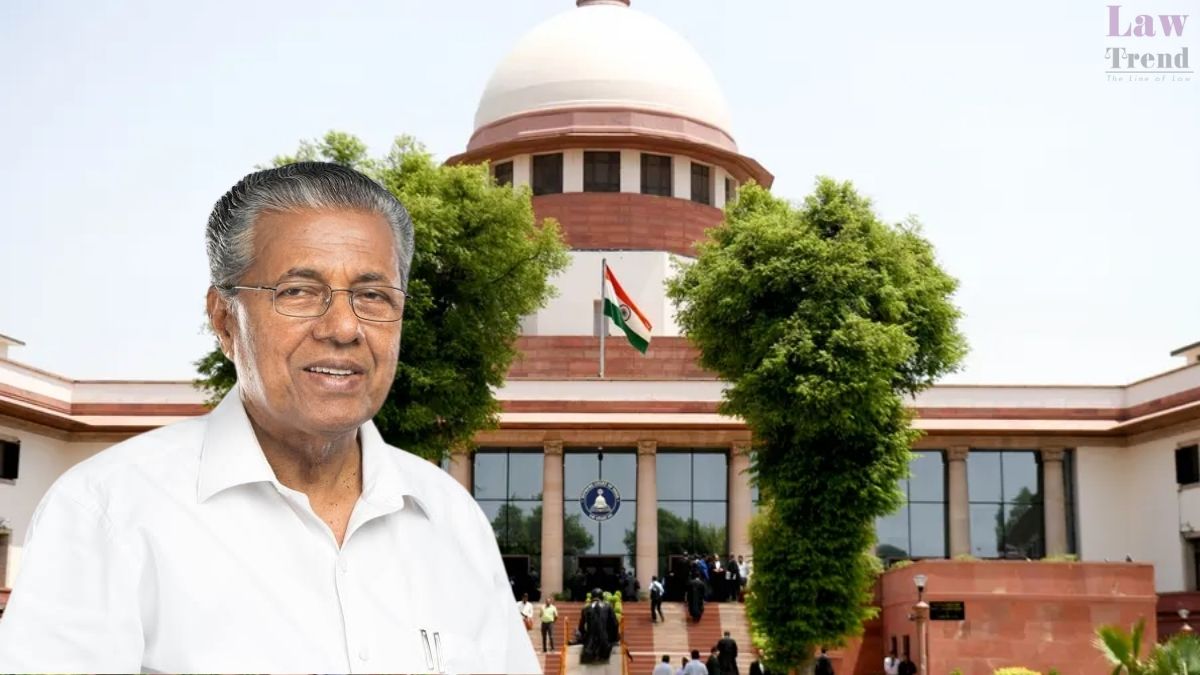
The Supreme Court on Wednesday stayed the investigation against former Kerala Chief Minister Pinarayi Vijayan and others in the CMRL-Exalogic corruption case for one week, allowing them to challenge the direction for registration of an FIR before a Division Bench of the Kerala High Court.
A vacation Bench of Justice Joymalya Bagchi and Justice V. Mohana set aside the High Court Division Bench’s order refusing permission to Vijayan and the other accused to pursue their appeals against the single-judge’s direction to register the FIR.
The Supreme Court clarified that the FIR would remain in existence, but the investigation would remain suspended for a week to allow the petitioners to seek appropriate relief from the High Court.
The Bench also questioned the circumstances in which the Kerala High Court had directed registration of a criminal case based on information forwarded by the Enforcement Directorate (ED), particularly when the State government had already constituted a Special Investigation Team (SIT) to conduct a preliminary inquiry.
Supreme Court Questions High Court’s Direction to Register FIR
During the hearing, the Supreme Court expressed concern that the single-judge had ordered registration of the FIR without hearing Vijayan and the other persons affected by the direction.
The Bench observed that the State had initiated a preliminary inquiry after receiving information from the ED. It questioned the need for judicial intervention directing immediate registration of an FIR without allowing that process to proceed.
The Court also examined whether information shared by the ED under Section 66(2) of the Prevention of Money Laundering Act (PMLA) automatically obliges a State investigating agency to register an FIR.
Justice Bagchi questioned the interpretation of the Supreme Court’s earlier ruling in Vijay Madanlal Choudhary as imposing a mandatory obligation on State agencies to register criminal cases whenever the ED forwards information.
The Bench indicated that the question of whether material supplied by the ED justifies an investigation under the Prevention of Corruption Act must be considered by the competent investigating agency in accordance with law.
It also cautioned the ED against extending its statutory powers into areas assigned to other investigating authorities.
The Court made clear that it was not opposed to the investigation of alleged offences or the registration of an FIR where legally justified. Its concern was whether the statutory procedure had been followed and whether the High Court was justified in directing registration of the case in the circumstances.
Accused Entitled to Pursue Appeal Before High Court
A central issue before the Supreme Court was whether Vijayan and the other petitioners could challenge the single-judge’s order despite not having been parties to the original writ proceedings.
The Kerala High Court’s Division Bench, comprising Justice K. Natarajan and Justice Johnson John, had refused permission to pursue the appeals on October 15, observing that the petitioners could challenge the FIR itself rather than the judicial direction ordering its registration.
The Supreme Court disagreed with the contention that the petitioners could not pursue an appeal against the single-judge’s direction.
The Bench distinguished the case from a situation where an investigating agency independently registers an FIR in the exercise of its statutory powers.
Here, the criminal case had been registered following a judicial order passed without hearing the persons against whom the FIR was directed.
Setting aside the Division Bench’s order, the Supreme Court permitted the petitioners to pursue their appeals on merits and seek interim relief before the High Court.
The Bench clarified that its observations were confined to the petitioners’ right to maintain the appeals and did not amount to any finding on the merits of the allegations.
Background of the CMRL-Exalogic Case
The proceedings arise from allegations concerning financial transactions between Cochin Minerals and Rutile Limited (CMRL) and Exalogic Solutions Private Limited, a company owned by Vijayan’s daughter, Veena Thaikkandiyil.
The ED claimed to have obtained material indicating possible irregularities and forwarded the information to the Kerala Police.
Instead of immediately registering an FIR, the Kerala government constituted an SIT to examine the material through a preliminary inquiry.
KM Shajahan, a lawyer who previously served as additional private secretary to former Kerala Chief Minister V.S. Achuthanandan during his tenure as Leader of the Opposition, approached the Kerala High Court seeking registration of an FIR.
On October 9, a single-judge Bench allowed his petition and directed the State Vigilance and Anti-Corruption Bureau (VACB) to register a case against Vijayan, Veena, her husband Mohammed Riyas, and others suspected of involvement in the alleged corruption.
The other persons named in the direction included Nikhil P., Hassan Varish, Shyjal Muhammad and Nandulal M.
Vijayan and the other affected persons subsequently approached the High Court’s Division Bench, but their appeals were not permitted to proceed. They then moved the Supreme Court.
Arguments Before the Supreme Court
Senior Advocate Sidharth Luthra, appearing for Vijayan, argued that the single-judge had directed registration of the FIR without giving his client an opportunity to be heard.
He also disputed the proposition that Section 66(2) of the PMLA makes registration of an FIR compulsory whenever the ED forwards information to a State agency.
Counsel representing Shajahan maintained that the Supreme Court’s ruling in Vijay Madanlal Choudhary imposed an obligation on the State agency to register an FIR after receiving such information from the ED.
Appearing for the ED, advocate Zoheb Hossain submitted that the material forwarded by the agency disclosed cognizable offences.
The Supreme Court acknowledged the submission concerning the nature of the material but emphasised that the legal consequences of an ED communication under Section 66(2), particularly in a corruption case, required examination.
The Bench also questioned why Shajahan had approached the High Court seeking registration of an FIR without waiting for the SIT to complete its preliminary inquiry.
Investigation Stayed for One Week
In its operative directions, the Supreme Court allowed the petitioners to approach the Kerala High Court’s Division Bench for consideration of their appeals on merits.
It further permitted them to seek interim protection in accordance with law.
The Court directed that the investigation pursuant to the FIR would remain stayed for one week to enable the petitioners to pursue these remedies.
The Bench expressly clarified that it had not decided the merits of the corruption allegations or the substantive questions arising from the ED’s communication.
Senior Advocates Sidharth Luthra and N. Hariharan, along with advocates Mayank Jain, Gilbert George Correya, Madhur Jain and Arpit Goel, appeared for Vijayan, Veena and Riyas.


