

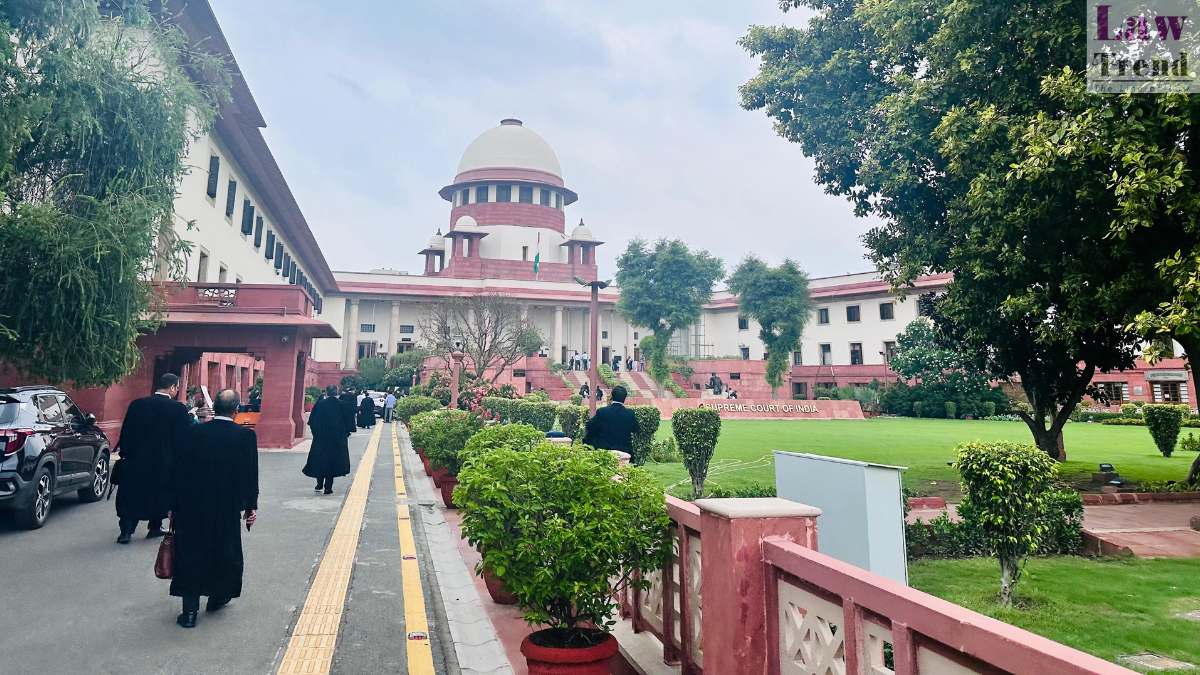
The Supreme Court on Monday ordered that no coercive measures be taken by the Central Bureau of Investigation against individuals linked to the Punjab government, providing interim protection in an inquiry into alleged corruption among high-ranking administration figures.
A division bench comprising Justices MM Sundresh and PB Varale issued formal notices to the central government, the CBI, the Enforcement Directorate, and other concerned parties. While granting relief against coercive action, the judges made clear that the First Information Report itself has not been stayed, allowing the central agency to proceed with its probe without exercising coercive powers.
High Court Mandate Under Challenge
The top court’s order follows an appeal filed the previous Monday by the Punjab government, represented by senior advocates Vikas Singh and Sidharth Luthra. The state administration approached the apex court seeking a stay on a directive from the Punjab and Haryana High Court that had transferred the matter to the federal agency.
The High Court had instructed the CBI to investigate the graft claims and deliver a comprehensive report within two months. As part of that ruling, the state government and the Punjab Police were ordered to hand over all records and documentation connected with the matter to the central investigating agency.
Allegations Of Policy And Transfer Irregularities
The investigation originated from a petition filed before the High Court by advocate Nikhil Saraf, which highlighted allegations of cash payments exchanged for official postings, employee transfers, and the rollout of advantageous administrative policies.
The plea asserted that the Aam Aadmi Party-led state government had failed to initiate proceedings despite earlier communications forwarded by the Enforcement Directorate. The petitioner maintained that an independent inquiry by a central body was necessary because the accusations directly questioned the integrity and functioning of the state government.
Legal Grounds Raised By State Administration
Challenging the High Court’s determination, the Punjab government contended that the ruling suffered from serious legal errors regarding statutory safeguards. The state argued that information shared under Section 66 of the Prevention of Money Laundering Act was mistakenly interpreted as a directive making the lodging of an FIR mandatory, which it stated runs contrary to the Supreme Court’s 2022 precedent in the Vijay Madanlal Choudhary case.
The petition further submitted that the High Court directed the registration of an FIR concerning official decisions on tenders, transfers, and policy matters without obtaining the prior sanction required under Section 17A of the Prevention of Corruption Act. The state maintained that the High Court improperly faulted the investigating bureau for failing to involve a serving public servant whom authorities were legally barred from questioning without that mandatory statutory approval.




