

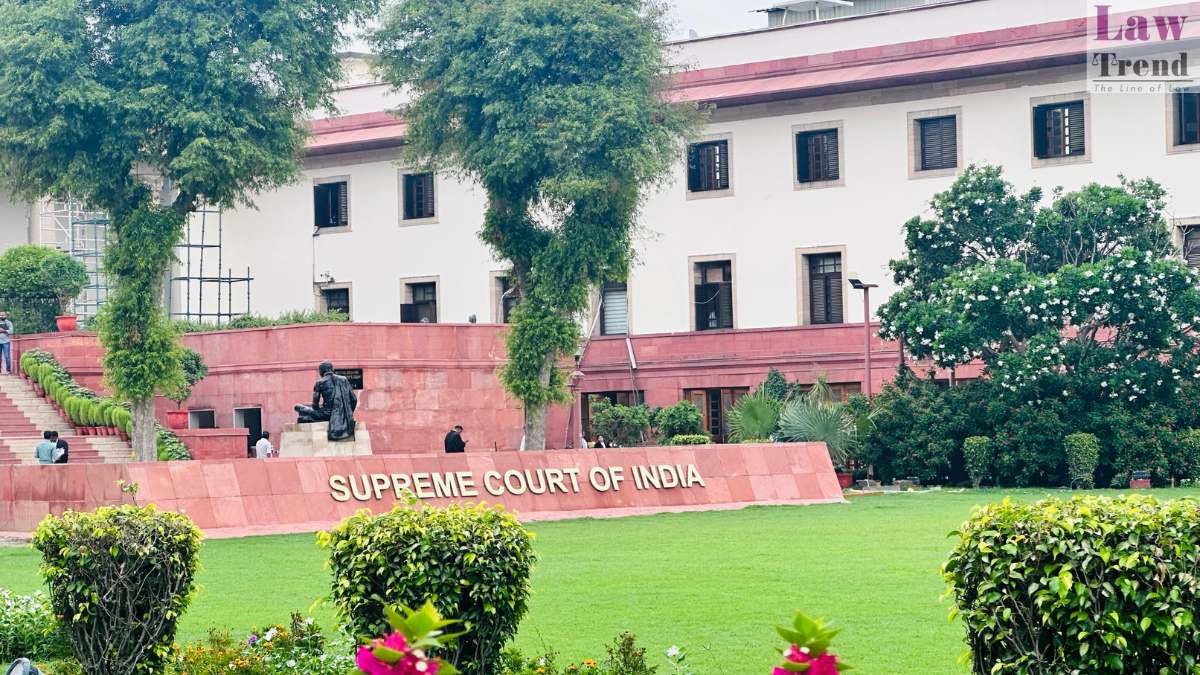
Taking a stern view of the persistent issue of inter-state human trafficking and bonded labour, the Supreme Court of India on Tuesday directed the Secretary of the Ministry of Labour and Employment to file a comprehensive affidavit detailing actions taken to eradicate the practice. The bench, comprising Justices Vikram Nath and Sandeep Mehta, emphasized that the report must specifically address the trafficking of minors and outline what further judicial directions are necessary to streamline rescue and rehabilitation.
The court’s intervention comes amid startling revelations that thousands of rescued children remain without the financial assistance they are legally entitled to. During the proceedings, Senior Advocate H.S. Phoolka informed the bench that while approximately 11,000 children have been rescued across various states, only 971 have received immediate financial aid.
The apex court highlighted a significant loophole in the current system: the bureaucratic delay in disbursing aid when minors are trafficked from their home states to work in adjoining regions. In previous hearings, the court had noted that the jurisdictional gap between the state where a worker is rescued and their native state often stalls the issuance of release certificates and the delivery of financial support.
To bridge this gap, the court had previously ordered the Ministry of Labour to convene a high-level meeting with counterparts from all States and Union Territories. The goal is to establish a simplified, unified procedure for immediate financial assistance, involving the National Human Rights Commission (NHRC) in the finalization process.
The matter originated from a petition filed in July 2022 seeking the enforcement of fundamental rights for trafficked workers. One of the petitioners, a victim from Bihar’s Gaya district, recounted being trafficked by an unregistered contractor to a brick kiln in Shahjahanpur, Uttar Pradesh.
The petitioner alleged that he and his fellow workers were forced into labour without minimum wages, with their rights to movement and employment severely restricted until their rescue in February 2019. Such cases underscore the “bonded” nature of the labour, where workers are held in debt bondage or through coercion.
Attorney General R. Venkataramani, assisting the court, noted that “quite a few developments” have occurred since the ministry was last tasked with reviewing the scheme. However, the bench insisted on a formal affidavit from the Secretary to ensure accountability.
“The affidavit will also indicate what further directions are required from this court so that appropriate orders can be passed on the next date,” the bench remarked.
The Ministry has been given three weeks to file the document. The Supreme Court has scheduled the next hearing for May 19, where it is expected to pass further orders to ensure the effective implementation of the bonded labour rehabilitation scheme.


